
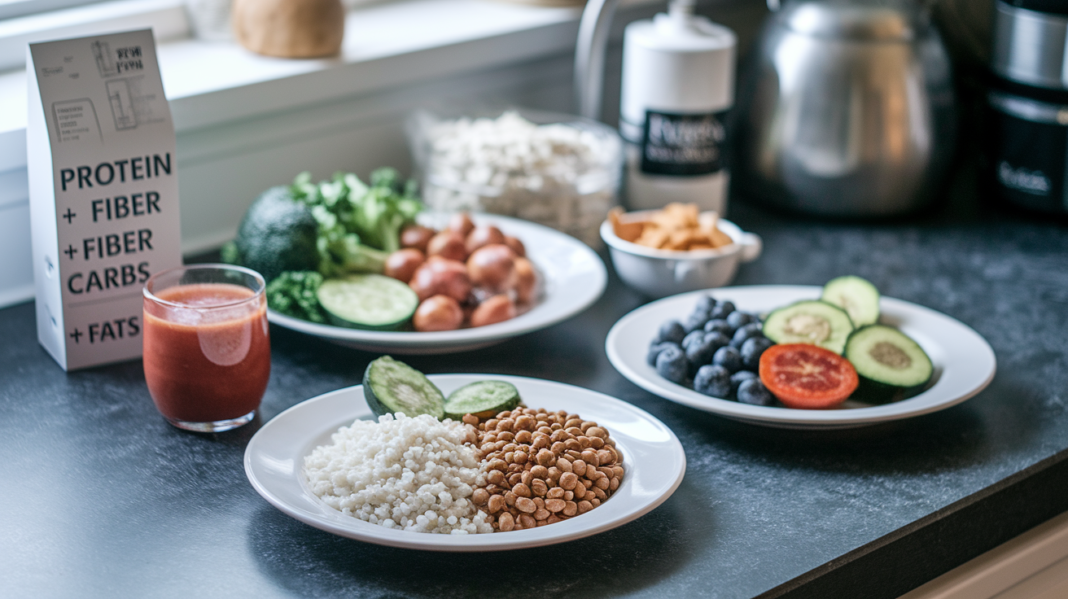

What if most energy crashes aren’t about willpower but about how you build a single plate?
A simple meal pattern—protein, fiber-rich carbs (carbs with plant fiber that slow digestion), and healthy fats—at every meal keeps blood sugar steady and stops the mid-afternoon slump.
Spacing meals and snacks about three to four hours apart smooths highs and lows.
This post gives daily meal templates, a weekly rotation, a grocery essentials list, and easy recipes you can use today—no weighing, just your hand as a portion guide.
If you want steady energy and fewer cravings, keep reading.
Daily Meal Template for Steady Energy and Balanced Blood Sugar
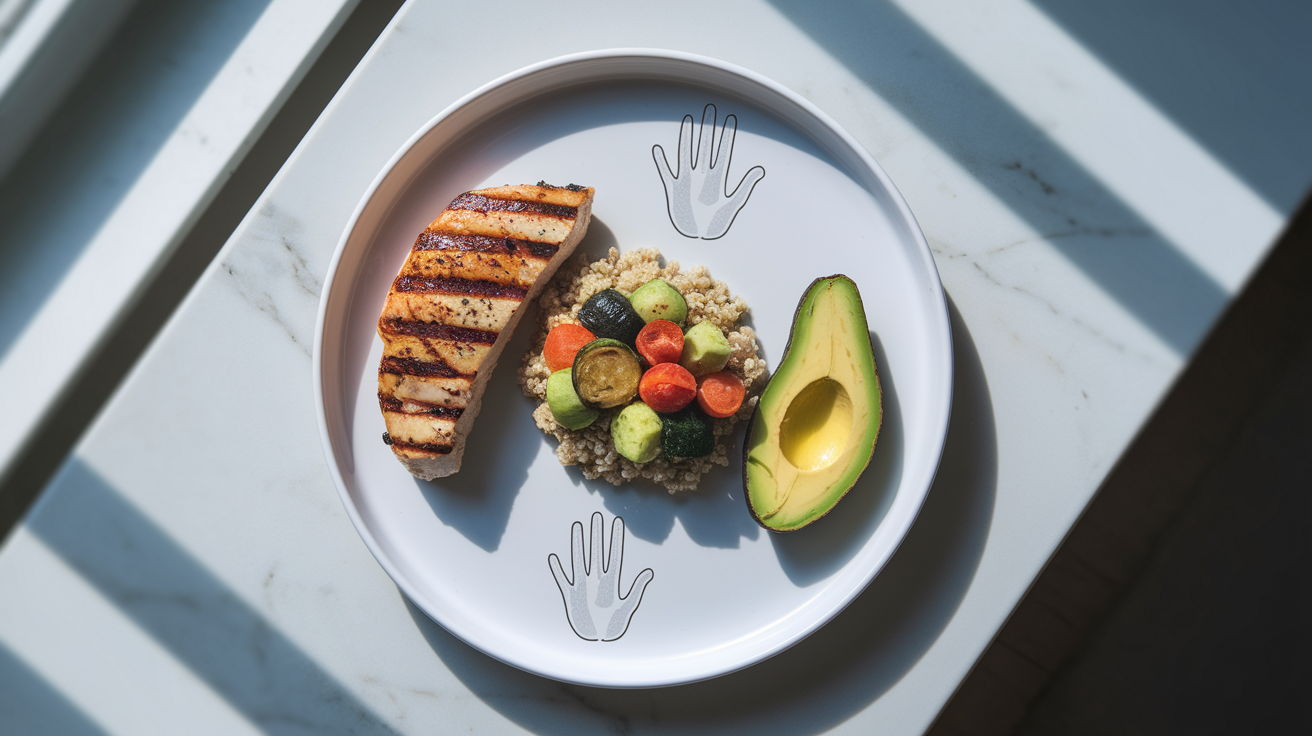
This template balances three macronutrients at every meal: protein, fiber-rich carbohydrates, and healthy fats. That combo prevents the post-meal crash you get from carb-heavy plates. Spacing meals and snacks about three to four hours apart keeps your blood sugar from swinging too high or dropping too low. The result? Fewer cravings, better focus, energy that lasts from morning through evening.
The structure also fixes a common mistake. A lot of people front-load carbs at breakfast and save protein for dinner. Each meal here includes a palm-sized portion of protein to slow digestion, at least two servings of non-starchy vegetables for fiber and volume, and a modest portion of slow-digesting carbs to fuel your brain and muscles without spiking glucose. Healthy fats like olive oil, nuts, seeds, or avocado round out the plate and keep you satisfied longer.
You don’t need to weigh food or count every gram. Use your hand as a guide: protein fits in your palm, carbs fit in your cupped hand, fats are about the size of your thumb. The optional evening mini-meal is there if you eat dinner early and need a light snack before bed to avoid overnight glucose dips or morning hunger that drives poor breakfast choices.
| Meal | Time | Portion Size | Macronutrient Ratio | Example Foods |
|---|---|---|---|---|
| Breakfast | 7–8 a.m. | 1 palm protein, 1 cupped-hand carb, 1 thumb fat, 1 cup non-starchy veg | 30% protein, 35% carb, 35% fat | 2 scrambled eggs, 1 slice whole-grain toast, 1/4 avocado, spinach and tomatoes |
| Mid-Morning Snack | 10–11 a.m. | 1 handful protein + fiber source | 40% protein, 40% carb, 20% fat | 1/3 cup cottage cheese with 1/2 cup blueberries |
| Lunch | 12–1 p.m. | 1 palm protein, 2 cups non-starchy veg, 1 cupped-hand carb, 1 thumb fat | 30% protein, 40% carb, 30% fat | Grilled chicken over mixed greens, 1/2 cup quinoa, 1 tablespoon olive oil vinaigrette |
| Afternoon Snack | 3–4 p.m. | 1 handful nuts or seeds, optional small fruit | 25% protein, 35% carb, 40% fat | 1 small apple with 1 tablespoon almond butter |
| Dinner | 6–7 p.m. | 1 palm protein, 2 cups non-starchy veg, 1 cupped-hand carb, 1 thumb fat | 35% protein, 35% carb, 30% fat | Baked salmon, roasted broccoli and cauliflower, 1/2 cup roasted sweet potato, drizzle of olive oil |
| Optional Evening Mini-Meal | 8–9 p.m. | Small protein + fat snack | 50% protein, 10% carb, 40% fat | Handful of walnuts or 2 hard-boiled eggs |
Weekly Meal Rotation for Blood Sugar Stability
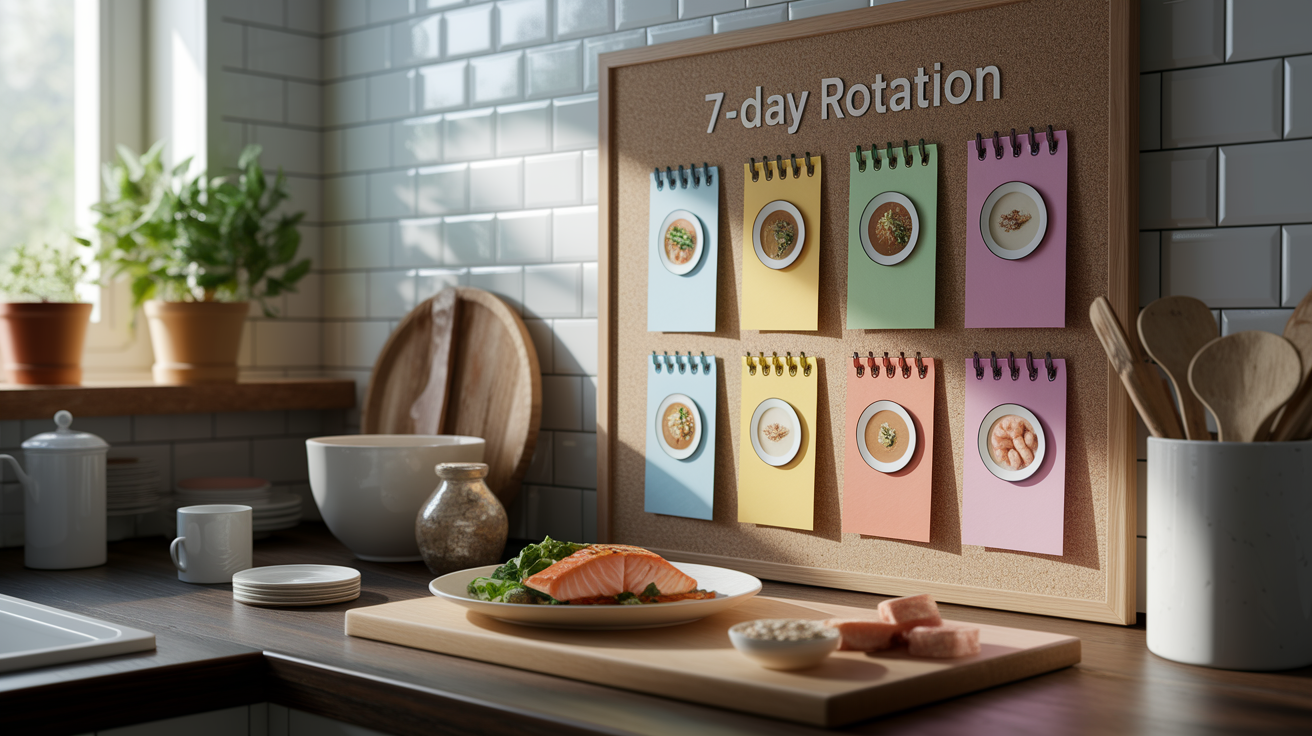
Repeating a weekly rotation removes decision fatigue and keeps your glucose patterns predictable. When you eat similar meals at similar times, your body adapts. Insulin sensitivity improves, cravings diminish, and you start to notice patterns like “I always feel great after lentil soup” or “that mid-morning yogurt keeps me steady until lunch.” A rotation also makes grocery shopping faster because you buy the same core ingredients each week and swap a few produce items or proteins to keep meals interesting.
You can theme each day loosely around a protein or cooking method. Monday might be chicken-based meals, Tuesday fish, Wednesday plant proteins like lentils or tofu, and so on. This structure ensures you rotate through different amino acid profiles and micronutrients without needing a nutrition degree. If a particular day’s menu doesn’t fit your schedule, swap it with another day or repeat a favorite. The goal is consistency, not perfection.
- Monday: Grilled chicken, leafy greens, quinoa, and roasted vegetables at lunch and dinner. Greek yogurt with berries for breakfast and snacks
- Tuesday: Baked or poached salmon, cauliflower rice, steamed broccoli, and a lentil soup. Whole-grain toast with avocado for breakfast
- Wednesday: Ground turkey stir-fry with bell peppers and snap peas over a small portion of brown rice. Smoothie bowl with protein powder and mixed greens for breakfast
- Thursday: Tofu or tempeh scramble with spinach and mushrooms for breakfast. Chickpea salad with olive oil and tomatoes for lunch. Lean beef or bison with roasted root vegetables for dinner
- Friday: Shrimp or white fish with zucchini noodles and pesto. Cottage cheese with cucumber slices for snacks. Veggie frittata for breakfast
- Saturday: Slow-cooker chicken or turkey chili with black beans and plenty of peppers and onions. Almond flour pancakes with nut butter for breakfast
- Sunday: Roasted chicken thighs or drumsticks with Brussels sprouts and mashed sweet potato. Egg bake with vegetables for breakfast. Hummus with raw veggies for snacks
Blood-Sugar-Friendly Grocery List Essentials
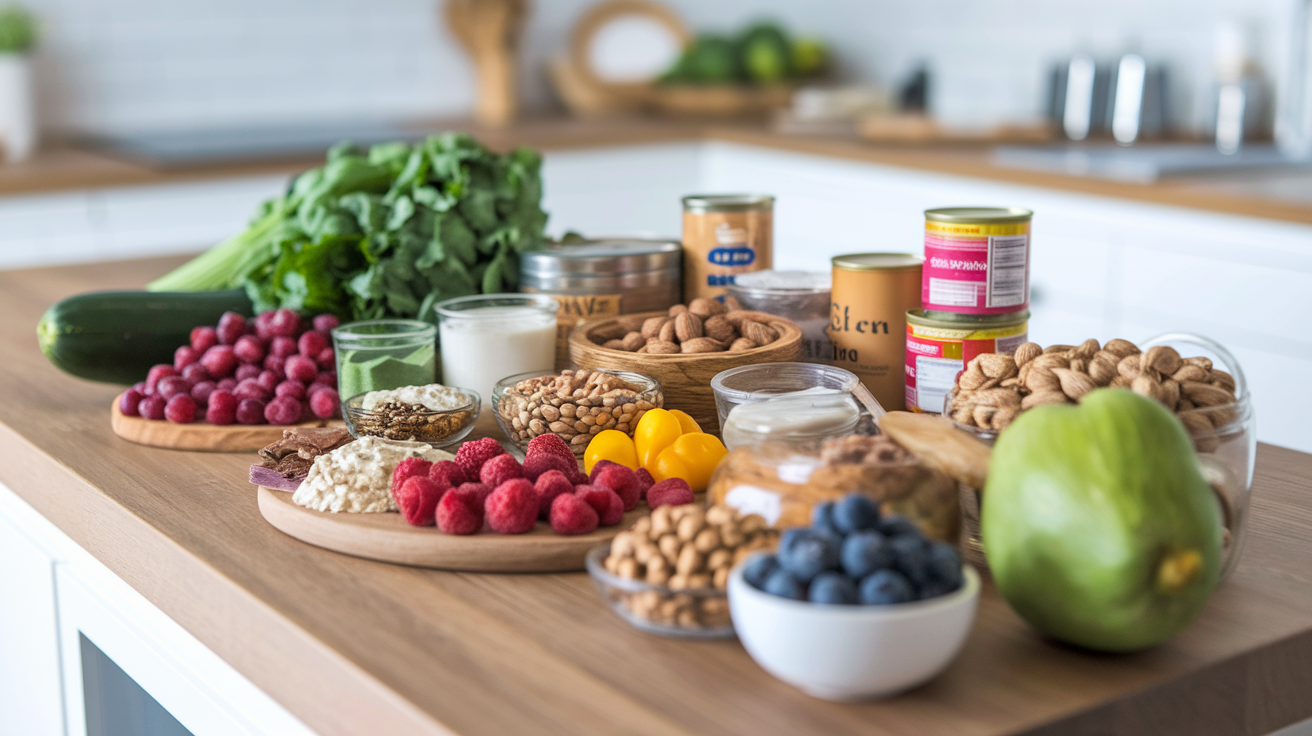
Stock your kitchen with foods that pair fiber and protein naturally, and you’ll never need to overthink a meal. Shop the perimeter of the store first: produce, meat, dairy, eggs. Then add a few pantry staples from the center aisles. Avoid anything with more than five ingredients or added sugars in the first three ingredients. If you can’t pronounce it, you probably don’t need it on your weekly rotation.
Buy enough fresh vegetables to fill half your plate at lunch and dinner every day, plus a few for snacks. Choose frozen vegetables as backups. They’re often more nutrient-dense than fresh produce that’s been sitting for days, and they won’t spoil if your week gets chaotic. For proteins, rotate through at least three types each week to vary your amino acids and keep meals interesting. Keep nuts, seeds, and canned beans on hand for quick additions when you’re short on time or forgot to thaw chicken.
- Leafy greens (spinach, kale, arugula, mixed salad greens)
- Non-starchy vegetables (broccoli, cauliflower, zucchini, bell peppers, Brussels sprouts, green beans, asparagus)
- Lean proteins (chicken breast, turkey, salmon, cod, shrimp, tofu, tempeh, eggs)
- High-fiber carbs (quinoa, lentils, black beans, chickpeas, steel-cut oats, sweet potatoes)
- Healthy fats (olive oil, avocado, raw almonds, walnuts, chia seeds, tahini)
- Berries (blueberries, strawberries, raspberries)
- Plain Greek yogurt or cottage cheese
- Whole-grain bread or almond flour
- Nut butters (peanut, almond, no added sugar)
- Canned or jarred items (canned tuna in water, low-sodium broth, tomato paste, vinegar)
- Herbs and spices (cinnamon, turmeric, garlic powder, black pepper, basil, oregano)
- Unsweetened plant milk (almond, coconut, oat)
Recipes That Support Stable Energy
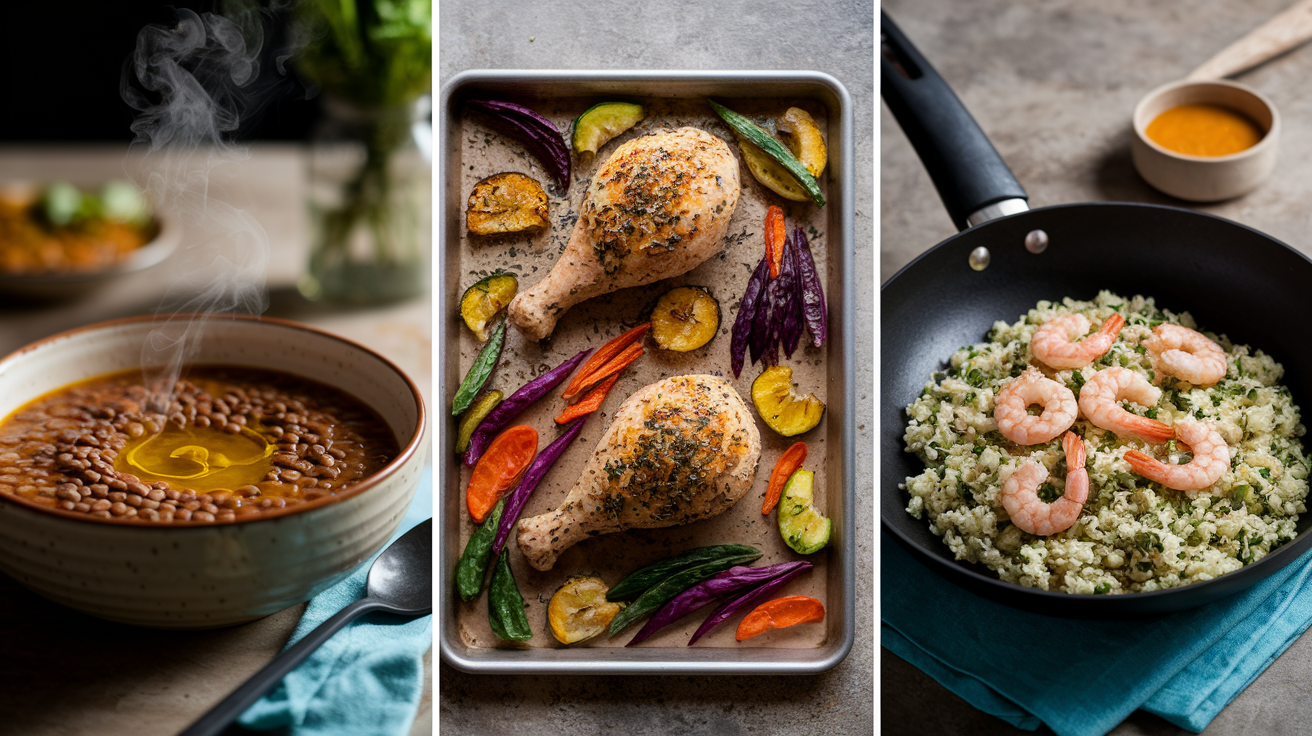
Recipes that layer fiber, protein, and fat in one dish make blood sugar management automatic. Bowls, stir-fries, and frittatas hit all three macronutrients without requiring separate side dishes or complicated timing. These meals also refrigerate well, so you can prep two or three servings at once and eat them over the next few days. That consistency is what keeps your glucose steady. Not one perfect meal, but the same balanced structure repeated.
Soups and stews work especially well because the liquid slows digestion even further. A lentil and vegetable soup with a drizzle of olive oil delivers protein from the lentils, fiber from the vegetables, and fat from the oil, all in a format that takes thirty minutes to make and reheats beautifully. You can batch-cook a big pot on Sunday and eat it for lunch three days in a row without feeling like you’re eating leftovers.
One-pan meals cut down on dishes and decision-making. Sheet-pan chicken with roasted vegetables and a sprinkle of nuts gives you a complete plate from one tray. Frittatas baked in a muffin tin become grab-and-go breakfasts that pair eggs with spinach, tomatoes, and a bit of cheese. When the recipe does most of the work, you’re more likely to stick with the plan.
- Lentil and Vegetable Soup: Cooked lentils, diced tomatoes, carrots, celery, onions, garlic, low-sodium broth, kale or spinach stirred in at the end, olive oil drizzle
- Sheet-Pan Herb Chicken with Roasted Vegetables: Chicken thighs seasoned with garlic and oregano, broccoli, bell peppers, red onion, olive oil, roasted at 400°F until crispy
- Cauliflower Fried Rice with Shrimp: Riced cauliflower, shrimp, scrambled egg, snap peas, carrots, soy sauce or coconut aminos, sesame oil, green onions
- Veggie and Egg Frittata Cups: Beaten eggs, chopped spinach, cherry tomatoes, diced bell pepper, crumbled feta or goat cheese, baked in muffin tins at 350°F for 18 minutes
Dietary Variations: Plant-Based, Low-Carb, and Gluten-Free Options
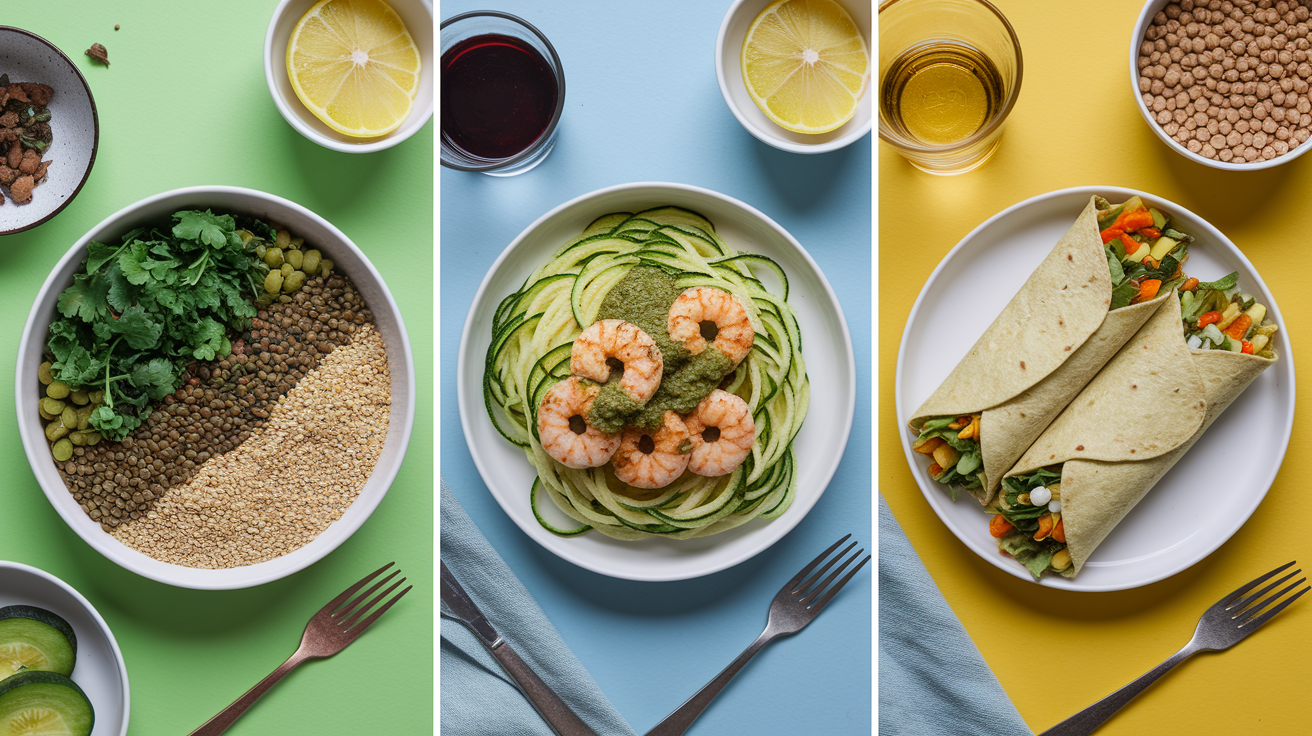
Different eating patterns can all support stable blood sugar if they prioritize protein, fiber, and healthy fats at every meal. Plant-based eaters swap animal proteins for lentils, chickpeas, tofu, tempeh, and hemp seeds, pairing them with plenty of vegetables and small portions of quinoa or sweet potato. The fiber load is often higher on a plant-based plan, which naturally slows digestion and smooths glucose curves. Just watch portion sizes on grains and starchy vegetables. Eating a whole bowl of quinoa because it’s “healthy” will still spike your blood sugar.
Low-carb or keto-adjacent plans drop the cupped-hand carb portion and double down on non-starchy vegetables and fats. Replace sweet potato with cauliflower mash, swap quinoa for cauliflower rice, and add extra olive oil or avocado to keep calories adequate. This approach works well for people who feel best on fewer carbs, but it’s not mandatory for blood sugar control. Many people stabilize perfectly fine with one cupped-hand serving of slow carbs per meal.
For gluten-free eaters, the main swap is bread and pasta. Use almond flour or coconut flour for pancakes, lettuce wraps instead of tortillas, and zucchini noodles or spaghetti squash in place of wheat pasta. Most of the meal templates in this article are naturally gluten-free or require only one substitution. The principles stay the same: half your plate non-starchy vegetables, a palm of protein, a small portion of slow carbs or extra fat, and a thumb of added fat. Structure matters more than the specific foods.
Understanding Glycemic Index and Glycemic Load
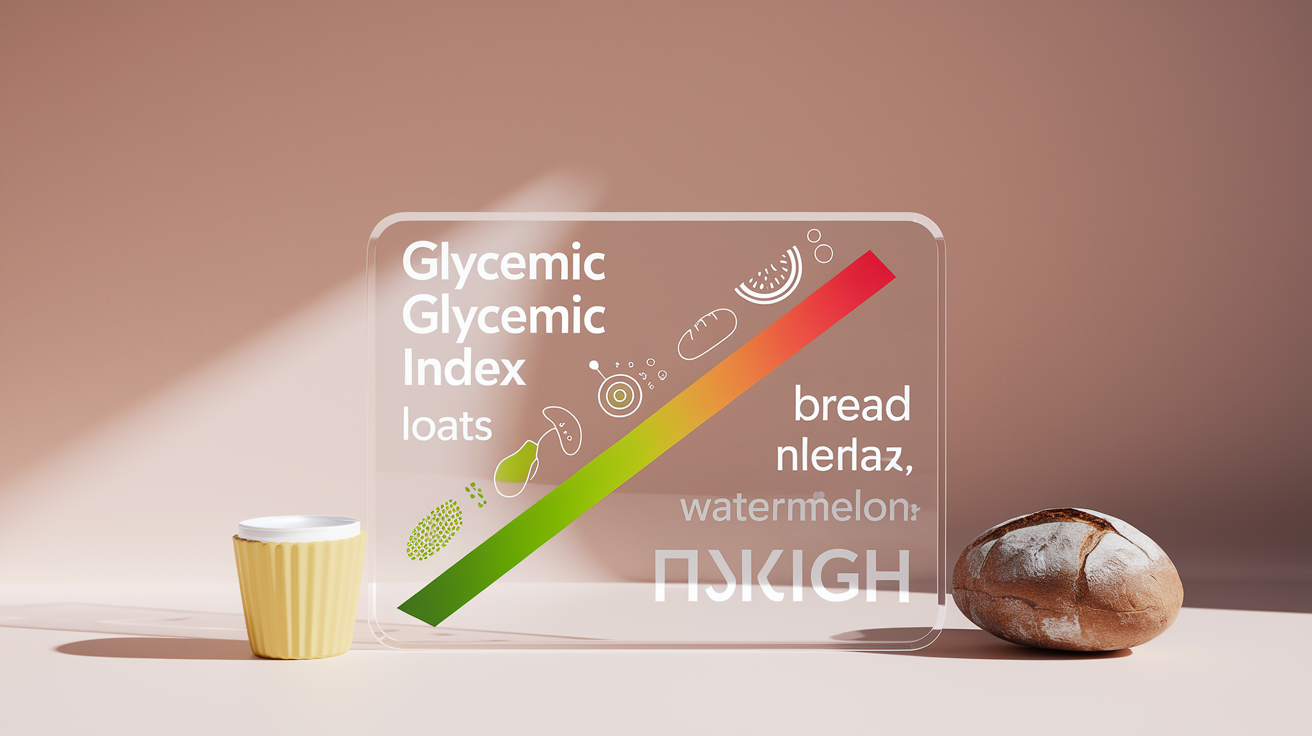
Glycemic index (GI) ranks how quickly a carbohydrate raises blood sugar compared to pure glucose, which scores 100. Foods under 55 are considered low-GI, 56 to 69 are medium, and 70 or higher are high. Steel-cut oats score around 55, while instant oatmeal can hit 79. That difference comes from processing. The more intact the grain, the slower your body breaks it down. Low-GI foods release glucose gradually, which keeps your energy steady and prevents the crash that comes an hour after eating a bagel.
Glycemic load (GL) takes portion size into account. A food can have a high GI but still produce a low GL if you eat a small amount. Watermelon has a GI of 72, but because it’s mostly water, a typical serving has a GL of only 4. That’s why GL is often more useful in real life. You’re not eating 50 grams of pure carbohydrate from watermelon in one sitting. A food with a GL under 10 is considered low, 11 to 19 is medium, and 20 or higher is high.
Choose foods with both a low GI and a low GL when possible, and pair higher-GI foods with protein or fat to blunt the glucose spike. Adding almond butter to an apple lowers the combined glycemic response. Eating chicken and olive oil with your quinoa does the same thing. You don’t need to memorize GI charts. Just follow the plate method and you’ll naturally land on low-glycemic meals.
Visual Meal-Building Examples
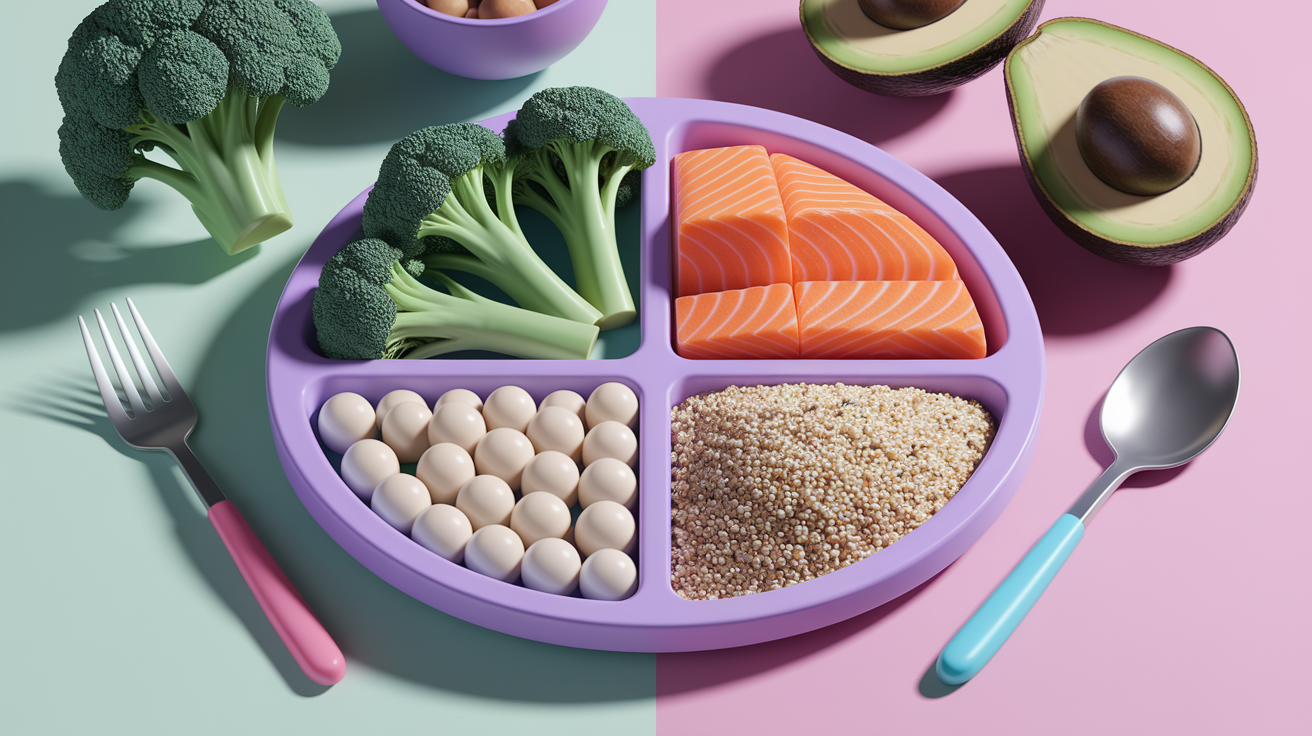
The half-plate-fiber, quarter-protein, quarter-carb method gives you a visual cue you can use in any kitchen, restaurant, or meal-prep container. Non-starchy vegetables take up the most space because they’re low in calories and high in fiber, which means you get volume and satiety without spiking glucose. The protein portion is roughly the size and thickness of your palm. The carb portion is smaller, about the size of your cupped hand or a tennis ball. Healthy fats are added on top as a drizzle, a sprinkle, or a side, about the size of your thumb.
This visual method works for every meal type. Breakfast might look different from dinner, but the proportions stay the same. A veggie-packed omelet counts as your protein and half-plate fiber, a slice of whole-grain toast is your carb, and a few slices of avocado provide your fat. A snack plate shrinks the portions but keeps the same balance: raw vegetables with hummus (fiber and fat), a boiled egg (protein), and a few whole-grain crackers (carb).
| Plate Type | Veg Portion | Protein Portion | Carb Portion | Healthy Fats |
|---|---|---|---|---|
| Breakfast Plate | 1 cup sautéed spinach and tomatoes | 2 scrambled eggs | 1 slice whole-grain toast | 1/4 avocado, sliced |
| Lunch Plate | 2 cups mixed greens and shredded carrots | 4 oz grilled chicken breast | 1/2 cup cooked quinoa | 1 tablespoon olive oil vinaigrette |
| Dinner Plate | 2 cups roasted broccoli and cauliflower | 5 oz baked salmon | 1/2 cup roasted sweet potato | Drizzle of olive oil and sprinkle of sesame seeds |
| Snack Plate | 1 cup raw bell pepper strips and cucumber slices | 1 hard-boiled egg | 5 whole-grain crackers | 2 tablespoons hummus |
Final Words
Start using the tools now: plug the daily meal template into your day, try the weekly rotation, and stock the grocery essentials. The recipes and plate visuals make it easy to build balanced meals that keep you moving.
You’ve got meal swaps for different styles and simple explanations of glycemic concepts so choices actually make sense.
Use the featured meal templates for steady energy and blood sugar as your base plan, tweak it week to week, and enjoy steadier, more workable days ahead.
FAQ
Q: What is a daily meal template for steady energy and balanced blood sugar?
A: A daily meal template for steady energy and balanced blood sugar is a schedule of evenly spaced meals that pair protein with fiber-rich carbs and healthy fats, keeping energy steady and hunger controlled across the day.
Q: How should I time my meals to keep blood sugar stable?
A: Timing meals to keep blood sugar stable means eating every 3–4 hours, prioritizing a protein-plus-fiber combination, and avoiding long gaps; a short walk after meals also helps blunt glucose spikes.
Q: What portion sizes and macronutrient ratios should I use?
A: Portion sizes and macronutrient ratios for steady energy use a visual plate: half non-starchy vegetables, quarter lean protein, quarter slow carbs, plus a thumb of healthy fat—roughly 30% carbs, 30% protein, 40% fat.
Q: What are good snack options for blood sugar control?
A: Snack options for blood sugar control are small pairings of protein with fiber or healthy fat, for example Greek yogurt with berries, apple with nut butter, or hummus with veggie sticks.
Q: How does a weekly meal rotation help blood sugar?
A: A weekly meal rotation helps blood sugar by reducing glycemic variability and decision fatigue; rotating themes keeps variety while sticking to predictable macronutrient patterns that stabilize glucose.
Q: What should be on a blood‑sugar‑friendly grocery list?
A: A blood‑sugar‑friendly grocery list includes beans, lentils, oats, quinoa, sweet potatoes, leafy greens, berries, nuts, seeds, lean poultry or tofu, Greek yogurt, and olive oil to support balanced meals.
Q: How do recipes support stable energy and what are easy examples?
A: Recipes support stable energy by pairing fiber, protein, and healthy fats; easy examples include grain bowls with beans and veggies, vegetable stir‑fries with tofu, egg frittatas, and hearty lentil soups.
Q: How can I adapt the templates for plant‑based, low‑carb, or gluten‑free diets?
A: Adapting templates for plant‑based, low‑carb, or gluten‑free diets means swapping proteins and carbs: use legumes or tofu for plant‑based, extra non‑starch veg for low‑carb, and rice or certified oats for gluten‑free.
Q: What is the glycemic index versus glycemic load and how do I use them?
A: The glycemic index measures how fast a food raises blood sugar, while glycemic load accounts for portion size; choose low‑GI foods and moderate portions to keep glucose and energy steadier.
Q: How can I build meals visually to support steady energy?
A: Building meals visually uses the plate method: half vegetables, quarter protein, quarter slow carbs, plus healthy fats; apply this to breakfasts, lunches, dinners, and adjust portions for activity levels.