


What if the quick fix for a bloated belly is already in your fridge?
Skip the miracle pill idea, real relief usually comes from three simple food moves: hydration, digestive enzymes (proteins that break down food), and probiotics (beneficial live bacteria).
This post shows fast-acting foods that reduce bloating—like cucumber, ginger, papaya, and yogurt—explains why they work, and gives easy swaps and one-day tricks you can use tonight.
By the end you’ll have a short list of practical foods and how to use them for near-immediate relief.
Fast-Acting Anti-Bloating Foods for Immediate Relief
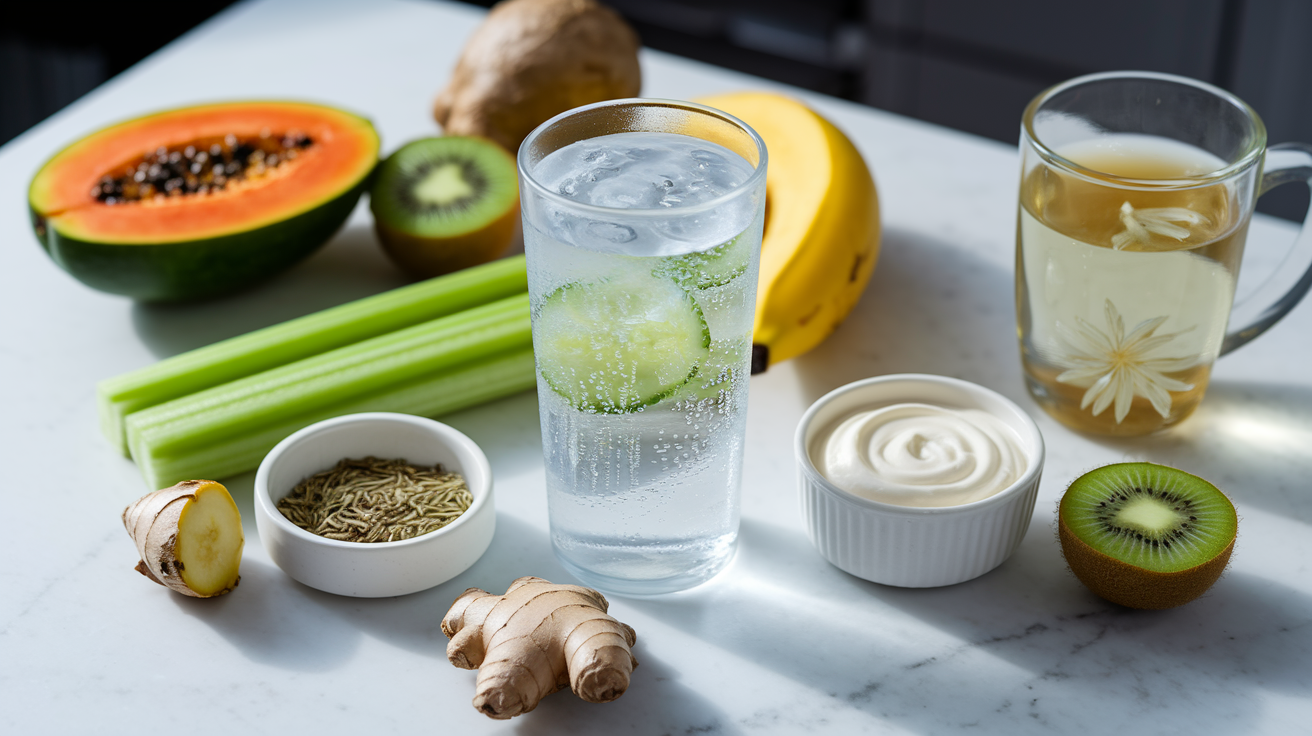
Bloating relief comes down to three things: hydration, digestive enzymes, and probiotics. High-water foods like cucumbers and celery flush out excess sodium and cut fluid retention in a matter of hours. Enzyme-rich fruits (papaya, pineapple, kiwi) break down proteins sitting in your gut and ease gas almost right away. Probiotic yogurt brings in live bacteria that calm inflammation and rebalance your microbiome, sometimes noticeably by the next day.
These foods work through real, measurable pathways. Cucumbers are about 96% water plus quercetin, a compound that decreases swelling. Celery’s roughly 95% water and delivers potassium and soluble fiber to keep things moving. Bananas (especially slightly green ones) offer potassium to offset sodium bloat and resistant starch that feeds good gut bacteria without turning into gas. Ginger has zingibain, an enzyme that relaxes intestinal walls and speeds things along. Fennel seeds contain anethole, fenchone, and estragole, natural antispasmodics that release trapped gas.
Quick-Relief Foods and How They Work:
- Ginger gets things moving with its zingibain enzyme, which relaxes intestines and cuts inflammation. Steep fresh slices as tea.
- Cucumber balances sodium and flushes fluids with ~96% water + quercetin. Add raw to salads.
- Banana eliminates excess sodium with high potassium. Eat slightly green for resistant starch.
- Probiotic yogurt brings live bacteria that reduce inflammation and support your microbiome. Try 1 cup daily.
- Celery packs ~95% water, potassium, soluble fiber. Cook it to soften fibers in soups.
- Chamomile or mint tea calms spasms and aids post-meal digestion. Drink after dinner.
- Papaya breaks down proteins with papain enzyme. Eat ½–1 cup fresh or blended.
- Pineapple reduces protein load and gas with bromelain. Try fresh slices or smoothies.
- Fennel seeds release trapped gas with antispasmodic oils. Brew 1 tsp as tea.
- Kiwi speeds protein digestion with actinidin. Eat 1 kiwi as dessert or snack.
- Lemon water mimics stomach acid to jumpstart digestion. Warm water + ½ lemon in the morning.
The easiest way to use these today: brew ginger or chamomile tea after lunch, toss cucumber slices into your next meal, blend papaya or pineapple into a smoothie, or grab a banana mid-afternoon. Keep fennel seeds around to chew or steep when you feel gassy. Raw, fresh, minimally processed versions keep the enzymes and water content intact.
Probiotic and Fermented Foods That Reduce Bloating Naturally
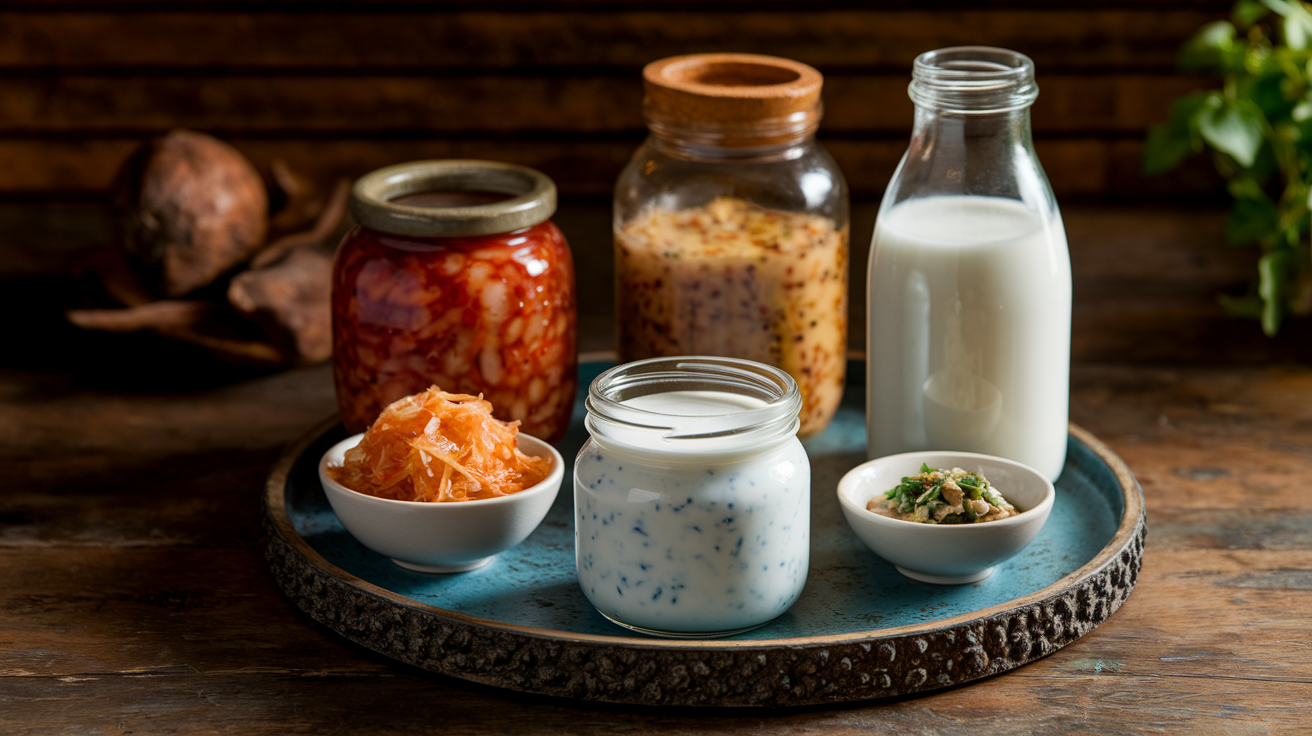
Probiotics are live microorganisms that improve gut motility, crowd out gas-producing bacteria, and reduce low-grade inflammation in your intestinal lining. Fermented foods deliver these strains along with organic acids and short-chain fatty acids produced during fermentation. These compounds support a balanced microbiome and help your gut process food more smoothly. When your bacterial community is diverse and stable, you produce less gas and retain less fluid.
Daily probiotic intake from whole-food sources can ease bloating within a few days as the bacteria colonize and influence digestion. Yogurt, kefir, kimchi, sauerkraut, and miso all introduce different probiotic strains. Fermented dairy alternatives (coconut yogurt, cashew kefir) work for lactose-sensitive people who still want the probiotic benefit without triggering dairy-related gas.
Probiotic Sources
- Yogurt has live cultures that support digestion and reduce swelling. Choose plain, unsweetened varieties.
- Kefir is a fermented milk drink with higher bacterial diversity than yogurt. Easier to digest for some lactose-intolerant folks.
- Kimchi provides Lactobacillus strains and fiber from fermented cabbage. Start with ¼ cup per meal.
- Sauerkraut is fermented cabbage rich in probiotics. Unpasteurized versions retain live cultures.
| Food | Primary Benefit |
|---|---|
| Yogurt | Reduces inflammation, improves microbiome balance |
| Kimchi | Provides diverse probiotic strains, aids motility |
| Kefir | Higher bacterial count, easier lactose digestion |
Start small. ¼ cup of kimchi or sauerkraut, 1 cup of plain yogurt or kefir. Increase gradually. Too much too fast can cause temporary gas as your gut adjusts. Consistent daily intake works better than occasional large portions.
High-Water and Potassium-Rich Foods to Combat Fluid Retention Bloating
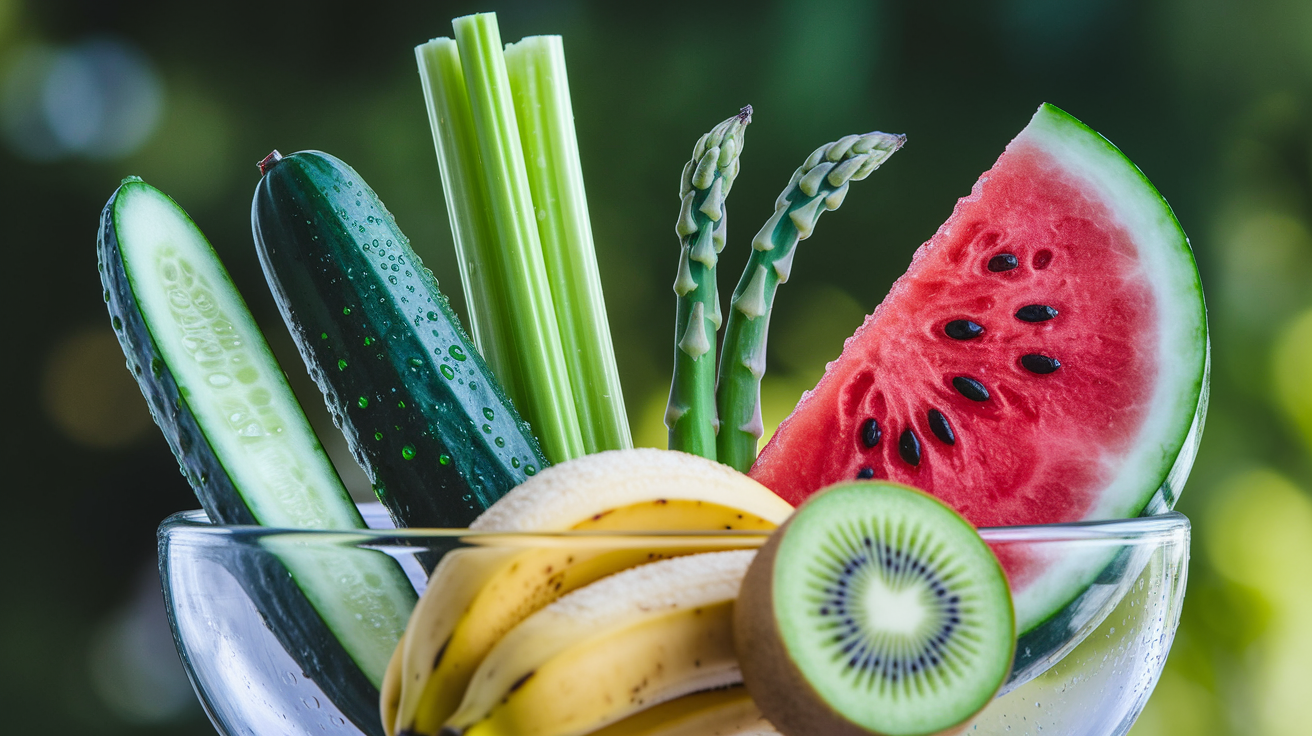
Bloating from fluid retention happens when your body holds excess sodium and water, often after salty meals or during hormonal shifts. Potassium helps your kidneys flush that extra sodium out. High-water foods dilute the sodium in your tissues and increase urine output naturally, reducing the puffiness and pressure in your abdomen.
Cucumbers deliver about 96% water and quercetin, a compound that decreases swelling. Celery’s roughly 95% water and adds potassium plus soluble fiber to keep things moving. Asparagus contains asparagine, an amino acid that acts as a natural diuretic to eliminate excess fluid and salt. Watermelon is about 91% water and packs potassium and electrolytes. Bananas and kiwi are both potassium-dense, helping rebalance sodium and prevent water-retention bloat after a high-salt day.
Hydrating, Potassium-Rich Foods:
- Cucumber: 96% water, balances sodium, reduces fluid retention
- Celery: 95% water, potassium, natural diuretic effect
- Watermelon: 91% water, potassium, electrolyte support
- Asparagus: asparagine promotes fluid elimination
- Banana: high potassium, resistant starch when slightly green
| Food | Water Content % |
|---|---|
| Cucumber | ~96% |
| Celery | ~95% |
| Watermelon | ~91% |
Best pairing strategy: eat a potassium-rich food (half an avocado, a banana, or a cup of cantaloupe) within a few hours of a salty meal. Add cucumber or celery slices to your plate to boost hydration at the same time. This combination helps your body restore fluid balance faster and reduces that tight, swollen feeling by evening.
Enzyme-Rich Foods That Improve Digestion and Reduce Gas
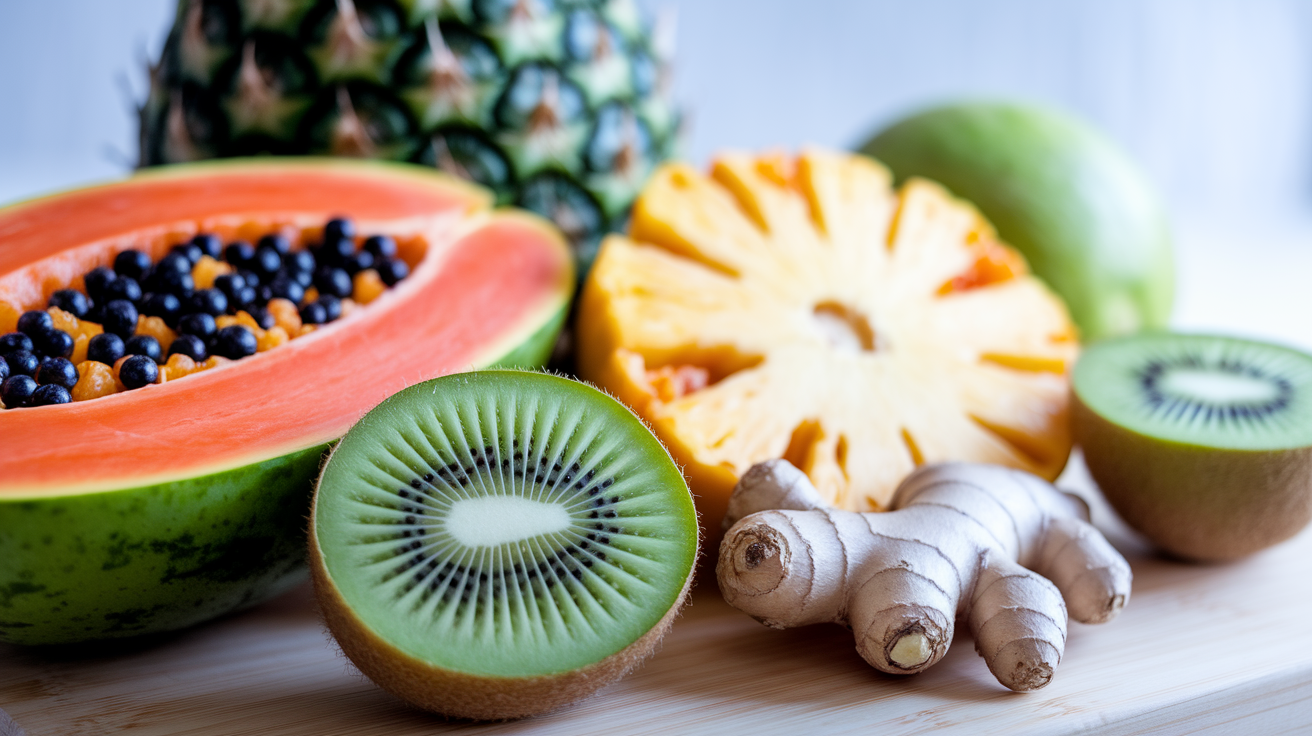
Digestive enzymes are proteins that break down food molecules (especially proteins and complex carbs) so your gut absorbs nutrients efficiently and produces less fermentation gas. When food sits partially digested, gut bacteria ferment it, creating gas and bloating. Enzyme-rich foods speed up that breakdown.
Papaya
Papaya contains papain, an enzyme that cleaves protein chains into smaller peptides and amino acids. Eating half to one cup of fresh, ripe papaya can reduce gas and ease constipation within hours. Avoid papaya if you have active gastrointestinal issues, as the enzyme can irritate inflamed tissue. Try fresh papaya slices or blend into a simple smoothie.
Pineapple
Pineapple delivers bromelain, another protein-digesting enzyme concentrated in the fruit’s core and flesh. Bromelain reduces bloating by breaking down heavy protein meals. Think post-steak or post-dairy. One cup of fresh pineapple or a smoothie works well as a dessert or mid-afternoon snack.
Kiwi
Kiwi fruit contains actinidin, an enzyme that accelerates protein digestion, particularly helpful after dairy-heavy or meat-rich meals. One kiwi provides fiber, potassium, and the enzyme punch. Eat it fresh with yogurt, toss into smoothies, or have it as a simple dessert.
Ginger
Ginger contains zingibain, which aids protein breakdown, but its main effect comes from stimulating peristalsis (the wave-like muscle contractions that move food through your intestines). Fresh ginger also reduces inflammation in the gut lining. Steep 1–2 grams of sliced fresh ginger in hot water for tea, or grate it into meals.
Combining these enzyme fruits in a smoothie (pineapple, kiwi, a small piece of ginger) creates a digestion-boosting snack that’s practical and fast. Drink it after a heavy meal or mid-afternoon when you feel sluggish and gassy.
Low-FODMAP and Gentle-Digestion Foods to Reduce Bloating

FODMAPs are fermentable carbohydrates (specific sugars and fibers) that certain gut bacteria ferment rapidly, producing gas. For people with sensitive digestion or IBS, high-FODMAP foods like dried fruits, broccoli, kale, onions, garlic, and regular dairy can trigger bloating even in small amounts. Low-FODMAP foods produce less fermentation and less gas.
Choosing gentle-digestion options doesn’t mean cutting out all fiber or nutrition. It means selecting foods your gut can process smoothly. Quinoa is a gluten-free, fiber-rich grain that’s well tolerated. White rice and plain oats (in moderate portions) provide energy without excessive fermentation. Cooked celery and other softened vegetables are easier to digest than raw cruciferous greens. Lactose-free yogurt delivers probiotics without the lactose that causes gas for intolerant individuals. Lean proteins like eggs, chicken, or fish produce minimal gas compared to beans or lentils.
Gentle-Digestion, Low-Bloat Foods:
- Oats contain beta-glucan fiber that reduces inflammation without heavy fermentation
- Quinoa is gluten-free, fiber-rich, gentle on sensitive guts
- White or brown rice is a low-FODMAP carb that digests smoothly
- Cooked greens (spinach, zucchini) have softer fibers, less gas than raw
- Eggs or lean protein have minimal fermentation, easy to digest
- Lactose-free yogurt gives probiotics without lactose-triggered gas
| Food | Reason It Reduces Bloating |
|---|---|
| Quinoa | Gluten-free, gentle fiber, low fermentation |
| Cooked celery | Softened fibers easier to digest than raw |
| Lactose-free yogurt | Probiotics without lactose gas trigger |
Healthy Fats, Fiber, and Gut-Friendly Carbs for Smoother Digestion
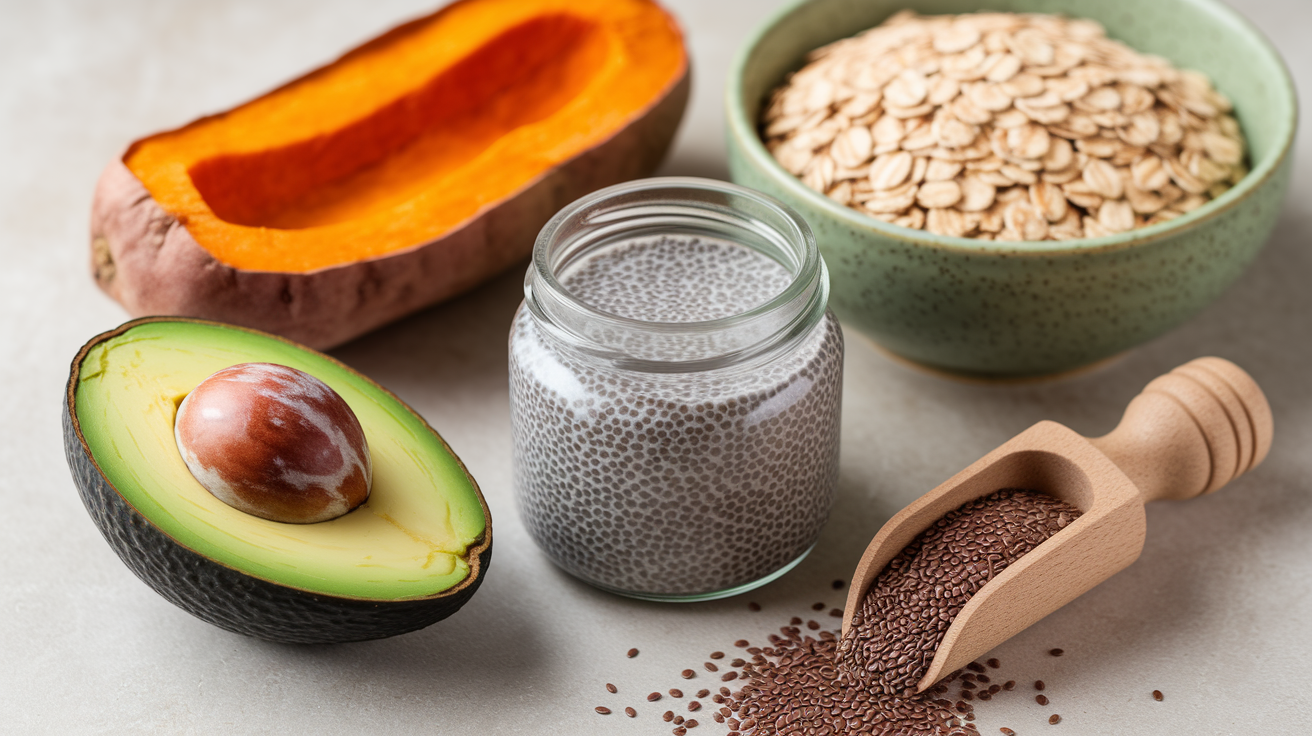
Certain fats and fibers promote steady motility. Food moves through your system at a healthy pace, reducing both constipation and gas buildup. Avocado combines healthy monounsaturated fats with about 9 grams of fiber per medium fruit (roughly 35% of a typical daily fiber target), plus potassium to balance fluids. Chia seeds and flaxseeds are fiber-dense, but they need to be soaked or ground to avoid trapping gas. When prepared correctly, they absorb water and create a gel that softens stool and reduces bloating. Sweet potatoes offer fiber and about 538 mg of potassium per medium potato, helping flush sodium and support regularity. Oats contain beta-glucan, a soluble fiber that fights inflammation in the digestive tract and feeds beneficial bacteria without causing excessive gas.
Healthy fats slow gastric emptying just enough to prevent spikes and crashes, while soluble fiber feeds your microbiome gently. Together, they create smoother, more predictable digestion.
Bloat-Friendly Fiber and Fat Sources:
- Avocado has 9 g fiber + potassium. Eat half to one with meals to offset salt and support motility.
- Chia seeds should be soaked in water or milk for 10 minutes to form a gel. Reduces gas and adds soluble fiber.
- Flaxseed needs to be ground fresh to release fiber and omega-3s. Mix into oats or smoothies.
- Sweet potato works baked or mashed. Fiber + potassium help regular bowel movements.
Timing matters with fiber: spread it across meals instead of loading one sitting. Soak chia and flax seeds at least 10 minutes before eating to prevent bloating from dry, expanding seeds in your gut. If you’re increasing fiber, add one new food at a time and drink plenty of water to help it move through.
Herbal Teas and Anti-Inflammatory Drinks for Bloating Relief

Certain teas and drinks reduce bloating by calming intestinal spasms, stimulating motility, or decreasing inflammation in the gut lining. Chamomile tea contains compounds that relax smooth muscle in the digestive tract, easing cramping and promoting steady movement. Peppermint tea has menthol, which acts as a natural antispasmodic and can release trapped gas quickly. Lemon water (especially warm) mimics the acidity of stomach acid, jumpstarting digestion when you drink it first thing in the morning. Ginger tea speeds up gastric emptying and reduces nausea and bloating. Green tea delivers antioxidants that fight low-grade inflammation throughout the digestive tract.
Avoid carbonated drinks entirely if bloating’s an issue. The dissolved gas in soda and sparkling water introduces extra air into your stomach, increasing pressure and discomfort.
Anti-Bloating Teas and Drinks:
- Chamomile tea calms spasms, promotes relaxation, supports evening digestion
- Peppermint tea releases gas with menthol, eases cramping
- Ginger tea speeds motility, reduces inflammation, settles nausea
- Warm lemon water mimics stomach acid, stimulates digestion when taken on waking
Timing makes these drinks more effective: warm lemon water in the morning to kickstart digestion, ginger or peppermint tea mid-afternoon if you feel gassy, chamomile in the evening to relax your gut before bed. Keep it simple. Hot water, fresh ingredients, no added sugar or artificial sweeteners that can trigger more bloating.
Cooking Methods, Preparation Tips, and Eating Behaviors That Reduce Bloating
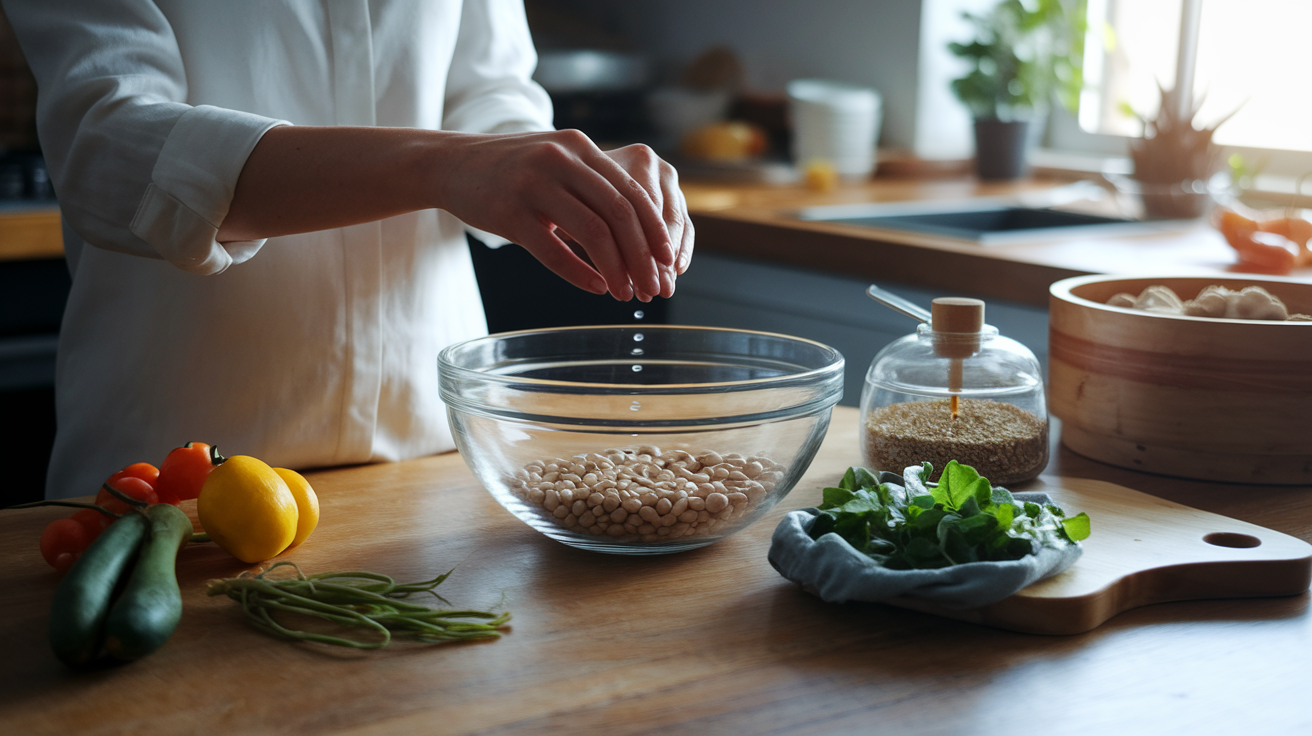
How you prepare and eat food affects bloating as much as which foods you choose. Cooking certain vegetables (like celery, broccoli, or cabbage) softens tough fibers and breaks down some of the complex carbohydrates that cause gas when raw. Soaking beans and lentils overnight, then rinsing and cooking them thoroughly, reduces oligosaccharides (the sugars that ferment heavily in your gut). Sprouting legumes and grains for 12–24 hours before cooking further lowers FODMAP content and increases digestibility.
Eating behaviors matter too. Eating slowly reduces the amount of air you swallow with each bite. Rushed meals introduce gas directly into your stomach. Chewing thoroughly breaks food into smaller pieces, giving digestive enzymes a head start and reducing fermentation later. Smaller, more frequent meals prevent overloading your digestive system at once, which can slow motility and increase bloating.
Cooking Tips
Cook celery, kale, and cruciferous vegetables to soften fibers and reduce gas. Soak beans and lentils overnight, rinse well, and cook until very soft. Sprout grains and legumes for 12–24 hours in a damp cloth or sprouting jar to lower FODMAP content. Steam or roast vegetables instead of eating them raw if you’re prone to bloating.
Eating Behavior Tips
Eat slowly. Aim for 15–20 minutes per meal. Chew each bite thoroughly before swallowing. Put your fork down between bites to slow your pace. Avoid chewing gum, which introduces swallowed air and can trigger gas. Limit portion sizes to what fits comfortably on one plate. Overeating stretches your stomach and slows digestion. Don’t drink through straws, which pull extra air into your digestive tract.
Combining these habits with the foods above creates a complete approach: prepare foods to reduce gas potential, eat mindfully to limit swallowed air, and choose ingredients that hydrate, provide enzymes, and support a balanced microbiome. That’s how you reduce bloating consistently, not just on good days.
Final Words
Reach for ginger tea, cucumber slices, probiotic yogurt, or a banana when bloating hits — these fast hitters work via hydration, enzymes, and live cultures.
We also covered high-water and potassium foods, enzyme-rich fruits, probiotic and fermented options, low-FODMAP choices, gentle fats and fiber, soothing teas, plus cooking and eating tweaks to reduce gas and fluid retention.
Start with one small swap today: sip chamomile after dinner, add kiwi to a smoothie, or have a palm of avocado. Small consistent moves using foods that reduce bloating add up, and you’ll feel better soon.
FAQ
Q: What reduces bloating fast? What foods immediately help with bloating? How do I quickly debloat my belly?
A: Fast bloating relief comes from high-water foods (cucumber, celery), enzyme-rich fruits (pineapple, papaya), probiotic yogurt, sipping ginger or peppermint tea, a 10-minute walk, and skipping carbonated drinks.
Q: What foods make your lower belly bloat?
A: Foods that commonly bloat the lower belly include high-FODMAP items like beans, lentils, onions, garlic, cruciferous veggies (broccoli, cauliflower), apples, pears, and sugar alcohols in some processed foods.