


Eating fiber before a race can slow you down—literally.
Low-residue pre-workout meals for runners cut fiber, keep fat low, and help your stomach empty fast so you don’t get gas, cramping, or that urgent dash to a porta-potty mid-pace.
Think of it like unloading heavy luggage before a sprint: less in the gut means more blood to your legs and steadier energy.
This post gives practical meals, timing tips, and easy swaps you can use 60–120 minutes before runs to fuel performance without gut drama.
Key Low-Residue Pre-Workout Meals for Runners (Direct Solutions for GI‑Friendly Fueling)

Low residue pre workout meals for runners are built around carbs that skip the fiber, keep fat low, and won’t turn your gut into a fermentation tank mid-stride. You’re eating to empty your stomach fast and keep your colon quiet when you’re three miles into a tempo run and blood’s rushing to your legs instead of your digestive tract. The goal isn’t complicated: get fuel in without creating a disaster.
Food doesn’t just vanish after you swallow it. Takes 24 to 72 hours to work through your system completely. So when you go low-residue, you’re reducing what’s sitting in your colon on race day, cutting down on the bacterial party that produces gas and bloating. Less material means less chance of cramping, reflux, or that sudden bathroom urgency that ruins workouts.
Runners pick simple carbs before hard efforts because exercise pulls blood away from digestion. Your gut gets more sensitive when you’re running. High-fiber foods that might sit fine on a rest day become a problem when you’re pushing pace. Simple carbs give you glycogen without the volume or fermentation baggage.
Here’s what that looks like in actual meals:
- 1.5 cups cooked basmati rice: 480 calories, 108 g carbs, 3 g fiber
- 2 unfrosted Pop-Tarts: 420 calories, 74 g carbs, 1 g fiber
- 1 package organic ramen noodles (ditch the seasoning): 200 calories, 40 g carbs, 1 g fiber
- 2 Belgian waffles: 320 calories, 46 g carbs, 1 g fiber
- 9 tablespoons cream of wheat: 360 calories, 75 g carbs, 3 g fiber
- 30 saltine crackers: 210 calories, 60 g carbs, 1 g fiber
- Bagel with jam: 45 to 60 g carbs, under 2 g fiber
- 2 slices white toast with honey: 30 to 40 g carbs, minimal fiber
Eat these 60 to 120 minutes before you run. Easy days, you can get away with 60 minutes. Tempo runs, intervals, races? Give yourself the full 90 to 120. Start at 90 and tweak by 15-minute chunks based on how your stomach handles the first mile.
Understanding Low‑Residue Foods for Pre‑Run Digestion

Low-residue eating cuts out the stuff that makes it to your colon intact. Fiber and undigested carbs get fermented by gut bacteria, which creates gas and pulls water into your stool. More volume, more signals to your gut that it’s time to move things along. Not what you want when you’re trying to hold pace.
Running shifts blood away from your digestive system to your muscles. That slows down how fast your stomach empties and messes with gut motility. When there’s residue sitting in your colon during that shift, you’re way more likely to feel cramping, bloating, or the kind of urgency that sends you looking for a porta-potty.
Carbs that don’t leave residue let your stomach clear faster and give your colon less to hold. You end up with a quieter gut when blood flow changes during hard running.
Knowing which carbs create residue and which don’t matters more than memorizing a long list of rules. Here’s the comparison:
| High-Residue Carb Source | Fiber per Serving | Low-Residue Alternative | Fiber per Serving |
|---|---|---|---|
| 1 cup cooked brown rice | 3.5 g | 1 cup cooked white rice | 0.6 g |
| 2 slices whole-wheat bread | 4–6 g | 2 slices white bread | 1–2 g |
| 1 cup cooked oatmeal | 4 g | 9 tablespoons cream of wheat | 3 g |
Stick to the right side before runs. Your gut gets less to process, fermentation drops, and you feel lighter when it counts.
Timing Low‑Residue Pre‑Workout Meals for Runners
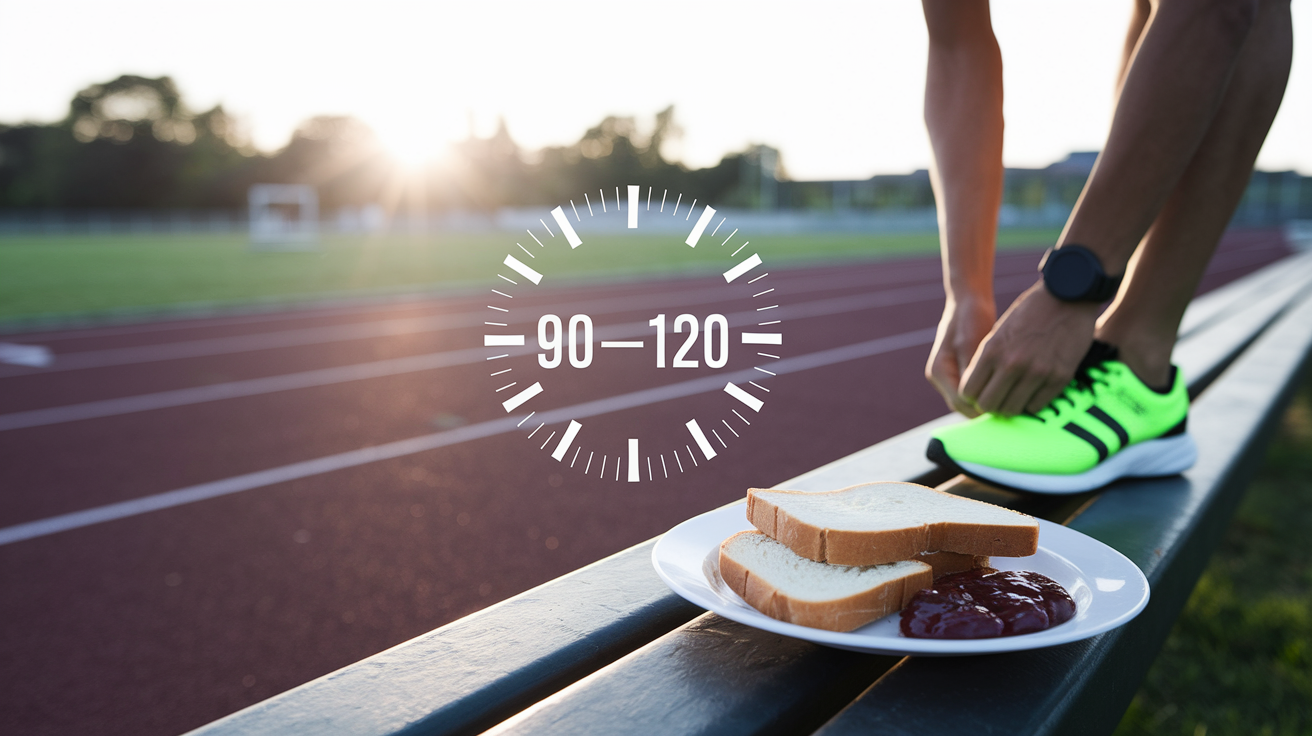
Research backs eating 1 to 4 grams of carbs per kilogram of body weight somewhere between 1 and 4 hours before you run. But that’s a big window. Where you land depends on how hard you’re going and how your stomach behaves.
Harder runs need more digestion time. High-intensity effort diverts more blood from your stomach, so gastric emptying slows down. Tempo run or race? You want 90 to 120 minutes. Easy recovery jog? Maybe 60 minutes does it.
Start at 90 minutes and adjust by 15-minute increments. Stomach sloshing or reflux in the first few miles? Push your meal back. Feeling empty or dragging early? Move it closer. Gastric emptying varies a lot between runners, so you’re looking for your number, not someone else’s.
Early-morning sessions create a timing problem. You wake up 30 to 60 minutes before you’re out the door. Liquids and very simple solids are your best bet because they clear the stomach faster. At 30 minutes out, try a single slice of toast with jam or a small sports drink. At 15 minutes, go liquid only, maybe a few ounces of orange juice.
Five timing scenarios:
- Easy runs under 60 minutes: 15 to 30 g carbs, 30 to 60 minutes before
- Tempo runs and hard workouts: 30 to 60 g carbs, 90 to 120 minutes before
- Long runs over 90 minutes: 60 to 90 g carbs, 2 to 3 hours before, plus 60 g carbs per hour during
- 5K to 10K races: substantial meal 2 to 3 hours out, light snack in final 30 minutes if needed
- Marathon and half-marathon races: 60 to 90 g carbs, 2.5 to 3 hours before start
Don’t go over 60 grams of carbs per hour during races. More than that just increases GI distress without getting you more fuel.
Categories of Low‑Residue Carbohydrates for Runners
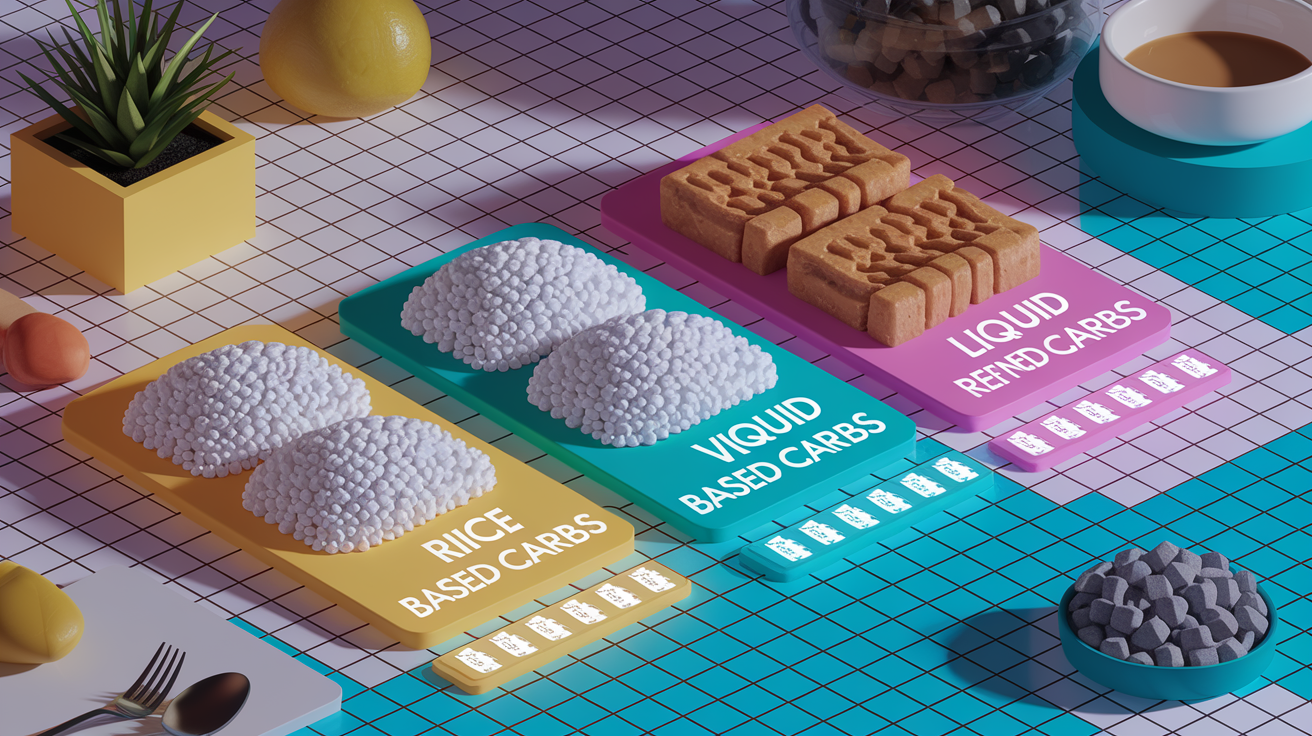
Grouping low-residue carbs into categories makes decision-making faster. Each category does the same thing: delivers quick carbs with minimal fiber, cuts down on residue and fermentation. Once you know the groups, you can swap foods inside them based on what’s in your pantry or what sounds edible at 5 a.m.
Different categories fit different timing windows. Rice-based and wheat-based options work well 90 to 120 minutes out. Liquid carbs and processed refined carbs handle shorter windows better, especially when your stomach’s touchy.
Four main categories:
- Rice-based carbs: white rice, rice cakes, rice noodles, rice cereal
- Wheat-based carbs: white bread, bagels, plain pasta, saltines, pretzels
- Liquid carbs: sports drinks, white grape juice, carb gels, maple water
- Processed refined carbs: waffles, pancakes, cream of wheat, Pop-Tarts, ramen noodles
Each group gives you options that digest similarly. Rotate inside a category without messing up your gut routine.
Low‑Residue Protein Options to Add Without Slowing Digestion
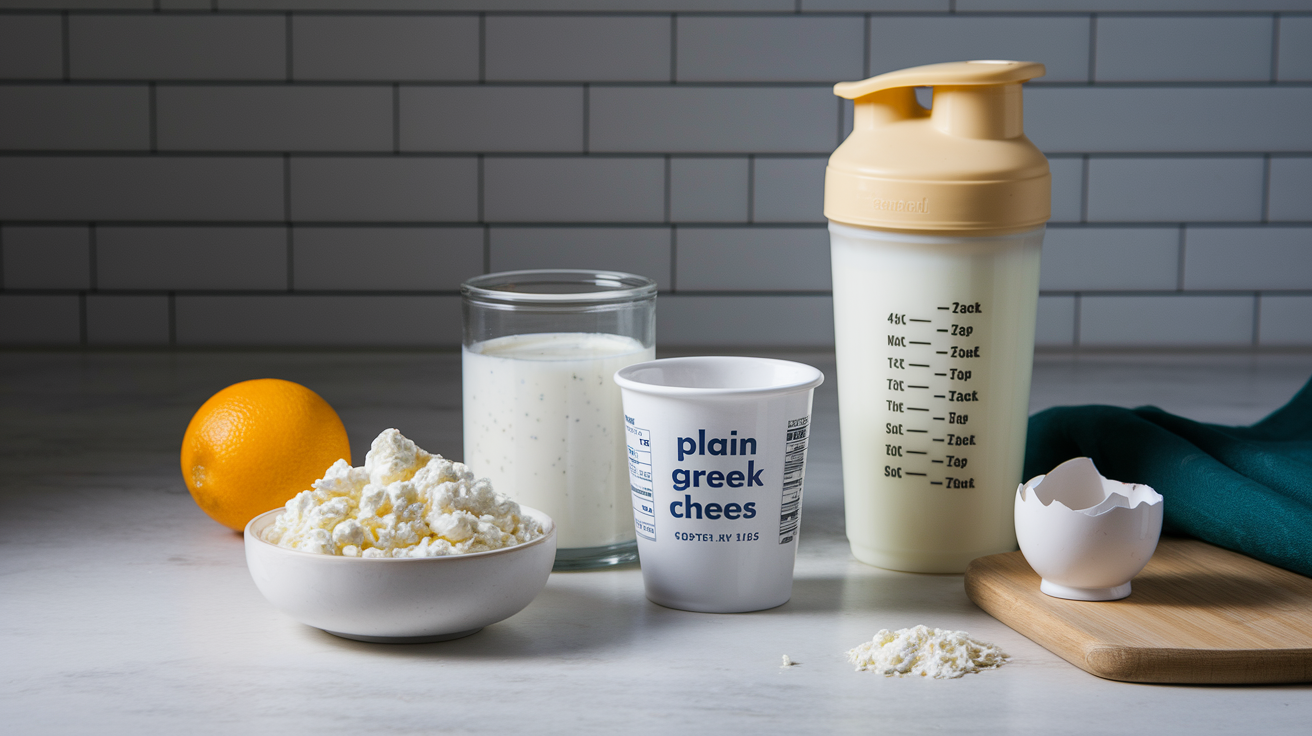
Keep protein around 5 to 10 grams before runs. More than that risks nausea, cramping, and delayed stomach emptying. When you’re picking protein, go for easy-to-digest sources with minimal fat and no tough connective tissue. Protein paired with carbs triggers more GI distress than carbs alone, so portion control matters way more than variety.
Low fat dairy works for a lot of runners. Plain Greek yogurt, cottage cheese, or skim milk blended into a smoothie. If you’re lactose intolerant, skip it or use lactose-free versions. Egg whites give you pure protein without the fat in yolks, making them one of the fastest animal proteins to digest. Soft-scramble them or make a simple omelet with white rice for a balanced meal.
Skip red meat, fatty poultry, and anything that takes more than two hours to leave your stomach. Research shows 32% of runners avoid meat before training because of GI issues. Makes sense. Animal protein with fat or connective tissue slows digestion and ups your chances of reflux, bloating, cramping during hard efforts. Stick with simple, lean, low-fat choices. Save bigger protein meals for after your run when digestion speed doesn’t matter.
Foods to Avoid Before Running to Prevent GI Distress

High-fiber foods, fatty proteins, and whole grains with more than 4 grams of fiber per serving slow your stomach down and jack up your risk of cramping, gas, and urgent bathroom stops. Whole grains like brown rice, quinoa, whole-wheat bread, bran cereals? They hit your large intestine mostly intact. Bacteria ferment them into gas and pull water into your stool. That fermentation keeps going during exercise, creating the bloating and urgency that cut workouts short or send you hunting for a restroom mid-race.
Most fruits and vegetables bring fiber and residue you don’t want in the final 24 to 72 hours before hard efforts. Skip apples, pears, berries, broccoli, cauliflower, leafy greens, beans, lentils, and raw vegetables. These foods are great for overall gut health and long-term performance, but they work against you when consumed too close to a run. Research shows 23% of runners specifically avoid high-fiber foods before training to cut down on GI distress.
Eliminate these from pre-run meals:
- Whole-grain breads, cereals, pasta with more than 4 g fiber per serving
- Nuts, seeds, nut butters (high fiber and fat)
- Red meat and fatty poultry cuts
- High-fat dairy like whole milk, cheese, ice cream
- Raw fruits and vegetables, especially with skins and seeds
- Legumes, beans, lentils
Dairy’s tricky because 31% of runners avoid it pre-run due to lactose intolerance or sensitivity. If dairy causes bloating, cramping, or diarrhea for you, go lactose-free or skip it entirely before training. Don’t experiment with foods that commonly cause you GI problems on race morning, even if they fit the low-residue profile for other runners.
Low‑Residue Pre‑Run Hydration and Electrolyte Strategy

Don’t make big fluid changes or suddenly start chugging fiber-rich drinks 24 to 72 hours before long runs and races. Exercise-induced blood flow shifts make your gut more sensitive to both volume and residue. Your hydration should focus on replacing water and key electrolytes (sodium, potassium, magnesium, calcium) without adding fiber, sugar alcohols, or carbonation that bloats you.
Plain water doesn’t replace electrolytes lost through sweat. Pair fluid intake with a sports drink or electrolyte supplement that gives you at least 300 to 500 mg of sodium per serving.
For events longer than 90 minutes, sync your pre-run electrolyte intake with your during-run fueling to hit about 60 grams of carbs per hour. Sports drink timing should line up with your low-residue meal schedule: drink 8 to 12 ounces of a carb-electrolyte beverage 60 to 90 minutes before the run, then keep sipping every 15 to 20 minutes during the effort. Liquid carbs empty from your stomach faster than solids, making them perfect for topping off fuel stores in the final 30 minutes before a race when solid food would feel heavy.
Four electrolyte considerations:
- Sodium: 300 to 700 mg per 16 oz of fluid to support fluid retention and delay cramping
- Potassium: 100 to 200 mg per serving to maintain muscle function
- Magnesium: 20 to 50 mg per serving to reduce cramping risk
- Calcium: 50 to 100 mg per serving for muscle contraction support
Skip drinks with high fiber content, sugar alcohols (sorbitol, xylitol), or excessive carbonation in the hours before running. All three increase gas production and bloating.
Low‑Residue Pre‑Run Snacks for 30–60 Minutes Before Running

Pre-run low residue snacks for the 30 to 60 minute window should be small, carb-focused, and either liquid or very soft to clear your stomach fast. Solids need more digestion time, so early-morning runners with only 15 to 30 minutes between waking and running should go liquid. Small serving of sports drink, white grape juice, or a few ounces of carb gel diluted in water. These give you 15 to 30 grams of carbs without taking up stomach space or creating residue.
When you’ve got a full 30 to 60 minutes, simple solids like toast with jam, a handful of dates, or applesauce provide slightly more sustained energy while still emptying faster than mixed meals. Single slice of white bread with a thin layer of jam delivers roughly 20 to 25 grams of carbs with under 1 gram of fiber. Works well for easy runs and recovery sessions. Low-residue fruit choices include peeled bananas (though some runners find them heavy), canned peaches in light syrup, or fruit pouches designed for toddlers that have pureed fruit without skins or seeds.
Six fast-acting pre-run snacks for 30 to 60 minutes out:
- 1 slice white toast with 1 tablespoon jam
- 3 to 4 Medjool dates
- 4 oz unsweetened applesauce
- 8 oz sports drink
- 1 rice cake with honey
- Half a peeled banana (or swap for canned pears, white grape juice, or rice cereal with skim milk if bananas sit heavy)
Liquid carbs beat solids in the shortest timing windows every time. Keep shelf-stable sports drinks or carb gels in your training bag for mornings when meal prep time disappears.
Simple Low‑Residue Recipes for Runners

Simple pre-run recipes built around low-residue smoothie recipes, rice bowls, and waffle plates give you repeatable meal templates that deliver 40 to 80 grams of carbs with under 3 grams of fiber per serving. These use familiar ingredients, don’t require cooking skills, and can be prepped in bulk on weekends to save time during busy training weeks. Blender pre-run smoothies work especially well for early mornings when appetite is low or when you’d rather drink fuel than eat it.
Recipe guidelines emphasize high-carb bases, low fiber, low fat to speed gastric emptying. Use lactose-free milk or plain low-fat yogurt if dairy’s tolerated. Choose peeled fruit over whole fruit to cut fiber. White rice syrup, honey, maple syrup, and jam add quick carbs without fiber, making them perfect for boosting carb totals when a recipe falls short of your target.
Smooth Low‑Residue Pre‑Run Smoothie
Blend 1 cup lactose-free milk (or almond milk), half a peeled banana, 2 tablespoons white rice syrup, and 3 to 4 ice cubes until smooth. Gives you approximately 45 grams of carbs and under 2 grams of fiber in a drinkable format that empties quickly. Add 1 scoop of plain whey protein isolate if you want 5 to 10 grams of protein without slowing digestion. Drink 60 to 90 minutes before easy or moderate runs.
Quick White Rice Energy Bowl
Cook 1.5 cups of white basmati rice and top with 1 tablespoon of honey and a pinch of salt. This bowl provides 108 grams of carbs and 3 grams of fiber, making it suitable for long runs or race-morning fueling when eaten 2 to 3 hours before start time. Honey adds 17 grams of fast-digesting carbs and improves palatability without introducing fiber or fat. Prep rice in bulk and reheat single servings in the microwave for 90 seconds.
Low‑Residue Waffle Plate
Toast 2 frozen Belgian waffles and spread with 2 tablespoons of jam. Delivers 60 to 70 grams of carbs with only 1 to 2 grams of fiber, hitting the target range for tempo runs and interval sessions. Waffles feel more substantial than liquid carbs but still empty faster than whole-grain pancakes or oatmeal. Eat 90 to 120 minutes before hard workouts.
Race‑Day Low‑Residue Breakfast Examples for Runners

Race morning low residue meal planning works best when you start 24 to 72 hours before the event. You’re reducing colonic residue and creating a lighter, more predictable gut feel on start day. This temporary low-fiber window decreases stool volume, cuts bacterial fermentation, and leads to slightly lower body mass because there’s less waste sitting in your digestive tract. Pre-race breakfast examples should use only familiar foods you’ve tested multiple times during training. Race-day stress already challenges your gut without adding new meals into the mix.
What you can expect from a 24 to 72 hour low-residue approach: more predictable morning bowel movements, reduced bloating, a lighter physical sensation during the race. Day-before dinners might include white pasta with marinara sauce, plain white rice with grilled chicken breast, or baked white potato with a small amount of butter and salt. Keep fat low even in the final dinner to make sure your stomach empties completely overnight.
Eat race-morning breakfast 2.5 to 3 hours before the start for marathons and half-marathons, or 2 hours before for 5K and 10K races. Use portion examples from your training to build breakfast combinations that deliver 60 to 90 grams of carbs with minimal fiber and fat.
| Race-Morning Breakfast | Carbohydrate | Fiber | Timing Before Start |
|---|---|---|---|
| 2 Belgian waffles + 2 tbsp jam + 8 oz sports drink | 80 g | 1–2 g | 2.5–3 hours |
| 1 white bagel + 1 tbsp honey + 1 peeled banana | 75 g | 2 g | 2.5–3 hours |
| 1.5 cups white rice + 1 tbsp maple syrup + pinch salt | 108 g | 3 g | 3 hours |
| 2 unfrosted Pop-Tarts + 8 oz white grape juice | 90 g | 1 g | 2–2.5 hours |
Never try new foods on race morning, even if they fit the low-residue profile. Stomach sensitivity increases under race-day stress, and unfamiliar foods raise the risk of nausea, cramping, or urgent bathroom needs during the event.
Special Considerations: Sensitive Stomachs, IBS, Lactose Intolerance, and Pregnancy
IBS-friendly pre-run meals should follow low-residue principles while also cutting out personal trigger foods you’ve identified through elimination testing or medical guidance. Runners with irritable bowel syndrome often have heightened gut sensitivity to fermentable carbs (FODMAPs), making low-residue eating an especially useful tool for managing symptoms during training. Reduce stool volume and water retention by temporarily minimizing fiber. Avoid high-lactose dairy, high-fructose fruits, and sugar alcohols that trigger IBS flares.
Lactose-free pre-run options include lactose-free milk, hard cheeses (which contain minimal lactose), and plant-based milk alternatives like almond or oat milk. Lactose-intolerant runners should avoid yogurt, soft cheeses, ice cream, and whole milk in the 24 to 72 hours before races. Undigested lactose draws water into the colon and increases diarrhea risk. Greek yogurt contains less lactose than regular yogurt because of the straining process, making it a middle-ground option for runners with mild lactose sensitivity who can tolerate small amounts.
Crohn’s-friendly running nutrition and low-residue eating overlap significantly. Both aim to reduce colonic residue and limit fermentation. Runners managing Crohn’s disease or ulcerative colitis should work with a gastroenterologist to determine safe pre-run foods. Individual tolerance varies widely based on disease activity and medication. Low-residue is a temporary strategy and shouldn’t exceed a few days, as prolonged fiber restriction can worsen constipation and reduce beneficial gut bacteria diversity.
Five adjustments for special populations:
- IBS runners: eliminate FODMAPs (onions, garlic, high-fructose fruits, sugar alcohols) in addition to fiber
- Lactose intolerance: use lactose-free dairy or plant milk, avoid soft cheeses and yogurt
- Crohn’s and IBD: work with a GI specialist, avoid raw vegetables, skins, seeds, and nuts
- Pregnancy: maintain adequate hydration and nutrient intake, avoid prolonged low-fiber eating
- Sensitive stomachs: start low-residue window at 48 hours before races instead of 24 hours to reduce fermentation further
Low-residue eating temporarily reduces stool volume and digestive load, but it doesn’t provide the fiber, polyphenols, and micronutrients needed for long-term gut health. Return to a varied, fiber-rich diet within 48 hours after your race to support recovery and maintain a healthy microbiome.
Final Words
In the action: you’ve got specific low‑residue meals, timing rules, quick snacks, simple recipes, hydration tips, and a clear list of foods to avoid.
These choices cut stool volume and fermentation, so you’re less likely to hit gas, bloating, reflux, or urgent bathroom stops mid-run.
Start by testing one meal 60–120 minutes before a run and tweak timing in 15‑minute steps. Using low residue pre workout meals for runners can make training and race mornings steadier and more comfortable—small changes, big wins.
FAQ
Q: What is a good pre-workout meal before running?
A: A good pre-workout meal before running is carb-focused, low-fiber, low-fat with a little protein (to avoid nausea). Try white toast with jam and yogurt or white rice and a small banana, 60–120 minutes before running.
Q: What is a low residue diet for runners?
A: A low residue diet for runners limits indigestible fiber (fiber that stays in the gut), cutting stool volume, gas and fermentation. Runners use it 24–72 hours before big efforts to reduce mid-run bathroom risk.
Q: What is the 4-2-1 eating rule for athletes?
A: The 4-2-1 eating rule for athletes means 4, 2, or 1 grams of carbohydrate per kilogram of body weight eaten 4, 2, or 1 hour before exercise to match carbs with available digestion time.
Q: What are low fiber foods before running?
A: Low fiber foods before running include white rice, plain pasta, white toast with jam, waffles, ramen noodles, applesauce, Pop-Tarts, and lactose-free yogurt — easy-to-digest carbs with minimal residue.