
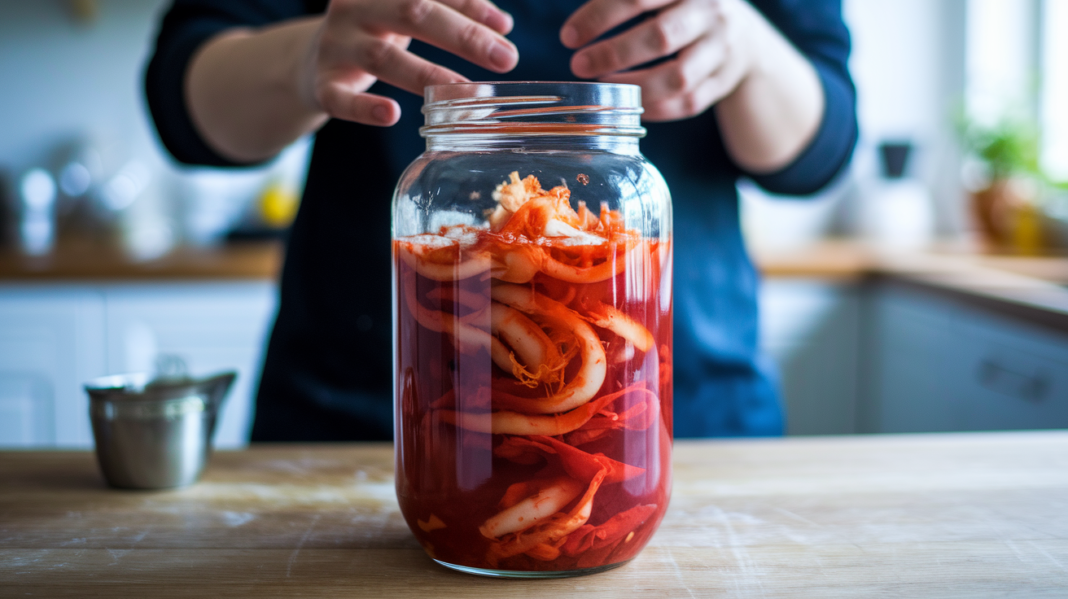

What if most “fermented” foods on grocery shelves do nothing for your gut?
Not all jars labeled fermented contain live cultures.
True fermentation creates probiotics, live microbes that can join your gut microbiome (the community of bacteria living in your gut) and help with digestion, bloating, and recovery after antibiotics.
This post shows why real, refrigerated ferments like kefir, kimchi, and sauerkraut matter,
how to pick the right ones, and simple ways to add them so your digestion actually improves.
How Fermented Foods Support a Healthy Gut Microbiome
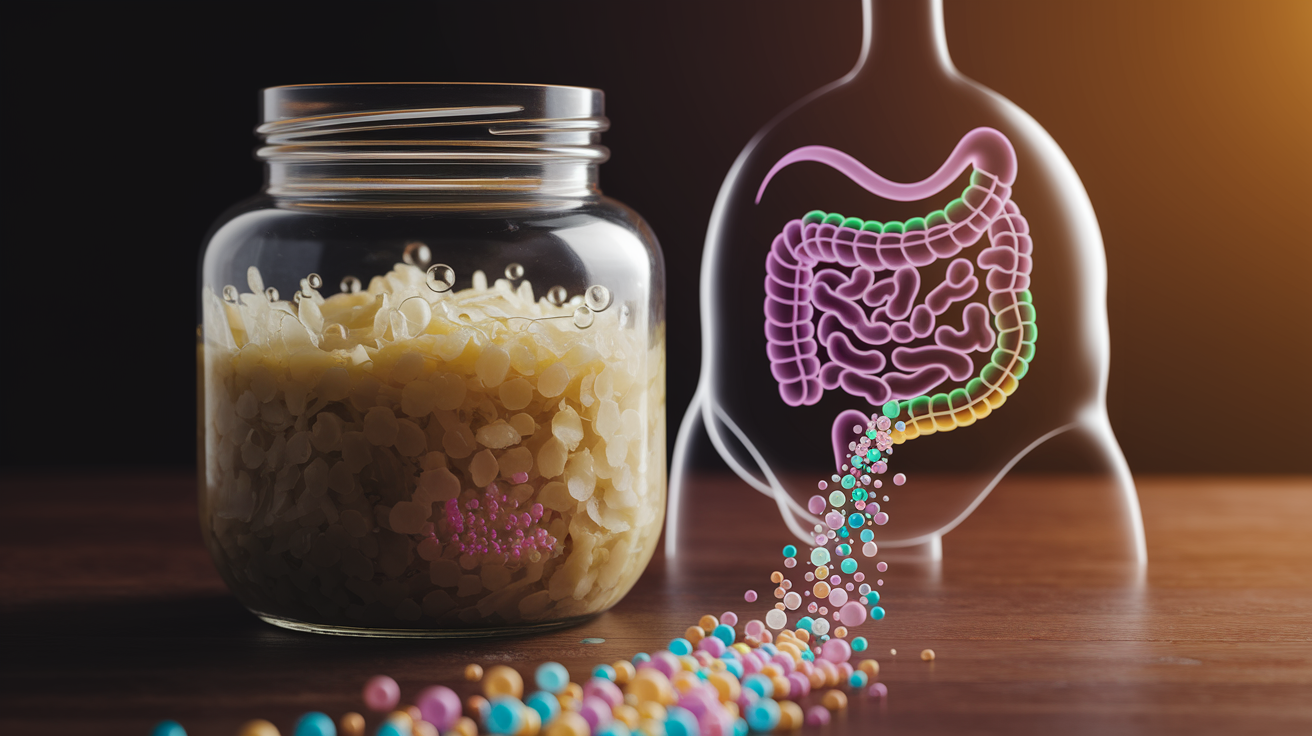
Fermentation creates probiotics through a straightforward process: bacteria and yeast eat the natural sugars in foods, producing beneficial microorganisms that take up residence in your digestive tract. Your gut already hosts roughly 100 trillion bacteria and other microbes. This community, the microbiome, influences everything from how you absorb nutrients to how your immune system responds. When you eat fermented foods with live cultures, you’re introducing fresh reinforcements that can shift the balance toward more helpful species.
Not all fermented products contain probiotics. Most grocery-store pickles are preserved with vinegar, which kills live cultures before the jar ever hits your fridge. True fermentation relies on salt brine, not vinegar, to create an environment where beneficial bacteria thrive. If a product sits on a warm shelf for months, it was probably pasteurized or never truly fermented. Refrigerated fermented foods like sauerkraut, kimchi, and miso are more likely to contain the active cultures you’re after.
Research connects regular fermented food intake to several measurable gut improvements:
Better digestion. Probiotics help break down fiber and produce short-chain fatty acids that fuel your intestinal lining.
More regular bowel movements. Fermented foods can ease both constipation and diarrhea by balancing gut motility.
Faster recovery after antibiotics. Live cultures replenish bacteria that antibiotics wipe out.
Reduced bloating. Diverse microbial communities often process gas-producing compounds more efficiently.
To get the most benefit, choose fermented foods labeled “live and active cultures” and stored in the refrigerator. Skip the shelf-stable jars if you’re after probiotics. Heat processing and vinegar preservation destroy the bacteria that make fermentation valuable for gut health.
Understanding the Fermentation Process Behind Gut-Friendly Foods

Lacto-fermentation is the most common method for preserving vegetables and creating gut-friendly foods. It starts when naturally occurring Lactobacillus bacteria on raw produce begin consuming sugars in the absence of oxygen. As they digest those sugars, they produce lactic acid, which lowers the pH of the food and creates the tangy, sour flavor you recognize in sauerkraut, kimchi, and yogurt. That acidic environment also discourages the growth of harmful bacteria, making fermentation both a preservation technique and a safety mechanism.
Temperature plays a big role in how fast fermentation proceeds. In a warm kitchen, say 75°F or higher, vegetables might reach peak tanginess in three days. In cooler conditions, that same batch could take a week. Bubbles rising through your brine are the clearest sign that fermentation is active. Those bubbles are carbon dioxide released by busy bacteria. Salt is critical: a typical ratio of 1 to 1¼ tablespoons of sea salt per two cups of water creates enough salinity to support beneficial microbes while keeping spoilage organisms in check.
Key Stages of Vegetable Fermentation
Fermentation moves through predictable phases. In the first 24 to 48 hours, aerobic bacteria deplete any remaining oxygen, and gas production begins. Next, Lactobacillus species take over, rapidly multiplying and acidifying the brine. By day three or four, the environment becomes too acidic for most other microbes, and the fermentation slows to a steady simmer. Flavor sharpens, textures soften slightly, and the vegetables develop that characteristic funk. Refrigeration halts most microbial activity, locking in the flavor profile you’ve created.
Top Fermented Foods to Add for Gut Health Benefits
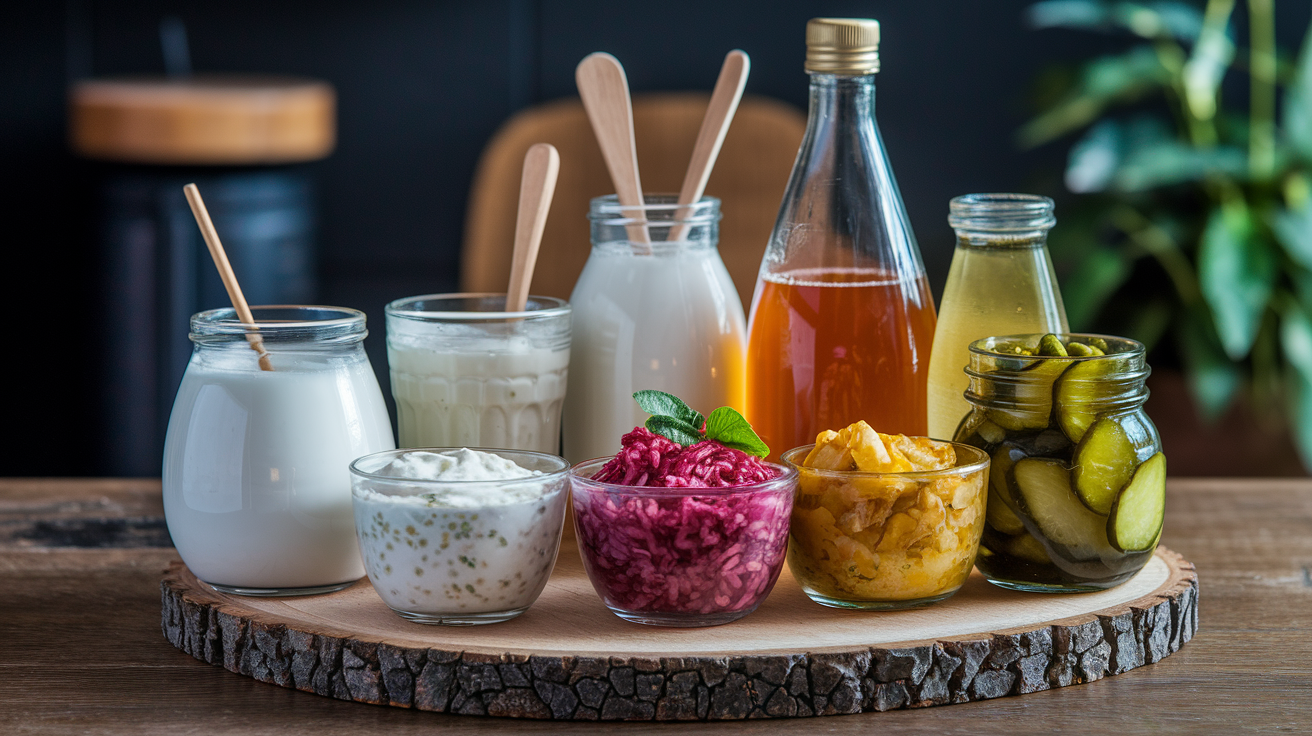
Building a gut-friendly plate means choosing fermented foods that deliver a wide range of probiotic strains. Plain yogurt with active cultures, kefir, kimchi, sauerkraut, miso, kombucha, tempeh, and naturally fermented pickles all qualify. But only when they’re prepared in ways that preserve live bacteria. Each food offers a slightly different microbial profile, so rotating your choices gives your gut the most diversity.
Here are eight fermented staples to stock:
Yogurt (live cultures). Look for labels listing Lactobacillus bulgaricus and Streptococcus thermophilus. Greek styles are strained but still probiotic-rich.
Kefir. A drinkable fermented milk that can contain up to 61 strains of bacteria and yeast, far more diverse than most yogurts.
Kimchi. Traditional Korean vegetable ferment, often napa cabbage or radish, seasoned with gochugaru. At least 200 regional varieties exist.
Sauerkraut. Finely shredded cabbage fermented in salt brine. Choose refrigerated, unpasteurized brands for live cultures.
Miso. Fermented soybean paste used in soups and sauces. Refrigerated miso retains active cultures that heat can destroy.
Kombucha. Lightly fizzy tea fermented with a SCOBY (symbiotic culture of bacteria and yeast). Choose unsweetened versions to avoid added sugar.
Tempeh. Firm, nutty fermented soybeans bound by mycelium. A complete protein and excellent meat substitute.
Fermented pickles. Cucumbers preserved in salt brine (not vinegar). Crisp, tangy, and probiotic-packed if unpasteurized.
Why Kefir and Kimchi Stand Out
Kefir grains host an unusually diverse microbial ecosystem, including Lactobacillus kefiri, which has been shown in lab studies to inhibit Salmonella, Helicobacter pylori, and E. coli. Kefir also produces kefiran, a carbohydrate with reported antibacterial properties. Kimchi, meanwhile, has been connected in observational research to lower cholesterol, reduced insulin resistance, and modest improvements in blood pressure and body weight over 16 weeks in people with prediabetes.
Dairy ferments like yogurt and kefir deliver calcium, protein, and B vitamins alongside probiotics. Non-dairy options like kimchi, sauerkraut, tempeh, and kombucha offer fiber, antioxidants, and unique plant compounds, making them great for vegan diets or lactose intolerance. Fermentation breaks down much of the lactose in dairy products, so many people who struggle with milk can tolerate kefir and yogurt labeled “fermented with active cultures.” Choosing a mix of both dairy and plant-based ferments gives you the widest probiotic coverage and the most nutritional flexibility.
How to Choose Fermented Foods With Live Cultures

Reading labels is the fastest way to separate truly probiotic products from impostors. Look for phrases like “live and active cultures,” “unpasteurized,” “raw,” or “contains probiotics.” Some yogurt and kefir brands list specific strains like Lactobacillus acidophilus, Bifidobacterium lactis, Lactobacillus rhamnosus, which is a good sign the manufacturer wants you to know the cultures survived processing. If a sauerkraut or pickle jar sits on a warm shelf next to the ketchup, it’s almost certainly pasteurized or vinegar-preserved. No probiotics there.
Bubbles inside a jar of kimchi or sauerkraut signal active fermentation, though not all live-culture products will fizz visibly. Refrigerated sections are your best bet: cold storage slows fermentation but keeps bacteria alive. Pasteurization, a heat treatment that extends shelf life, destroys probiotics entirely, so any product labeled “pasteurized for safety” won’t help your microbiome. Vinegar-based pickles are tasty but offer zero live cultures. True fermentation relies on salt brine and time, not acetic acid shortcuts.
| Product Type | What to Look For | What to Avoid |
|---|---|---|
| Yogurt & Kefir | “Live and active cultures,” strain names listed | Heat-treated after culturing, no strain info |
| Sauerkraut & Kimchi | Refrigerated, unpasteurized, salt-brined | Shelf-stable, pasteurized, vinegar-preserved |
| Pickles | “Naturally fermented,” salt brine only | Vinegar listed first, no mention of fermentation |
| Miso | Refrigerated, unpasteurized | Instant miso soup packets (often pasteurized) |
| Kombucha | Refrigerated, “raw,” minimal added sugar | Pasteurized, high sugar content |
Beginner-Friendly Ways to Add Fermented Foods to Meals
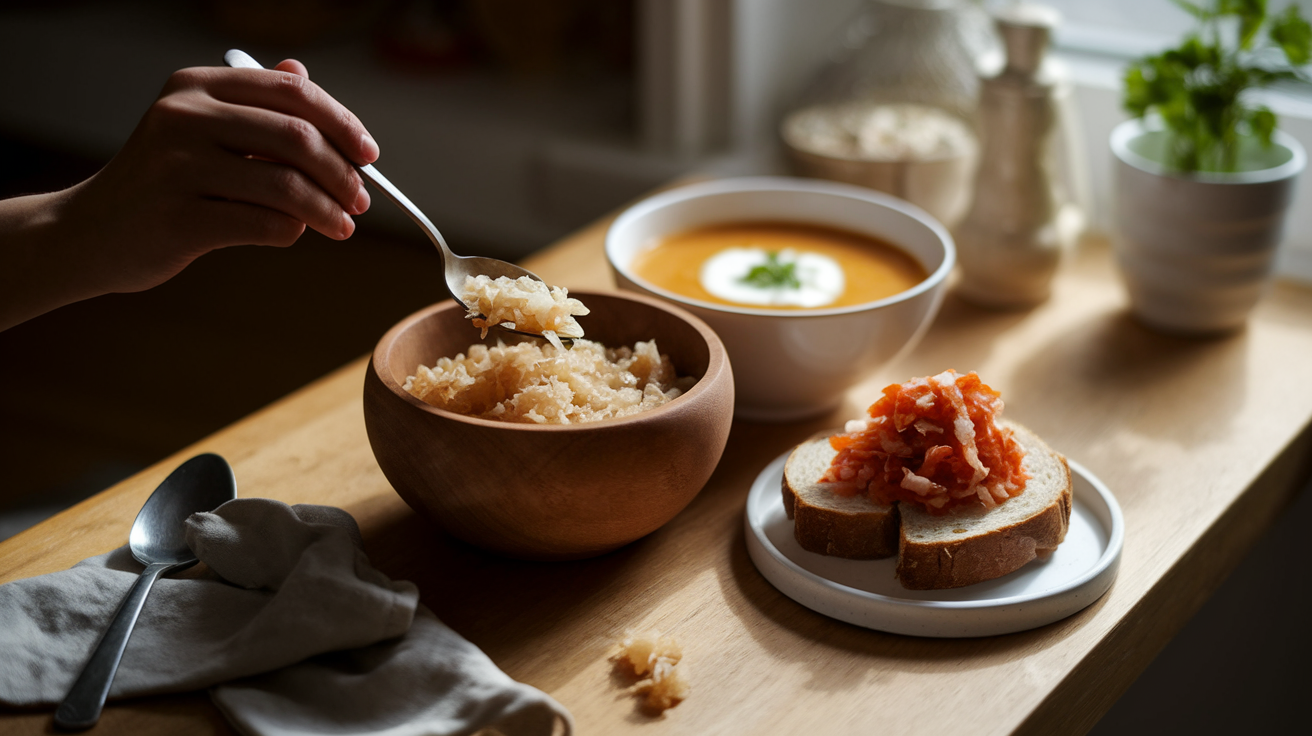
Heat destroys probiotics, so the trick is adding fermented foods at the end of cooking or using them cold. Stir a spoonful of sauerkraut onto your grain bowl after it cools, dollop plain yogurt over warm soup instead of stirring it in while the pot is boiling, or toss kimchi onto a sandwich rather than heating it in a pan. These small timing shifts preserve the live cultures you’re after.
Start by swapping familiar condiments for fermented versions. Use apple cider vinegar with “the mother” in salad dressings instead of plain white vinegar. Replace mayo with a thin layer of miso paste on a turkey wrap. Top scrambled eggs with a forkful of fermented salsa or kraut. Blend kefir into your morning smoothie, or drink a few ounces straight as a mid-afternoon snack.
Here are five ways to fold fermented foods into your day:
Mix plain kefir or yogurt into overnight oats or chia pudding.
Add a handful of kimchi or sauerkraut to grain bowls, tacos, or burritos.
Use miso paste as a savory spread on toast or stirred into broth-based soups (off heat).
Drink 4 to 6 ounces of unsweetened kombucha with lunch or as a soda replacement.
Drizzle apple cider vinaigrette (ACV, olive oil, Dijon, honey) over salads, roasted vegetables, or slaw.
Recommended Daily Intake and Tolerance Tips for Fermented Foods
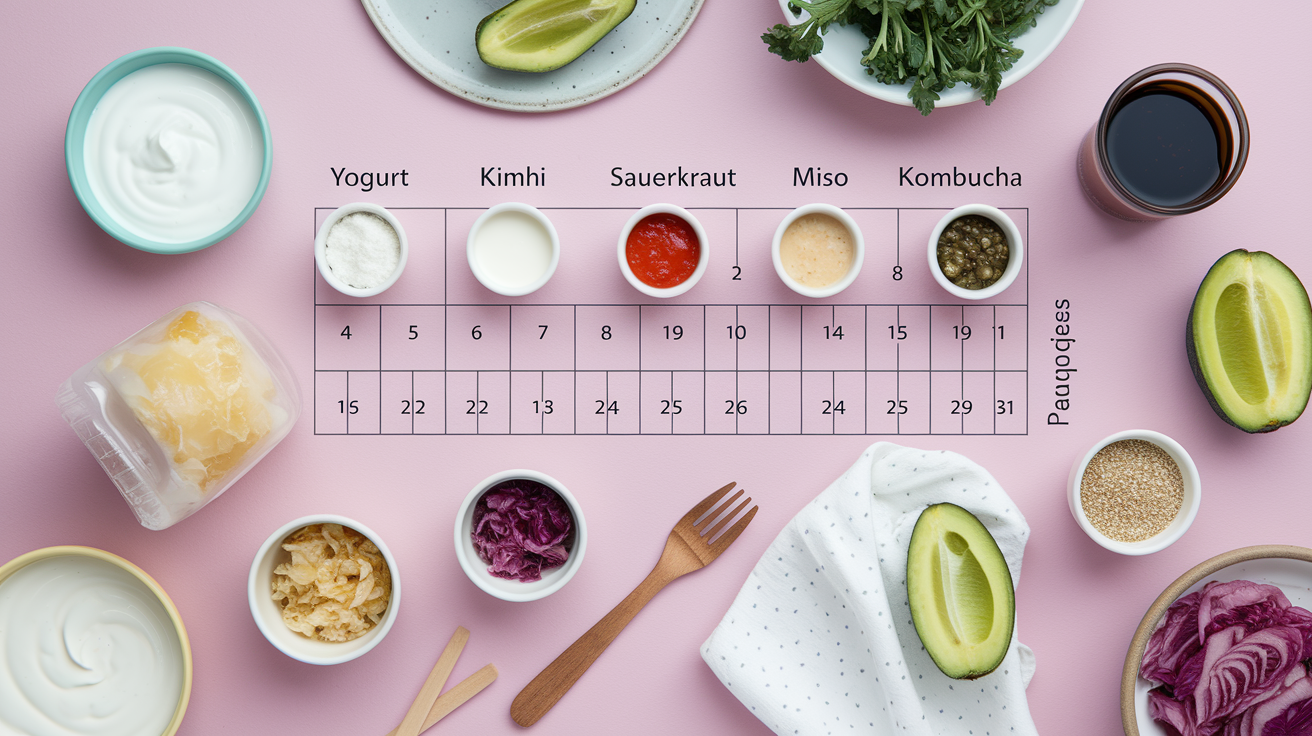
Most people benefit from one to three servings of fermented foods daily, but your gut needs time to adapt. Start with one or two tablespoons of sauerkraut or kimchi, or two to four ounces of kefir or kombucha, and gradually increase over a week or two. Jumping straight to a big serving can trigger bloating or gas as your microbiome adjusts to the influx of new bacteria.
Once your system adapts, you can aim for a daily rotation that might look like three-quarters of a cup of plain yogurt at breakfast, four to eight ounces of kefir or kombucha with lunch, and one to four tablespoons of kimchi or sauerkraut at dinner. Variety matters more than volume. Eating three different fermented foods each week introduces more microbial diversity than eating one type every day.
Practical serving suggestions to guide your build up:
Week 1: 1 to 2 tablespoons fermented vegetables or 2 to 4 oz fermented beverage daily.
Week 2: Add a second small serving (like yogurt at breakfast, sauerkraut at dinner).
Ongoing: Rotate ¾ cup yogurt, 4 to 8 oz kefir or kombucha, 1 to 4 tbsp kimchi or kraut across meals.
For variety: Include at least two different fermented foods each week to maximize strain diversity.
Potential Side Effects and Safety Tips With Fermented Foods
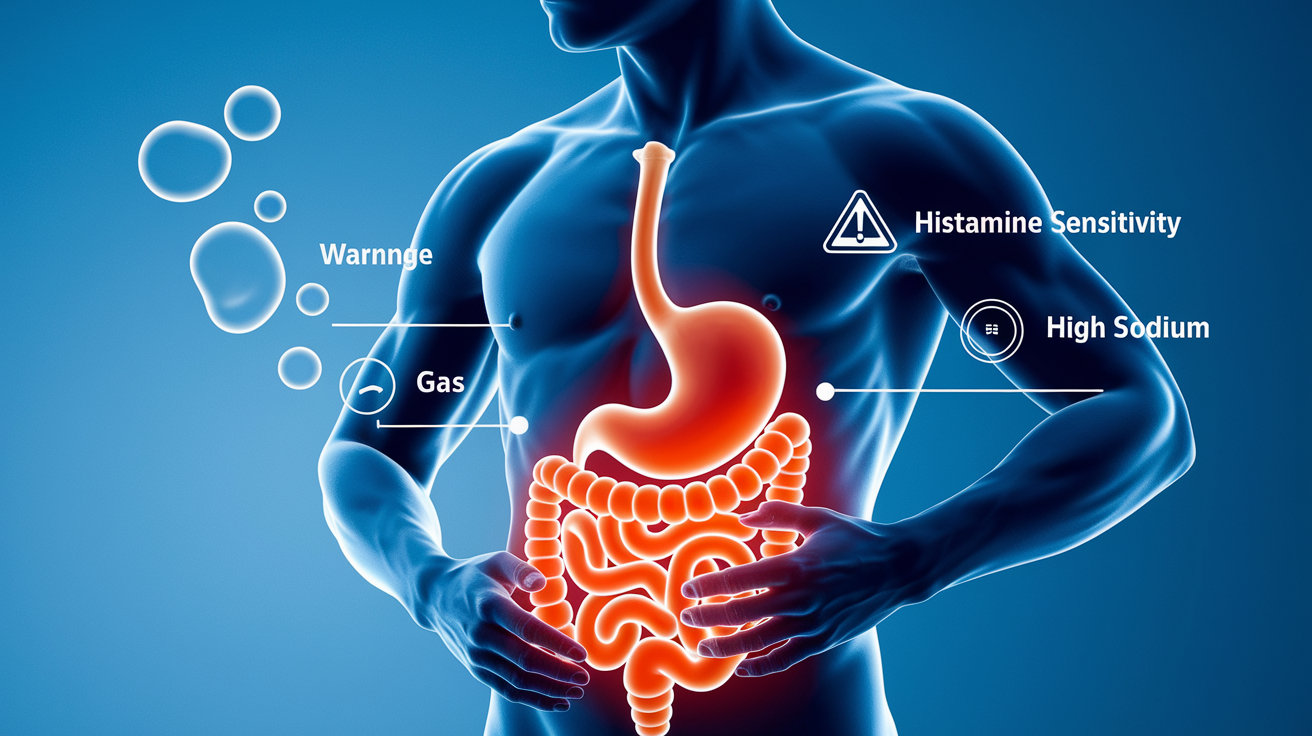
Your gut may protest the first few times you introduce fermented foods. Temporary bloating, gas, and mild digestive upset are common as your microbiome recalibrates. These symptoms usually fade within a few days to a week. If they persist or worsen, scale back your portions or try a different fermented food. Some people tolerate yogurt better than kimchi, or vice versa.
Fermented foods can be high in sodium, especially sauerkraut, kimchi, and miso. If you’re watching salt intake, rinse vegetables gently before eating, or choose lower-sodium brands. Kombucha contains trace amounts of alcohol from fermentation, usually less than 0.5 percent, and can have added sugar, so moderate your intake to eight ounces or less per day. People with histamine intolerance may react to aged or heavily fermented products with headaches, flushing, or digestive discomfort. Immunocompromised individuals and those with serious illness should consult a doctor before consuming unpasteurized ferments, as live bacteria carry a small infection risk in vulnerable populations.
Common reactions and precautions to keep in mind:
Gas and bloating. Start with small servings and increase slowly.
Histamine sensitivity. Try lower-histamine options like fresh yogurt instead of aged cheese or long-fermented sauerkraut.
Sodium overload. Rinse fermented vegetables or choose “low-sodium” labels.
Sugar in kombucha. Read nutrition labels and choose unsweetened or lightly sweetened varieties.
Immunocompromised caution. Avoid unpasteurized ferments or discuss with your clinician first.
Simple At-Home Fermentation: Sauerkraut, Pickles, and Miso Sauce
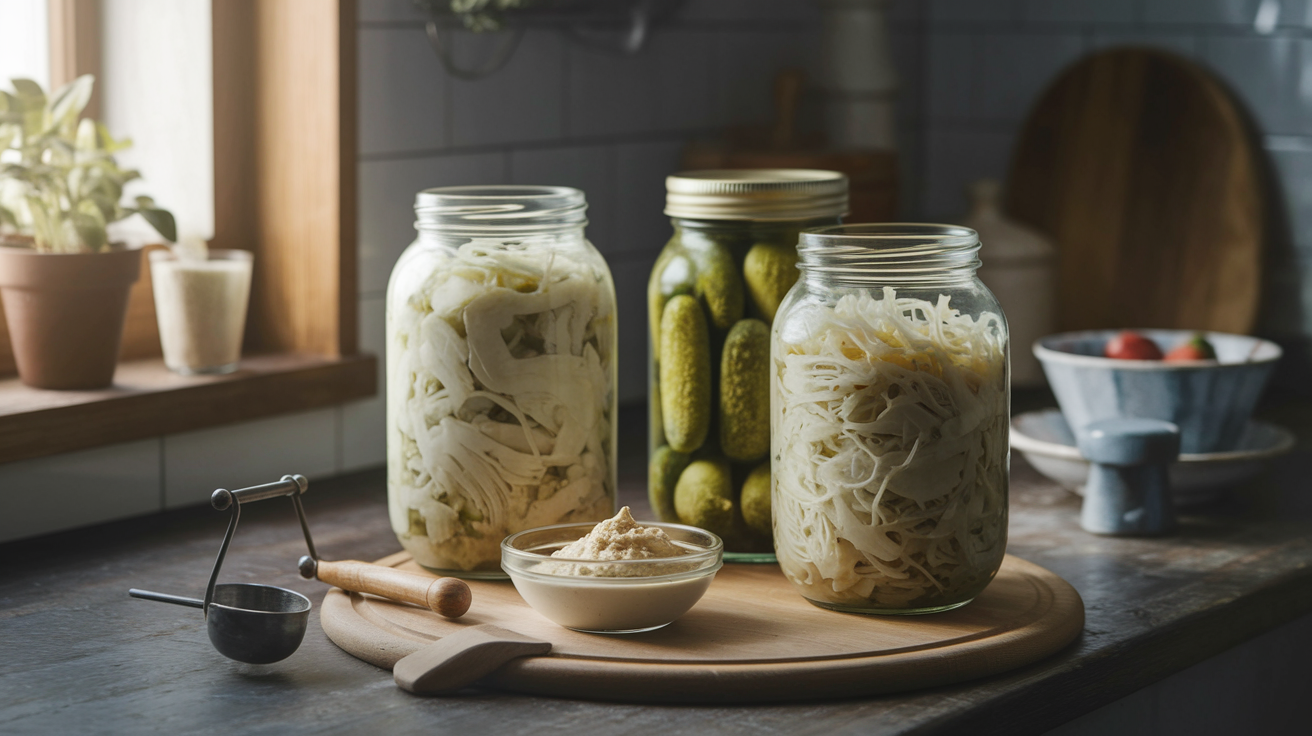
Making fermented foods at home is easier than most people expect. You need clean jars, salt, water, and time. No special equipment or advanced cooking skills. Homemade sauerkraut, pickled vegetables, and simple miso sauces let you control sodium, skip additives, and experiment with flavors while keeping costs low.
DIY Sauerkraut
Traditional sauerkraut is just shredded cabbage, salt, and patience. The basic ratio is about one tablespoon of sea salt per two pounds of cabbage. Massage the salt into the cabbage until it wilts and releases liquid, pack it tightly into a sterilized quart jar, and weigh it down with a cabbage leaf so everything stays submerged. Ferment at room temperature for three to five days, tasting daily until the tanginess hits your preference, then seal and refrigerate.
Here’s a step-by-step process:
Shred one small head of cabbage and toss with 1 tablespoon sea salt in a large bowl.
Massage the cabbage for 5 to 10 minutes until it releases enough liquid to cover itself.
Pack tightly into a sterilized quart jar, pressing down to eliminate air pockets.
Tuck a whole cabbage leaf over the top to hold the shreds beneath the brine.
Loosely cover with a lid or fermentation weight and let sit at room temperature for 3 to 5 days.
Taste daily. When sour enough, seal tightly and refrigerate for up to one month.
Salt-Brined Pickled Vegetables
Salt-brined pickles follow the same principle: vegetables, salt water, and time. Use a ratio of 1 to 1¼ tablespoons of sea salt per two cups of filtered water to make your brine. Pack raw vegetables like carrots, cauliflower, celery, jalapeños into a sterilized jar, pour the cooled brine over them, and add two tablespoons of apple cider vinegar to jumpstart fermentation. Keep everything submerged, vent gases daily for the first few days, and refrigerate when the pickles reach your desired sourness.
| Step | Action | Time / Ratio |
|---|---|---|
| 1. Make brine | Dissolve 1 to 1¼ tbsp sea salt in 2 cups warm filtered water; cool, then add 2 tbsp apple cider vinegar | 5 minutes prep |
| 2. Pack jar | Tightly pack raw vegetables into sterilized quart jar to within 1 to 2 inches of top | Quart jar |
| 3. Ferment & store | Pour brine to 1 inch from top, cover with cabbage leaf, loosen lid daily for gas release, refrigerate when tangy | 3 to 5 days room temp; keeps ~1 month refrigerated |
Simple Miso Sauce
Miso paste is a quick way to add umami and probiotics to dressings, marinades, and dips. For a peanut butter style miso sauce, whisk together three-quarters of a cup of natural peanut butter and two tablespoons of honey. Local honey adds a floral note. Use it on salads, roasted vegetables, or grilled fish. For a thinner miso base, stir half a cup of miso paste into half a cup of hot water until smooth, then drizzle over grain bowls or use as a soup starter. Just add it off heat to preserve the live cultures.
When Fermented Foods Are Not Enough: Supplements and Professional Guidance

Fermented foods are powerful, but they’re not a cure-all. Some digestive conditions like small intestinal bacterial overgrowth (SIBO), inflammatory bowel disease, or severe IBS require targeted probiotic strains, prescription medications, or dietary protocols that go beyond what sauerkraut and yogurt can deliver. If you’ve been eating fermented foods consistently for a few weeks and your symptoms haven’t improved, or if they’ve worsened, it’s time to talk to a gastroenterologist or registered dietitian who specializes in gut health.
Probiotic supplements can offer higher colony counts and specific strains studied for particular conditions, but they’re not automatically better than food. Supplements bypass the fiber, vitamins, and bioactive compounds that come bundled with fermented vegetables and dairy. For most people, food-based probiotics are a strong first move. If your gut issues are complex, persistent, or affecting your quality of life, professional guidance ensures you’re treating the root cause rather than guessing with over-the-counter options.
Final Words
in the action, this article walked through how fermentation creates probiotics, why refrigerated salt-brined ferments matter, top picks like kefir and kimchi, simple at-home recipes, serving guides, and safety tips.
You’ve got practical steps: read labels for live cultures, start with small servings, add ferments after cooking, and watch how your body responds.
Try adding fermented foods for gut health this week—one spoon of sauerkraut, a small cup of kefir, or kimchi on a sandwich. Small, steady changes stack, and you’ll likely notice gentler digestion and steadier energy.
FAQ
Q: What is the best fermented food for the gut? What are the super six foods for gut health?
A: The best fermented food for the gut is often kefir because it has many probiotic strains (beneficial bacteria); the “super six” to try are kefir, yogurt with live cultures, kimchi, sauerkraut, miso, and kombucha.
Q: Does Greek yogurt count as a fermented food?
A: Greek yogurt counts as a fermented food because it’s made with bacterial cultures; choose refrigerated varieties labeled “live and active cultures” to ensure you’re getting viable probiotics.
Q: What is a 7 day gut reset?
A: A 7 day gut reset is a short plan that increases fermented foods and fiber, cuts processed sugar, keeps regular meals and hydration, and adds gentle movement to reduce bloating and support gut bacteria balance.