
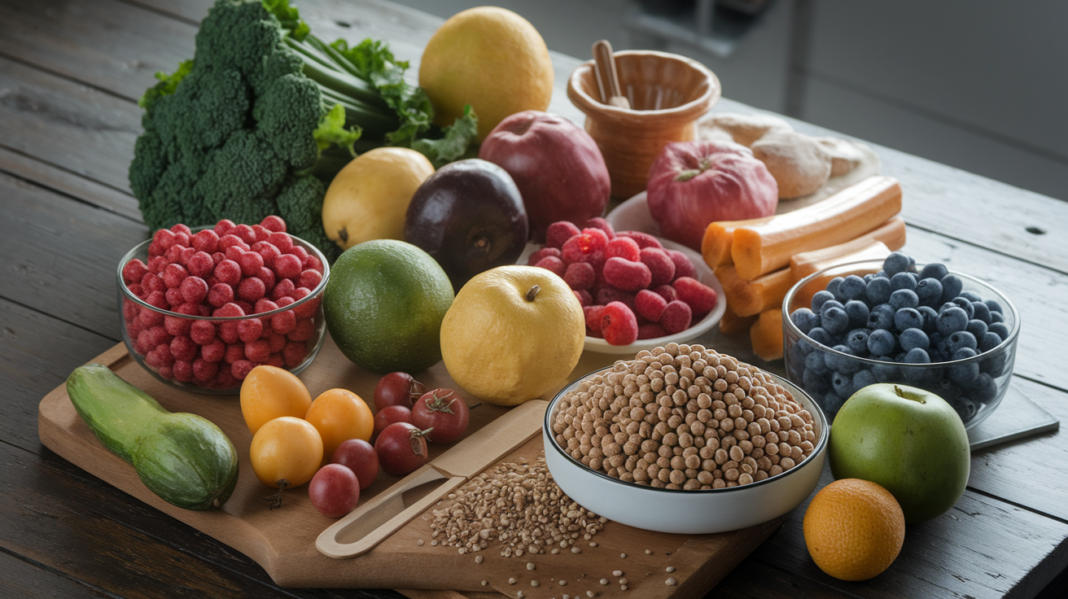

Think fiber is boring?
It’s actually the quickest, most reliable way to calm bloating, steady your energy, and make digestion predictable.
Fiber feeds your microbiome (the community of bacteria living in your gut) and becomes the fuel that helps good bacteria make anti-inflammatory compounds and keep stool moving.
This post gives a short list of top high-fiber foods, explains soluble vs insoluble fiber in plain terms, and shows small swaps that add 5 to 10 grams per meal without triggering major gas.
Quick List of Top High-Fiber Foods
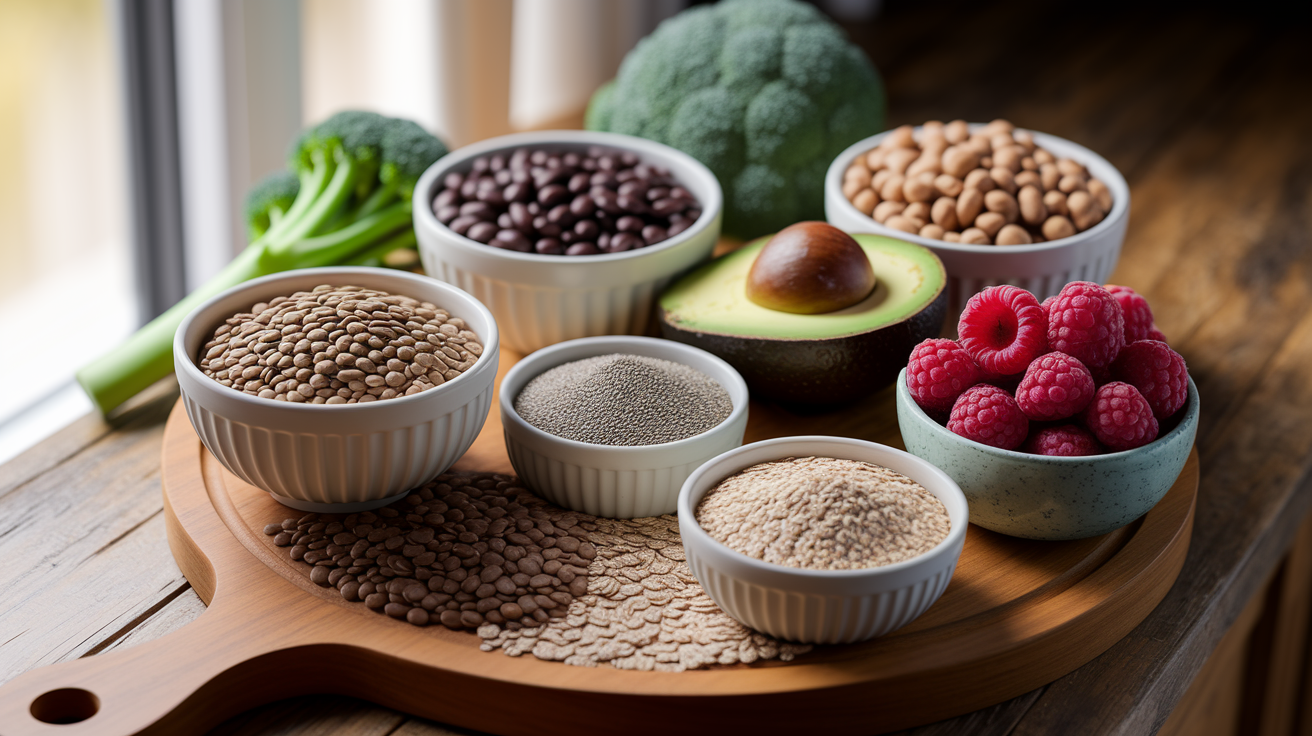
These foods deliver the most fiber per serving and make it easy to hit your daily target without overthinking meals. You’ll find everyday pantry staples alongside nutrient-dense seeds and legumes that pack serious gut health benefits into small portions.
| Food | Type of Fiber | Fiber per Serving (g) | Typical Serving Size |
|---|---|---|---|
| Lentils (cooked) | Soluble + Insoluble | 15–16 | 1 cup |
| Black beans (cooked) | Soluble + Insoluble | 15 | 1 cup |
| Split peas (cooked) | Soluble + Insoluble | 16 | 1 cup |
| Chia seeds | Soluble | 10–11 | 1 oz (28 g) |
| Raspberries | Soluble + Insoluble | 8 | 1 cup |
| Avocado | Soluble + Insoluble | 9–10 | 1 medium |
| Ground flaxseed | Soluble + Insoluble | 6–7 | 2 tbsp |
| Oats (rolled, cooked) | Soluble | 4 | 1 cup |
| Barley (cooked) | Soluble + Insoluble | 6 | 1 cup |
| Chickpeas (cooked) | Soluble + Insoluble | 12–13 | 1 cup |
| Broccoli (cooked) | Insoluble + Soluble | 5 | 1 cup |
| Pear (with skin) | Soluble + Insoluble | 5–6 | 1 medium |
Use this table to identify foods that move the needle in a single meal. Add half a cup of lentils to lunch for 8 grams. Toss a tablespoon of chia into your morning smoothie for 5 grams. Or snack on an avocado for nearly 10.
Legumes and seeds sit at the top, so if there’s a big gap between where you are now and your daily target, start by making beans or lentils a regular part of three or four dinners each week.
Soluble vs. Insoluble Fiber and Their Roles in Gut Function
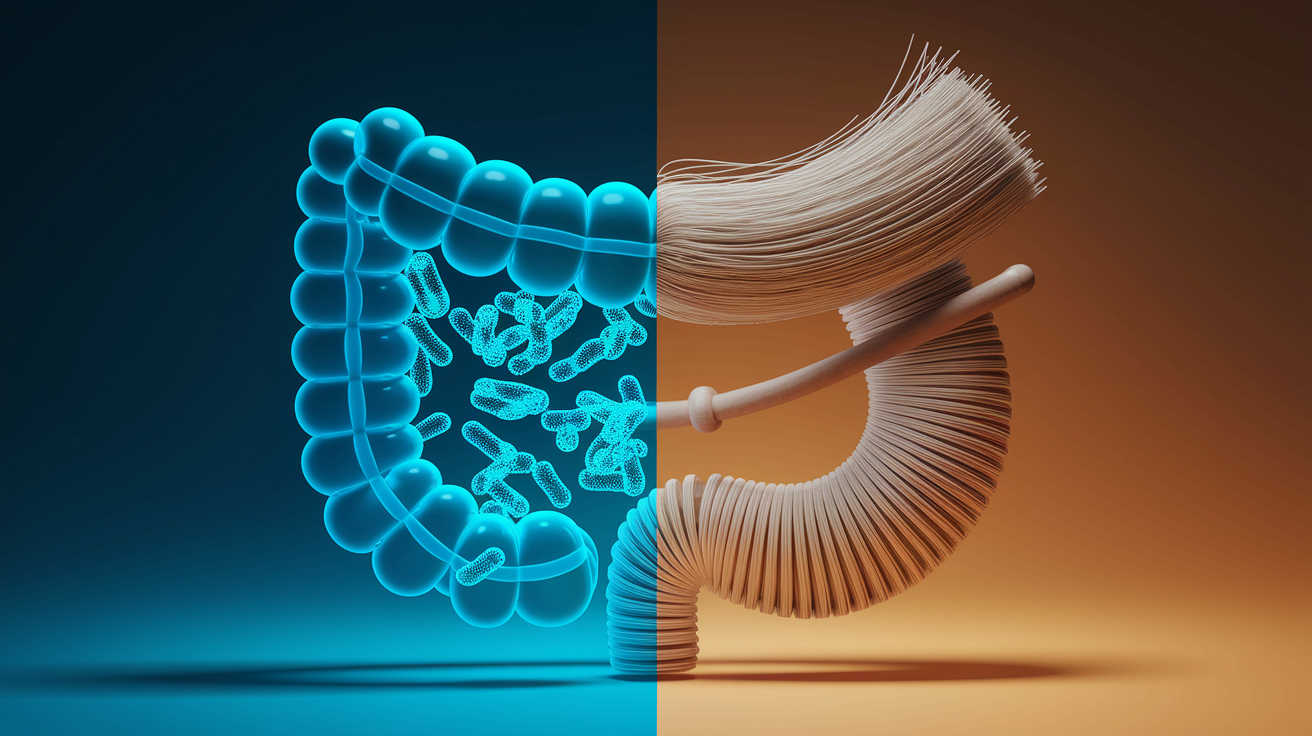
Soluble fiber dissolves in water and turns into a gel as it moves through your digestive system. This gel slows things down, which helps keep blood sugar steady and makes you feel fuller longer. It also feeds beneficial gut bacteria, which ferment it into short-chain fatty acids that calm inflammation and support the gut lining.
Insoluble fiber doesn’t dissolve. It adds bulk to stool and speeds up how fast food moves through your intestines, which keeps bowel movements regular and prevents constipation. Think of it like a broom sweeping waste through more efficiently.
Top soluble fiber sources:
- Oats (rolled or steel-cut)
- Apples (with skin)
- Citrus fruits (oranges, grapefruit)
- Carrots
- Chia seeds
- Barley
Top insoluble fiber sources:
- Whole-wheat bread and pasta
- Brown rice
- Wheat bran
- Almonds
- Cauliflower
- Green beans
Both types work together to keep your gut microbiome healthy. Soluble fiber feeds the good bacteria, helping them multiply and produce compounds that protect your gut lining. Insoluble fiber keeps things moving so waste doesn’t sit too long and create an environment where harmful bacteria can overgrow.
When you eat a mix of both across meals, you’re giving your gut the variety it needs to stay balanced and resilient.
Most whole foods contain a combination of both types. You don’t need to track them separately. Just focus on eating a range of vegetables, fruits, legumes, whole grains, and seeds throughout the week, and you’ll naturally cover both.
How Fiber Supports Gut Health

When fiber reaches your large intestine, gut bacteria break it down through fermentation. This produces short-chain fatty acids (butyrate, acetate, propionate) that fuel the cells lining your colon. These acids reduce inflammation, strengthen the gut barrier, and help regulate immune function. Without enough fiber, beneficial bacteria don’t get the fuel they need. The gut lining can become more permeable, letting irritants and pathogens trigger low-grade inflammation.
Fiber also regulates bowel movements by adding bulk and softness to stool. Soluble fiber absorbs water and makes stool easier to pass. Insoluble fiber speeds up transit time so waste doesn’t sit in your colon for days. Regular, well-formed bowel movements tell you your digestive system is working efficiently. Chronic constipation or irregular habits often improve when fiber intake goes up, especially when paired with enough water.
Higher fiber intake correlates with greater diversity in the gut microbiome. Diverse gut bacteria are better at breaking down different types of food, producing a wider range of beneficial compounds, and crowding out harmful microbes. Research shows people who eat more fiber tend to have lower markers of inflammation, better blood sugar control, and reduced risk of conditions like type 2 diabetes, heart disease, and colon cancer.
Fiber doesn’t just improve digestion in the moment. It creates long-term changes in your gut environment that support overall health.
Recommended Daily Fiber Intake for Adults

For adults aged 19 to 50, men should aim for about 38 grams of fiber per day. Women should aim for about 25 grams. After age 50, the targets drop slightly to 30 grams for men and 21 grams for women.
Most people in the U.S. consume only around 15 to 16 grams daily. That means the average adult is missing roughly half the fiber they need.
Key intake factors:
- Men generally need more fiber due to higher average calorie intake
- Women over 50 require less as metabolic rate and calorie needs decline
- Active individuals or those eating 2,500+ calories per day may benefit from 35 to 40 grams
- Pregnancy and breastfeeding may increase fiber needs slightly (consult a healthcare provider)
If you’re starting from a low baseline, don’t try to jump from 15 grams to 35 overnight. Your gut bacteria need time to adjust to the increased fermentation load. Your digestive system needs time to adapt to the extra bulk.
Add about 5 grams of fiber per week until you reach your target. This gradual approach reduces the risk of bloating, gas, and cramping that can happen when you ramp up too quickly. Think of it as training your gut to handle more fuel, not shocking it with a sudden overload.
Easy Meal Ideas to Boost Fiber Intake
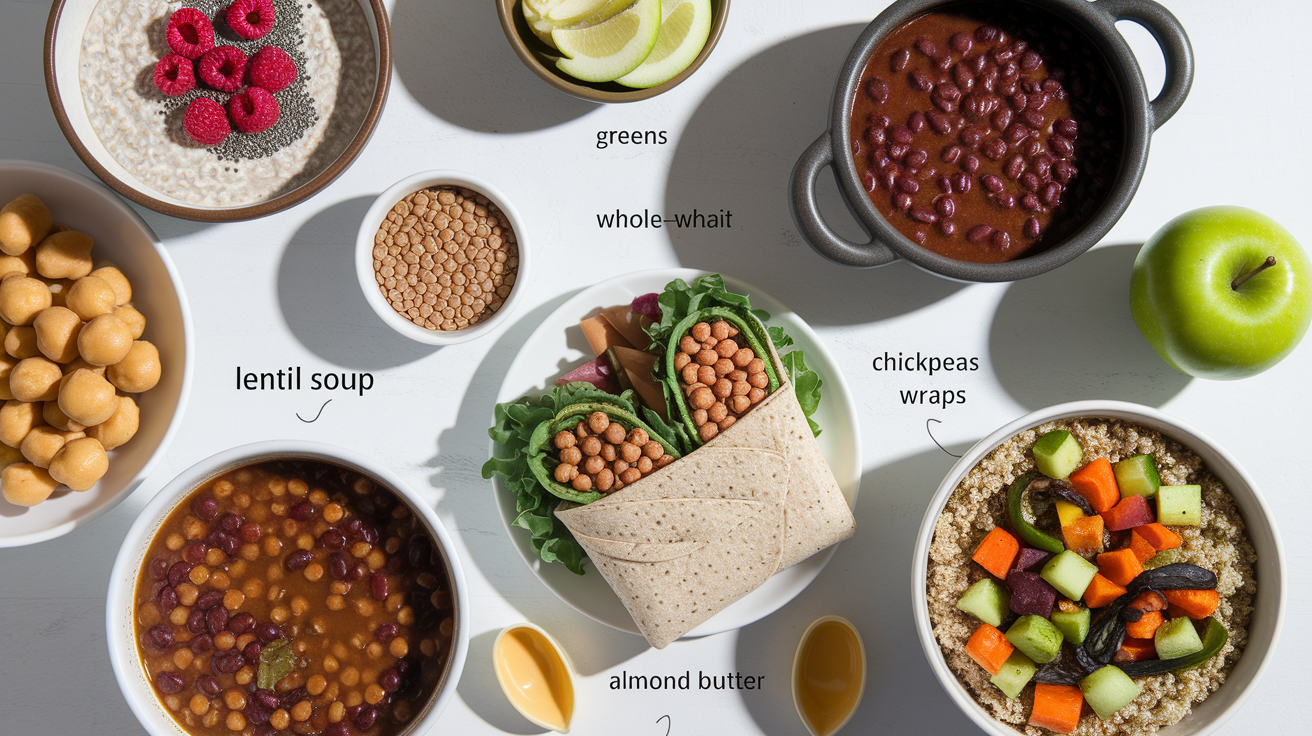
Building fiber into your meals doesn’t require complicated recipes or specialized ingredients. Include at least one high-fiber food in every meal and snack, aiming for 8 to 12 grams of fiber per meal if you’re targeting 25 to 38 grams daily.
Quick high-fiber meal ideas:
- Overnight oats (1/2 cup oats = 4 g) + 1/2 cup raspberries (4 g) + 1 tbsp chia seeds (5 g) = 13 g fiber
- Black bean chili (1 cup cooked black beans = 15 g) + 1/2 cup diced tomatoes (1 g) + 1/2 avocado (5 g) = 21 g fiber
- Lentil soup (1 cup cooked lentils = 15 g) + 1 cup cooked broccoli (5 g) = 20 g fiber
- Whole-wheat wrap (1 tortilla = 3 g) + 1/2 cup chickpeas (6 g) + mixed greens (2 g) = 11 g fiber
- Apple with skin (1 medium = 4 g) + 2 tbsp almond butter (2 g) = 6 g fiber (good snack)
- Quinoa bowl (1 cup cooked quinoa = 5 g) + 1/2 cup black beans (7 g) + roasted vegetables (3 g) = 15 g fiber
To build balanced, fiber-dense meals, start with a base of whole grains or legumes. Add a serving of vegetables (cooked or raw). Include a piece of fruit or a tablespoon of seeds. This pattern naturally stacks fiber without requiring you to measure obsessively.
Swap white rice for brown rice or barley. Choose whole-wheat pasta instead of regular. Keep a bag of frozen berries or a container of chia seeds on hand to toss into smoothies or yogurt. Small, repeatable swaps add up faster than trying to overhaul every meal at once.
How to Increase Fiber Intake Safely

When you suddenly increase fiber intake, your gut bacteria start fermenting more material, which produces gas as a byproduct. This is normal and temporary. But it can cause bloating, cramping, and discomfort for the first one to three weeks. Your digestive system also needs time to adjust to the extra bulk moving through your intestines, especially if you’ve been eating a low-fiber diet for a while.
The key to avoiding digestive discomfort is to increase fiber gradually and match the increase with more water. Fiber absorbs water. Without enough fluid, it can actually slow down digestion and worsen constipation instead of improving it.
Steps to increase fiber safely:
- Add about 5 grams of fiber per week until you reach your target. For example, if you’re at 15 grams and aiming for 30 grams, plan for a three-week ramp-up.
- Drink an extra 8 to 16 ounces (250 to 500 mL) of water for every 10 grams of fiber you add. Aim for at least 8 to 10 cups (2 to 2.5 liters) of total fluid per day.
- Spread fiber across meals rather than loading it all into one meal. Three meals with 8 to 10 grams each is easier on your gut than one 25-gram meal.
- Choose a mix of soluble and insoluble fiber sources. Soluble fiber is gentler on digestion, so if you’re starting low, lean toward oats, chia, and cooked vegetables before adding large amounts of wheat bran or raw cruciferous vegetables.
- Keep a simple log for one week to check your baseline intake, then track your weekly increases. This helps you identify which foods work well for your digestion and which might need adjustment.
If you get persistent bloating, severe cramping, or worsening constipation after increasing fiber, scale back and try smaller increments. Some people with irritable bowel syndrome or sensitivity to certain carbohydrates (FODMAPs) may need to avoid high-fiber foods like onions, garlic, wheat, beans, apples, and pears.
In those cases, low-FODMAP fiber options like oats, chia seeds, flaxseed, firm bananas, carrots, and spinach can still provide gut health benefits without triggering symptoms. If digestive issues persist beyond three weeks, or if you notice blood in your stool, unintentional weight loss, or severe abdominal pain, consult a healthcare provider before making further changes.
Final Words
Start taking action: pick two items from the Quick List and add one to your next meal.
We covered soluble vs insoluble fiber and why both matter, how fiber feeds your microbiome and keeps things moving, daily targets to aim for, simple high-fiber meal swaps, and safe steps to increase intake without discomfort.
Use the table and meal ideas to build steady habits. Choosing a variety of fiber-rich foods for gut health is an easy, high-impact move. Small changes add up. You’ve got this.
FAQ
Q: What is the best fiber for the gut?
A: The best fiber for the gut is a mix of soluble (oats, chia, legumes) and insoluble (whole grains, broccoli, pears). This combo feeds gut microbes (the bacteria in your gut) and adds stool bulk for regularity.
Q: How to get 100% fiber daily?
A: To get 100% of daily fiber, aim for 25 g/day for women or 38 g/day for men and spread servings across meals: oatmeal+chia (≈12 g), lentils (8–10 g), fruit, vegetables and whole grains.
Q: Should I take fiber with zepbound?
A: You should check with your prescriber before taking fiber with Zepbound because fiber can alter medication absorption; they’ll advise timing or safe dosing, and the pharmacist can confirm any interaction.
Q: What foods are high in fiber for the gut?
A: Foods high in fiber for the gut include lentils, black beans, chia seeds, raspberries, broccoli, oats, pears, apples, whole grains and sweet potato — all provide fiber that feeds microbes and supports regularity.