


What if dieting is the reason you keep gaining weight back?
This post gives a practical plan you can follow every day without feeling punished.
You’ll get clear calorie ranges, a muscle-sparing protein target, and simple plate rules that stop the late-afternoon binge.
Think hand-based portion cues, snacks that actually help, and a shopping list that makes cooking easy.
The goal: steady fat loss, steady energy, and habits you’ll keep for months, not weeks.
Core Daily Meal Plan for Effective Weight Loss
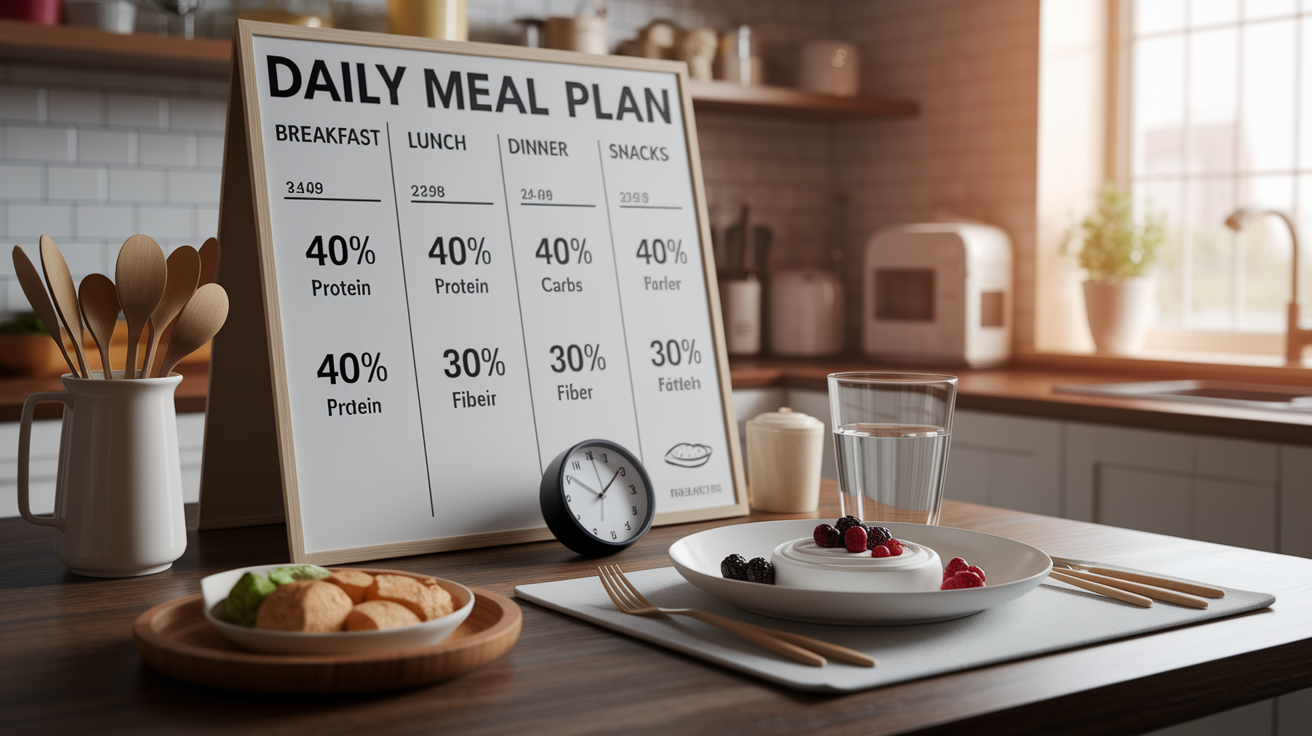
Setting a structured daily calorie target gives you the foundation you need for weight loss that doesn’t feel like punishment. Most women see results around 1,200 to 1,500 calories per day. Men usually land somewhere between 1,500 and 1,800. Those ranges create a 500 to 750 calorie deficit for most adults, which translates to about 0.5 to 1 kg of fat loss per week when you’re moving a bit throughout the day. Your exact number depends on where you’re starting, how active you are, and what your metabolism looks like. But honestly? Consistency beats perfection every time.
Macro balance is what determines whether you feel full and energized or cranky and starving. A higher protein structure works well here. Think roughly 40% of calories from protein, 30% from carbs, and 30% from fats. That setup reduces hunger between meals and keeps your muscle intact while you’re losing weight. If you’re aiming for 1,500 calories, you’re looking at about 150 grams of protein, 112 grams of carbs, and 50 grams of fat daily. Spreading protein across three main meals (30 to 40 grams each) and one or two snacks (10 to 20 grams) keeps your metabolism ticking and prevents that late-afternoon crash that makes you overeat at dinner.
Timing your meals consistently keeps blood sugar stable and hunger predictable. Breakfast within an hour of waking, lunch 4 to 5 hours later, and dinner before 7 p.m. (with a small snack if you need it) creates a rhythm you can actually stick with. Front loading protein and fiber early in the day, like Greek yogurt with berries at breakfast, can reduce total calorie intake by 10 to 15% in most studies. You’re just less hungry when evening cravings show up.
| Meal | Calories | Protein (g) | Carbs (g) | Fats (g) | Example Foods |
|---|---|---|---|---|---|
| Breakfast | 350–400 | 30–35 | 30–35 | 10–12 | Greek yogurt (170 g), ½ cup oats, ½ cup berries |
| Lunch | 450–500 | 40–45 | 35–40 | 15–18 | Grilled chicken (140 g), 2 cups greens, ½ cup quinoa, 1 tbsp olive oil |
| Dinner | 500–550 | 40–45 | 40–45 | 18–20 | Baked salmon (120 g), 1 cup broccoli, ¾ cup sweet potato |
| Snacks (1–2) | 200–250 | 15–20 | 20–25 | 8–10 | Apple + 14 almonds, or protein shake with almond milk |
Foods to Prioritize for Weight Loss
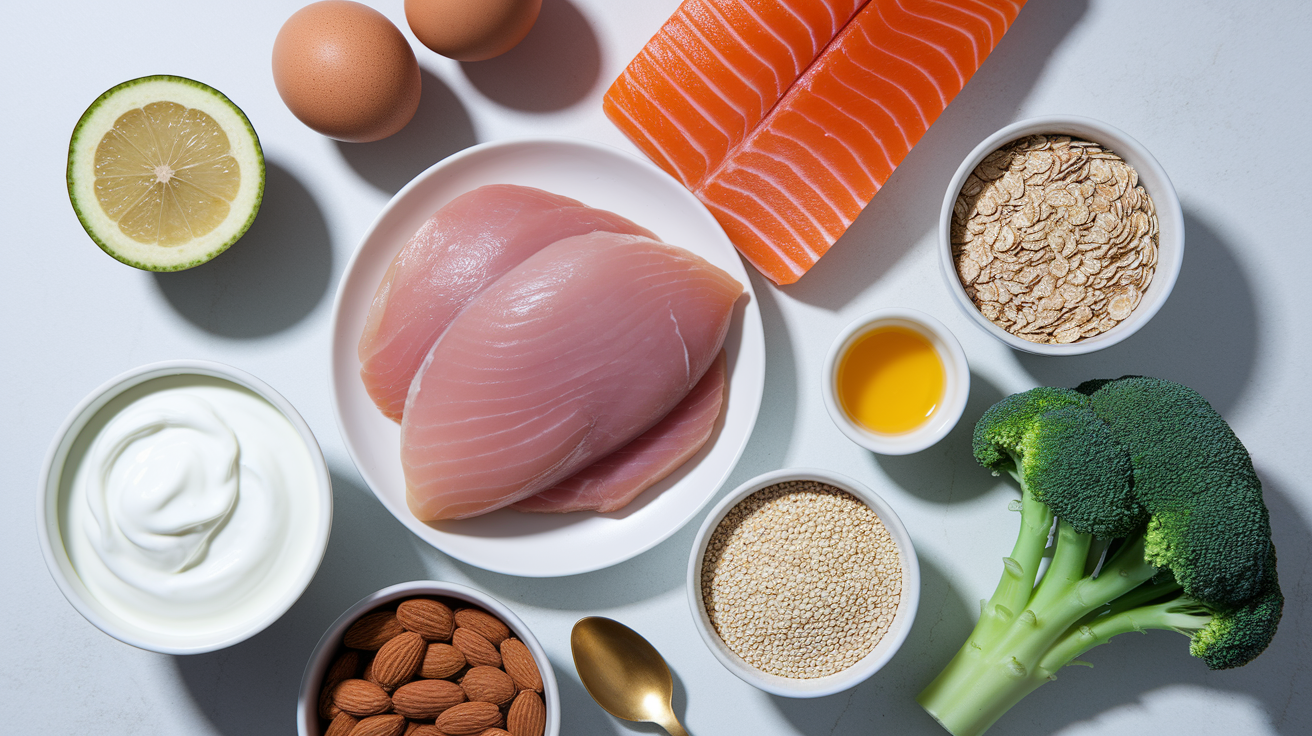
Nutrient-dense foods deliver more vitamins, minerals, and fiber per calorie. You stay fuller on fewer total calories. High protein options like chicken breast, eggs, and Greek yogurt trigger satiety hormones that keep hunger away for 3 to 4 hours after eating. Fibrous vegetables like spinach, broccoli, and bell peppers add volume to your plate without piling on calories, so you can eat a larger portion and still stay in your deficit. Whole grains like oats and quinoa give you slow-releasing energy that prevents the blood sugar swings that make you raid the pantry mid-afternoon.
Combining protein, fiber, and healthy fats at each meal creates a trifecta that supports fat loss. Protein requires more energy to digest (the thermic effect). Fiber slows gastric emptying so you feel full longer. Fats add flavor and texture that make meals satisfying enough to stick with long term. Prioritizing these foods doesn’t mean cutting out everything else. It just means building your meals around them first, then adding smaller amounts of higher calorie extras like cheese or sauces.
- Greek yogurt: 15 to 20 g protein per serving, doubles as a mayo substitute, supports gut health.
- Chicken breast: Lean protein at around 30 g per 120 g cooked, great for batch cooking.
- Eggs: 6 g protein each, affordable, quick breakfast or snack option.
- Salmon: Omega-3 fats reduce inflammation, 40 g protein per 140 g serving.
- Oats: Soluble fiber keeps you full, pairs well with protein powder or Greek yogurt.
- Broccoli: High volume and fiber, under 50 calories per cup cooked.
- Quinoa: Complete plant protein, ½ cup cooked provides around 4 g protein and complex carbs.
- Almonds: Thumb sized portion (14 almonds) adds 6 g protein and healthy fats for about 100 calories.
Portion and Plate Building Guidelines
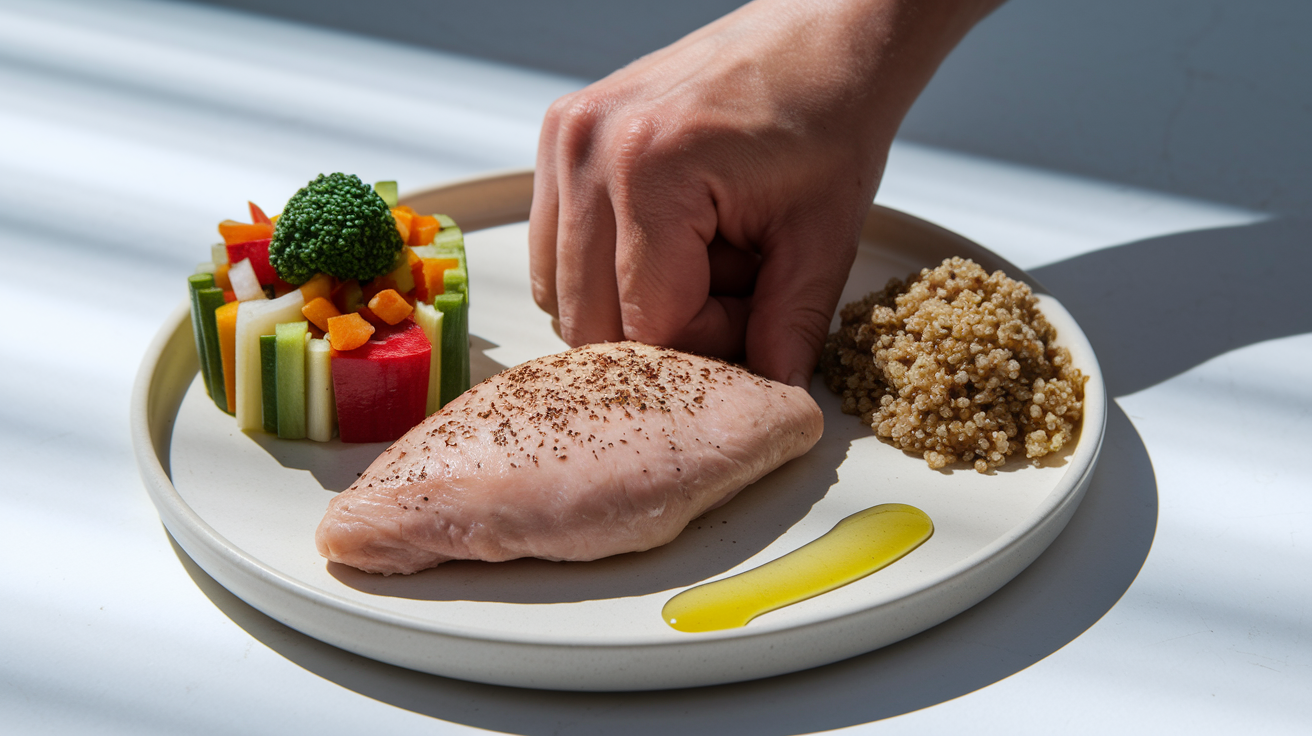
Visual portion methods get rid of the need for constant weighing and measuring while still controlling calorie intake. Use your palm as a guide for protein (roughly 90 to 140 grams cooked meat or fish). Your fist for starchy carbs like rice or sweet potato (about ½ to ¾ cup cooked). Two open hands for non-starchy vegetables (at least 2 cups). Your thumb represents one serving of fats. One tablespoon of olive oil, a quarter of an avocado, or about 14 nuts. These cues work across different body sizes because larger people naturally have larger hands and higher calorie needs.
The balanced plate model makes meal construction simple. Fill half your plate with vegetables, one quarter with lean protein, and one quarter with whole grains or starchy vegetables. This structure naturally reduces calorie density without making you feel deprived. A dinner plate with 2 cups of roasted broccoli and peppers, a palm sized grilled chicken breast, and ¾ cup of quinoa delivers around 450 to 500 calories while keeping you full for hours. Adding a thumb of olive oil or a small handful of nuts brings healthy fats into the mix without pushing the total too high.
A practical lunch might look like this. A large base of mixed greens (unlimited volume, minimal calories), 140 grams of grilled chicken or tofu (one palm), half a cup of cooked quinoa or chickpeas (one fist), and a dressing made from one tablespoon of olive oil mixed with vinegar and lemon (one thumb). That combination hits around 450 to 500 calories, delivers 40+ grams of protein, and provides enough fiber to keep hunger away until dinner. Repeat that template with different proteins, grains, and vegetables throughout the week. You’ve built a sustainable plan without tracking every bite.
Weekly Shopping List for Weight Loss Success
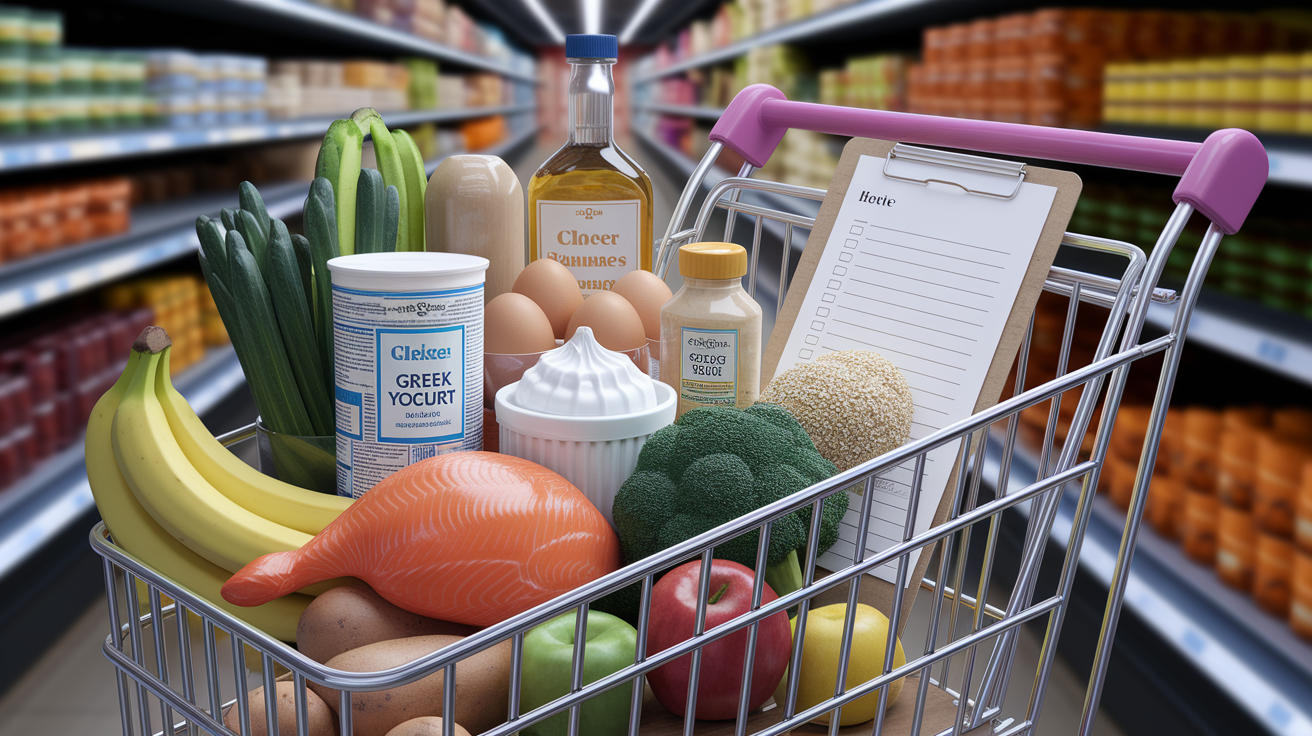
A focused grocery list reduces decision fatigue and keeps you from grabbing processed snacks when hunger strikes mid-week. Buying proteins and vegetables in bulk at the start of the week makes meal prep faster and ensures you always have the right foods on hand. Most people find that prepping twice per week (a Sunday batch and a Wednesday refresh) keeps produce fresh and meals interesting without requiring hours in the kitchen.
- Proteins: Chicken breast (1.2 to 1.4 kg), salmon or white fish (600 to 800 g), eggs (12), canned tuna (2 to 3 cans), Greek yogurt (1 kg plain).
- Vegetables: Mixed greens (2 bags), broccoli (2 heads), bell peppers (4), zucchini (3), carrots (1 bag), spinach (fresh or frozen).
- Whole grains & starches: Rolled oats (500 g), brown rice or quinoa (500 g), sweet potatoes (3 to 4 medium).
- Fruits: Bananas (6), apples (6), frozen berries (500 g bag).
- Legumes: Canned black beans or chickpeas (3 cans, 15 oz each).
- Healthy fats: Olive oil (250 to 500 ml), almonds or walnuts (200 to 300 g), avocado (2 to 3).
- Pantry staples: Low sodium soy sauce, balsamic vinegar, lemon, garlic, spices (paprika, cumin, black pepper).
Customizing the Plan for Different Dietary Needs
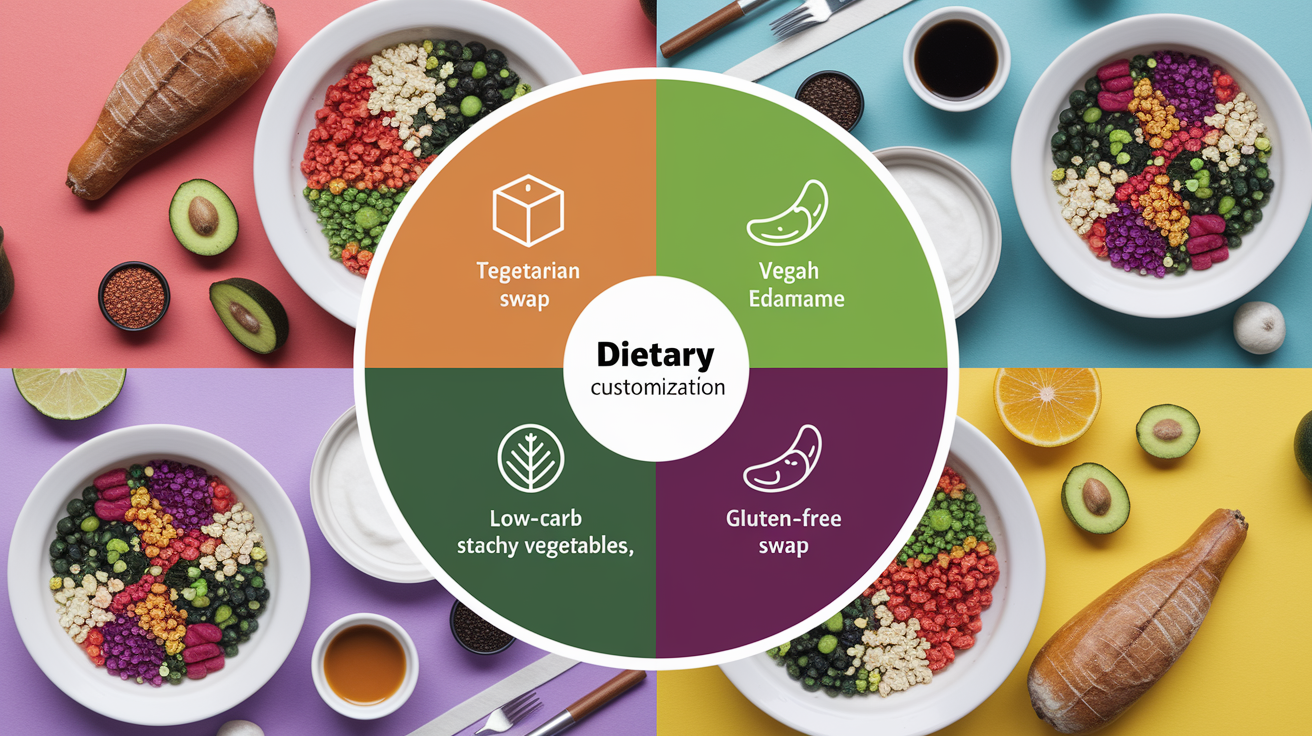
The calorie deficit principle applies regardless of whether you eat meat, follow a low carb approach, or avoid certain foods due to intolerances. Vegetarians and vegans can hit the same protein targets by swapping chicken or fish for tofu (120 to 150 grams cooked), tempeh, lentils (1 cup cooked provides around 18 g protein), or a scoop of plant-based protein powder (20 to 30 g protein). Combining legumes with whole grains (like black beans with brown rice) delivers complete amino acid profiles that support muscle preservation during weight loss.
Low carb adaptations work by shifting macros to roughly 35 to 40% protein, 20 to 25% carbs, and 35 to 40% fats while keeping total calories in the same deficit range. Replace grains and starchy vegetables with extra non-starchy vegetables, and increase healthy fats from avocado, nuts, and olive oil to maintain energy. A low carb dinner might pair a palm sized salmon fillet with two cups of roasted cauliflower and a side salad dressed with tahini, delivering 500 calories and 40 grams of protein without the sweet potato or quinoa.
Gluten-free and dairy-free adjustments are straightforward. Substitute certified gluten-free oats, use quinoa or rice instead of wheat-based grains, and replace Greek yogurt with unsweetened almond or coconut yogurt fortified with protein. Track your protein intake closely during the first week of any swap to ensure you’re still hitting 30 to 40 grams per meal, since plant-based and alternative dairy options can sometimes fall short without a little planning.
- Vegetarian swap: Replace 120 g chicken with 150 g firm tofu or 1 cup cooked lentils. Add protein powder to smoothies if needed.
- Vegan swap: Use tempeh, edamame, or legume-based pastas. Fortify with B12 and consider an algae-based omega-3 supplement.
- Low carb swap: Drop grains to ¼ cup per meal or cut them out. Double non-starchy vegetables and add an extra thumb of fats.
- Gluten-free swap: Choose quinoa, rice, or certified gluten-free oats. Check labels on sauces and dressings for hidden wheat.
The Science Behind Weight Loss and Metabolism

Weight loss happens when you consistently consume fewer calories than your body burns, forcing it to mobilize stored fat for energy. A daily deficit of 500 to 750 calories typically produces 0.5 to 1 kg of fat loss per week, though the first week often shows a larger drop due to glycogen and water shifts rather than pure fat. Your body stores about 500 grams of glycogen (the storage form of carbohydrates) along with roughly 1.5 kg of water. Reducing carb intake or starting a calorie deficit releases that water quickly, which is why the scale moves faster initially.
Protein plays a unique metabolic role during weight loss. Digesting protein burns 20 to 30% of the calories it contains (a phenomenon called the thermic effect of food) compared to only 5 to 10% for carbohydrates and 0 to 3% for fats. Higher protein intakes also preserve lean muscle mass when you’re in a calorie deficit, which keeps your resting metabolic rate higher. Pairing the nutrition plan with resistance training two to three times per week signals your body to maintain muscle tissue, so the weight you lose comes primarily from fat stores rather than metabolically active muscle.
- Calorie deficit mechanics: Sustained energy shortfall forces the body to oxidize stored triglycerides (fat) for fuel.
- Thermic effect of food: Protein digestion costs 20 to 30% of its calories, carbs 5 to 10%, fats 0 to 3%, making high protein diets metabolically efficient.
- Muscle preservation: Resistance training combined with adequate protein (1.6 to 2.2 g per kg body weight) protects lean mass during deficits.
- Hormonal regulation: Protein and fiber improve satiety hormones like GLP-1 and PYY, reducing hunger signals between meals.
- Glycogen depletion: Early weight loss includes glycogen and water. Fat loss becomes the primary driver after week one.
Applying these principles means you’re not just eating less. You’re eating strategically to support your metabolism while losing fat. Front loading protein, timing resistance workouts, and choosing nutrient-dense foods all stack the physiological deck in your favor. Over four to eight weeks, these small advantages compound into noticeable changes in body composition, energy levels, and how your clothes fit, even if the scale doesn’t always move in a straight line downward.
Final Words
Use the daily meal plan and the sample calorie ranges to set a steady deficit. Follow the 40/30/30 macro idea so protein keeps you full and muscle is protected.
Build plates with half veggies, a palm of protein, and a fist of carbs. Pack the shopping list, favor high‑protein and fibrous choices, and swap foods to match vegetarian or low‑carb needs. The science—thermic effect, consistent deficit, and strength work—supports this.
Start with one simple swap this week. This nutrition plan weight loss approach is doable and will move you forward.
FAQ
Q: What is the 3-3-3 rule for weight loss?
A: The 3-3-3 rule for weight loss is eating three balanced meals and up to three small protein-rich snacks spaced about three hours apart to steady hunger and support calorie control.
Q: How did Kelly Clarkson lose weight so quickly?
A: Kelly Clarkson’s rapid weight loss was reported to involve a prescription GLP-1 medication plus reduced calories and increased activity; medications often lower appetite, but always discuss options with a clinician.
Q: What diet is good for high blood pressure?
A: The diet good for high blood pressure is the DASH diet (Dietary Approaches to Stop Hypertension), high in fruits, vegetables, whole grains, lean protein, low in sodium and processed foods; aim for 1500–2300 mg sodium.
Q: What is the diet plan for tirzepatide?
A: The diet plan for tirzepatide is a modest calorie deficit with protein-focused, nutrient-dense meals, smaller portions, and slow food increases to limit nausea; monitor blood sugar and follow your prescriber’s guidance.