


What if the food you can’t digest is actually the best thing for your gut?
Prebiotic fiber is that food. It passes through your small intestine and arrives in the colon to feed the microbiome (the community of bacteria living in your gut).
Feeding the right microbes can ease bloating, improve regularity, and help your gut lining stay strong.
In this post we’ll explain how key prebiotic types work, list everyday foods and sensible supplements, and give a simple, safe plan to add them so you see real improvement in weeks.
Core Functions of Prebiotic Fiber in Supporting Gut Microbiome Health

Prebiotic fiber for gut health works because your stomach and small intestine can’t digest it. Other carbs get absorbed early, but prebiotic fiber passes through untouched and lands in your colon ready to feed the bacteria living there. This selective feeding is the whole point. Prebiotics nourish beneficial microbes like bifidobacteria and lactobacilli, helping those populations expand and edge out less helpful strains.
When beneficial bacteria consume prebiotic fiber, they ferment it and produce metabolites that support your entire gut ecosystem. Fermentation creates compounds that strengthen your intestinal lining, signal immune cells, and regulate inflammation and nutrient absorption. Using more than one type of prebiotic at a time drives better results. Different bacteria prefer different fuel sources, so variety feeds a broader team of microbes and produces a richer mix of beneficial metabolites.
You’ll often notice early changes within the first week or two. Smoother digestion, more regular bowel movements, maybe less bloating once your system adapts. Deeper shifts in microbiome diversity and resilience typically take four to six weeks of consistent intake, as populations stabilize and cross-feeding networks strengthen across your gut.
Key functions of prebiotic fiber in the gut:
- Selectively feeds beneficial bacteria while starving many harmful strains
- Drives fermentation that produces health-supporting metabolites
- Strengthens the mucus layer and tight junctions of the gut barrier, reducing permeability
- Signals immune cells to calibrate inflammation and pathogen defense
- Improves stool bulk and consistency by increasing bacterial biomass and water retention
Types of Prebiotic Fiber and How Each Supports Gut Function
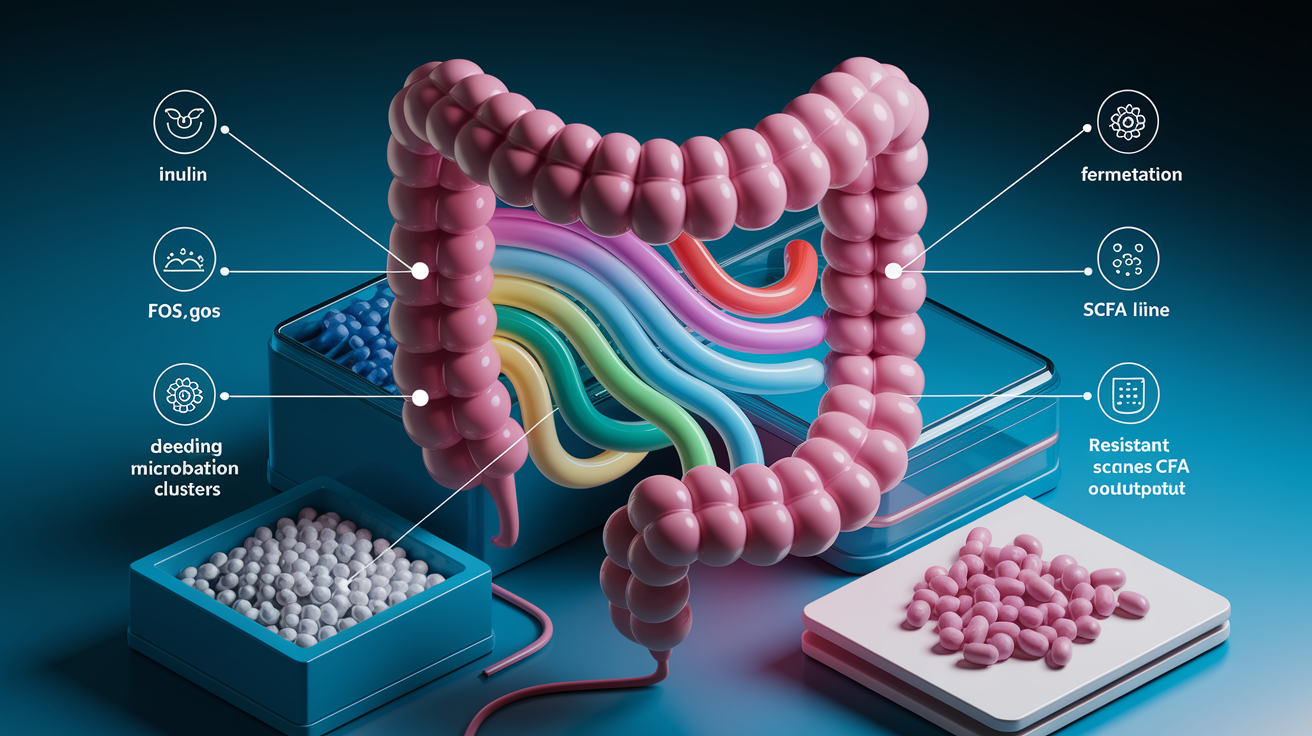
Different prebiotic fibers ferment at different rates and in different parts of your colon. Each one feeds specific bacteria and produces unique benefits. Combining types creates a staggered feeding schedule that keeps beneficial microbes active from the beginning of your colon all the way to the end.
Inulin
Inulin ferments fast, mostly in the proximal colon. It’s a favorite food for bifidobacteria. Studies show measurable increases in bifidobacterium populations within two to four weeks of daily inulin intake. Because it ferments quickly, inulin can produce gas if you ramp up too fast. Once adapted, most people tolerate it well and see improvements in regularity and calcium absorption.
FOS
Fructooligosaccharides (FOS) are short-chain fibers that also boost bifidobacteria and have been linked to better mineral absorption, especially calcium. FOS ferments rapidly in the upper colon and can help inhibit pathogenic bacteria by lowering local pH. It’s often combined with inulin in supplements because the two have overlapping but slightly different bacterial targets.
GOS
Galactooligosaccharides (GOS) support both bifidobacteria and lactobacilli and have shown immune-modulating effects in clinical trials, including enhanced natural killer cell activity and reduced markers of systemic inflammation. GOS ferments a bit more slowly than FOS, extending its benefits deeper into the colon. It’s one of the gentler prebiotics for people sensitive to rapid fermentation.
Resistant Starch
Resistant starch reaches the distal colon largely intact, where it becomes a primary fuel for butyrate-producing bacteria. Butyrate is the preferred energy source for colon cells and plays a central role in gut barrier integrity and inflammation control. Resistant starch intake has been associated with improved insulin sensitivity and lower post-meal blood sugar spikes.
| Fiber Type | Fermentation Rate | Primary Benefit |
|---|---|---|
| Inulin | Fast (proximal colon) | Boosts bifidobacteria; improves calcium absorption |
| FOS | Fast (proximal colon) | Enhances mineral uptake; inhibits pathogens |
| GOS | Moderate | Supports immune markers; feeds bifidobacteria & lactobacilli |
| Resistant Starch | Slow (distal colon) | Fuels butyrate production; improves insulin sensitivity |
Prebiotic Fiber Food Sources That Naturally Enhance Gut Health

Eating a wide variety of plant foods is the most reliable way to feed a diverse microbiome. Different fibers ferment in different colon regions and feed different bacterial populations. The more types you include, the broader the metabolic benefits. Cross-feeding happens when one species of bacteria breaks down fiber into compounds that another species can use, creating a cooperative network that’s more resilient to stress, diet shifts, and pathogen exposure.
A practical target is about 30 different plant foods per week. Vegetables, fruits, whole grains, legumes, nuts, seeds, and herbs all count. You don’t need exotic ingredients. Rotating through common options like onions, oats, apples, and lentils will cover most prebiotic bases. Pairing multiple fiber types at meals (oatmeal with banana and a handful of berries, for example) mimics the multi-fiber approach shown to produce the strongest microbiome diversity in research.
Common prebiotic-rich foods:
- Garlic and onions (inulin, FOS)
- Asparagus (inulin)
- Green bananas (resistant starch)
- Cooked-then-cooled potatoes and rice (resistant starch)
- Oats and barley (beta-glucan)
- Apples with skin (pectin)
- Chickpeas, lentils, and beans (GOS, resistant starch)
- Jerusalem artichokes, also called sunchokes (very high in inulin)
- Leeks (inulin, FOS)
- Dandelion greens (inulin)
Mechanisms Linking Prebiotic Fiber to SCFAs and Gut Barrier Strength

When bacteria ferment prebiotic fiber, they produce short-chain fatty acids (SCFAs). Primarily acetate, propionate, and butyrate. These three metabolites account for a large share of the health benefits attributed to prebiotics, and each one plays a distinct role.
Acetate is the most abundant SCFA and circulates widely, supporting energy metabolism and serving as a substrate for lipid synthesis. Propionate helps regulate cholesterol by influencing liver cholesterol production and bile acid recycling. Butyrate is the preferred fuel for the cells lining your colon. It strengthens tight junctions between cells, reducing gut permeability (often called “leaky gut”), and has potent anti-inflammatory effects that help calm local and systemic immune responses.
Using multiple types of prebiotic fiber creates a broader SCFA profile because different bacteria produce different ratios of these acids. A diverse SCFA mix strengthens the mucus layer that protects your gut lining, improves immune signaling, and reduces inflammatory markers like C-reactive protein and IL-6. This is why multi-fiber strategies outperform single-fiber supplements in most studies. You’re feeding a wider team of microbes and generating a richer set of protective metabolites.
Choosing Prebiotic Fiber Supplements for Better Gut Health Outcomes

If you’re not getting enough prebiotic diversity from food alone, a well-formulated supplement can fill the gap. Look for products that include at least three to four different prebiotic fiber types. Combinations like inulin, FOS, GOS, and resistant starch cover multiple fermentation rates and colon regions. Check the Supplement Facts panel to confirm the amount of each fiber per serving. Vague “proprietary blend” labels without individual quantities make it impossible to know what you’re actually getting.
Third-party testing seals (USP, NSF, Informed Choice) signal that the product has been independently verified for purity and potency. Most people tolerate 5 to 10 grams per day of mixed prebiotic fibers once they’re adapted, but starting at a lower dose and building up over two to three weeks reduces the risk of gas and bloating. Prebiotics can be paired with probiotics to create a “synbiotic” effect. The fiber feeds both the supplemented strains and your native bacteria, improving colonization and overall benefit.
What to check on supplement labels:
- Presence of multiple fiber types (≥3), not just one
- Clearly listed amounts per fiber (in grams), not hidden in proprietary blends
- Third-party testing certification (USP, NSF, or similar)
- If combined with probiotics, the specific strains and CFU count per serving
- Absence of added sugars, fillers, or unnecessary additives
- Dosing instructions that recommend gradual titration
| Form | Pros | Typical Use Case |
|---|---|---|
| Powder | Flexible dosing; easy to mix into beverages or foods; cost-effective per dose | Daily smoothies, oatmeal, or water; users who want precise control over intake |
| Capsule | Consistent dose; portable; no taste; convenient for travel | People who prefer pills; those adding prebiotics to an existing supplement routine |
| Gummy | Palatable; good adherence for adults and kids; no mixing required | Children (ages 4+); adults who dislike pills or powders |
How to Introduce Prebiotic Fiber Safely and Manage Temporary Side Effects

Gas and bloating are common when you first increase prebiotic intake. Your gut bacteria are ramping up fermentation activity. These symptoms don’t mean the fiber is harmful. They’re a sign your microbiome is adapting. But they can be uncomfortable if you add too much too quickly. Most people’s digestive systems adjust within one to two weeks, and symptoms resolve as bacterial populations stabilize.
Taking prebiotics with meals slows fermentation and reduces the sudden production of gas. Splitting your dose across the day (for example, half in the morning, half in the evening) can also smooth out fermentation and make side effects less noticeable. If you’re sensitive, start with food sources like oats or cooked-then-cooled potatoes before adding concentrated supplements. Always ramp up slowly.
Safe titration plan (5 steps):
- Week 1: Start with 2 to 3 grams per day of mixed prebiotic fiber or one high-prebiotic food per day (a serving of oats or half a green banana).
- Week 2: If tolerated, increase to 4 to 5 grams per day or add a second prebiotic-rich food.
- Week 3: Advance to 6 to 8 grams per day or three varied prebiotic foods daily.
- Week 4: Reach your target dose (typically 8 to 10 grams per day for supplements, or diverse whole-food intake if using food alone).
- Ongoing: Maintain consistent intake. If symptoms flare after a break, re-titrate over a few days rather than jumping back to full dose.
Scientific Evidence on Prebiotic Fiber and Gut Health Improvements

Randomized controlled trials consistently show that prebiotics increase populations of beneficial bacteria, especially bifidobacteria and lactobacilli. One meta-analysis found that inulin supplementation significantly raised bifidobacterium counts within two to four weeks, with effects sustained as long as intake continued. Multi-fiber formulations produce broader microbiome shifts than single-fiber products, improving resilience after stressors like antibiotics, travel, or dietary disruptions.
SCFA-mediated benefits are well-documented in studies from 2014 through 2023. Trials measuring fecal and serum SCFA levels show that prebiotic fiber intake increases butyrate, propionate, and acetate concentrations, correlating with improvements in inflammatory markers (lower IL-6, TNF-α), better glucose metabolism, and enhanced gut barrier function (measured by reduced serum lipopolysaccharide and improved zonulin levels).
Clinically meaningful changes in stool consistency, bowel transit time, and subjective digestive comfort typically appear within four to six weeks of consistent use. Biomarkers like fecal calprotectin (a marker of gut inflammation) tend to decrease. Some studies report improvements in systemic markers like fasting insulin and LDL cholesterol, particularly with resistant starch and beta-glucan fibers.
Major research-backed findings:
- Inulin and FOS reliably increase bifidobacteria abundance within 2 to 4 weeks
- Multi-fiber approaches improve microbiome resilience and recovery after antibiotic use
- SCFA production from prebiotics correlates with reduced systemic inflammation and better metabolic markers
- Resistant starch supplementation improves insulin sensitivity and post-meal glucose control in multiple trials
Integrating Prebiotic Fiber Into Daily Eating Patterns for Gut Health
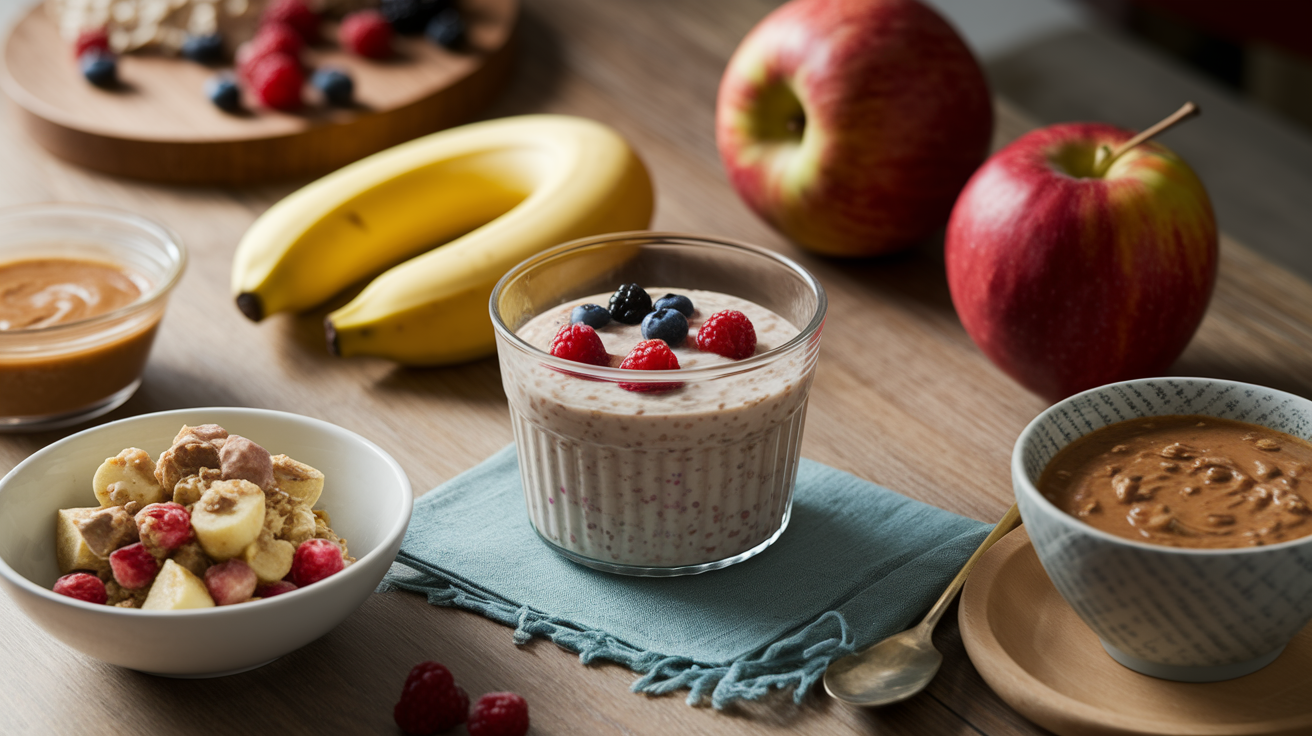
Building prebiotic fiber into your routine doesn’t require a complete diet overhaul. Start by adding one high-prebiotic food to each meal. Garlic or onion in dinner, oats at breakfast, an apple as a snack. Cooking and cooling starchy foods like potatoes, rice, and pasta increases their resistant starch content, turning leftovers into a prebiotic boost. Smoothies are an easy vehicle for inulin or acacia fiber powder. You won’t taste either one if you blend them with fruit.
Pair prebiotic-rich foods with fermented options (yogurt, kefir, sauerkraut, kimchi) to create a synbiotic effect at the meal level. The live cultures in fermented foods get an immediate fuel source from the fiber, improving their survival and activity in your gut. Gradually rotating through different vegetables, grains, and legumes each week keeps your fiber intake diverse and prevents your microbiome from adapting too narrowly to one type.
Simple meal and snack ideas (6 examples):
- Overnight oats (beta-glucan) topped with sliced green banana (resistant starch) and chia seeds
- Scrambled eggs with sautéed garlic, onion, and asparagus (inulin, FOS)
- Lentil soup (GOS, resistant starch) with a side of rye or barley bread (beta-glucan)
- Apple slices with almond butter (pectin plus healthy fat to slow digestion)
- Cooked-then-chilled potato salad made with plain yogurt dressing (resistant starch plus probiotics)
- Smoothie with inulin powder, frozen berries, spinach, and kefir (multi-fiber plus live cultures)
When Prebiotic Fiber May Require Personalization or Clinical Guidance

For most people, prebiotics are well-tolerated and beneficial. But a small subset, especially those with small intestinal bacterial overgrowth (SIBO) or severe FODMAP sensitivity, may experience worsening symptoms. In SIBO, bacteria have overgrown in the small intestine where they shouldn’t be, and feeding them with fast-fermenting prebiotics can increase bloating, pain, and diarrhea. If you have diagnosed SIBO or suspect it (persistent upper-GI bloating within 1 to 2 hours of eating fiber), work with a practitioner to address the overgrowth first. Then reintroduce prebiotics slowly once bacterial populations are rebalanced.
Breath testing (lactulose or glucose breath tests) can help identify SIBO, and stool-based microbiome sequencing can reveal whether your gut has unusually low diversity or an overgrowth of gas-producing species. Personalized nutrition approaches, using food diaries, symptom tracking, and lab data, allow you to tailor fiber types and doses to your tolerance. Some people do best starting with resistant starch or pectin (slower fermenters) before advancing to inulin or FOS. Others tolerate everything fine from day one if they titrate carefully.
Final Words
Start by adding one prebiotic-rich food or a small supplement dose this week. We covered what prebiotic fiber is, how different types feed microbes, and the timeline for early shifts and deeper changes.
You also got practical food lists, supplement tips, and a safe titration plan to cut down gas. Special cases like sensitivity or SIBO need slower personalization.
Use simple steps. Mix variety into meals, aim for steady increases, and note how you feel. Adding prebiotic fiber for gut health is a habit that pays off in a few weeks, and you’ll notice steadier digestion and energy.
FAQ
Q: Is prebiotic fiber good for my gut health?
A: Prebiotic fiber is good for gut health because it feeds beneficial microbes, boosts microbial diversity, improves stool consistency, and can lower inflammation; small improvements appear in 1–2 weeks, larger shifts by 4–6 weeks.
Q: What is the best source of prebiotic fiber? / What’s the best prebiotic for gut health?
A: The best prebiotic sources are whole foods like garlic, onions, asparagus, Jerusalem artichokes, green bananas, cooked-then-cooled potatoes, oats, barley, legumes, and apples—aim for variety over a single “best” food.
Q: What probiotics are good for Mthfr mutation?
A: Probiotics for MTHFR mutation are not one-size-fits-all; clinically tested Lactobacillus and Bifidobacterium strains support gut balance, and you should discuss folate-supporting B vitamins and personalized advice with your clinician.