


Think a big smoothie or a fiber-packed breakfast will power your workout?
It often leaves you bloated, heavy, and out of breath.
If you want to train light and strong, choose low-fiber (the part of plant foods your body doesn’t fully break down), low-fat, quick-digest carbs and keep portions small.
This post lays out simple foods, timing, and practical swaps so you skip the mid-workout slosh and keep steady energy.
Pre-Workout Foods That Prevent Bloating
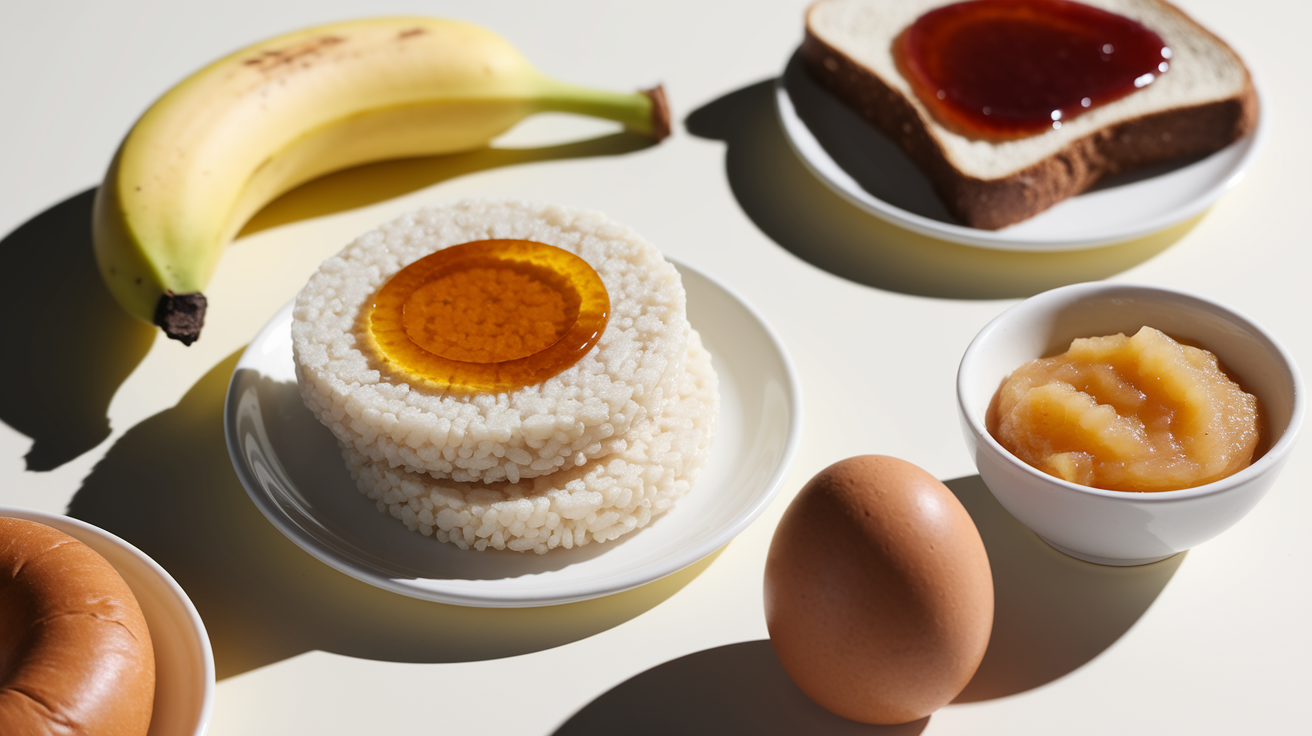
The fastest way to stop pre-workout bloating? Stick with low-fiber, low-fat foods that digest quickly and don’t trap gas in your gut. Your digestive system can’t handle a complex meal when you’re about to start moving. Simple carbs become your safest bet. They absorb fast, give you quick energy, and keep your stomach feeling light.
Timing matters just as much as what you eat. If you’re eating 30 to 45 minutes before training, keep portions tiny. A single banana or one rice cake with honey. Your stomach’s still working when you start moving, so keeping the load light prevents that sloshing, bloated feeling mid-workout. Got 1 to 2 hours? You can eat a slightly larger snack with some protein. One slice of white toast with a tablespoon of peanut butter or a small bowl of oatmeal made with water.
Here are six pre-workout foods that rarely cause bloating:
One medium banana (easy sugars, minimal fiber, digests in 20 to 30 minutes)
One or two rice cakes with a thin layer of honey or jam (very low fat, quick carbs)
One slice of white toast with jam (refined grain, gentle on the gut)
A small cup of plain applesauce, around 100 to 150 g (low fiber, naturally sweet)
Half a bagel, plain or lightly toasted (simple carbs, minimal fat)
One boiled egg if protein sits well with you (quick protein, no dairy, no fiber)
Keep portions small enough that you could jog within 20 minutes of finishing. If your stomach still feels full or heavy, you’re eating too much or too close to your warm-up.
Why Bloating Happens Before Exercise

Bloating before a workout usually comes down to two things: your gut’s holding too much gas, or it’s holding too much undigested food and fluid. When you eat high-fiber foods like broccoli, beans, or whole-grain cereal close to exercise, those fibers ferment in your intestines and produce gas that gets trapped as you start moving. Your body can’t pass that gas naturally when you’re mid-squat or halfway through a run.
High-fat meals slow down how fast your stomach empties. A greasy breakfast sandwich might taste good, but two hours later that fat’s still churning around while you’re trying to sprint. Same thing happens with large portions. Drink 500 ml of a thick smoothie 20 minutes before lifting? Your stomach’s literally stretched and sloshing.
Dehydration makes bloating worse because your intestines pull water from your body to help move food through. That slows digestion and increases gas buildup. Eating too fast also causes you to swallow air with every bite, and that air has to go somewhere. Even mild lactose sensitivity can turn a pre-workout yogurt into a bloated, gassy session. Small digestive missteps add up fast when you’re about to ask your body to perform.
Foods and Ingredients to Avoid Before a Workout
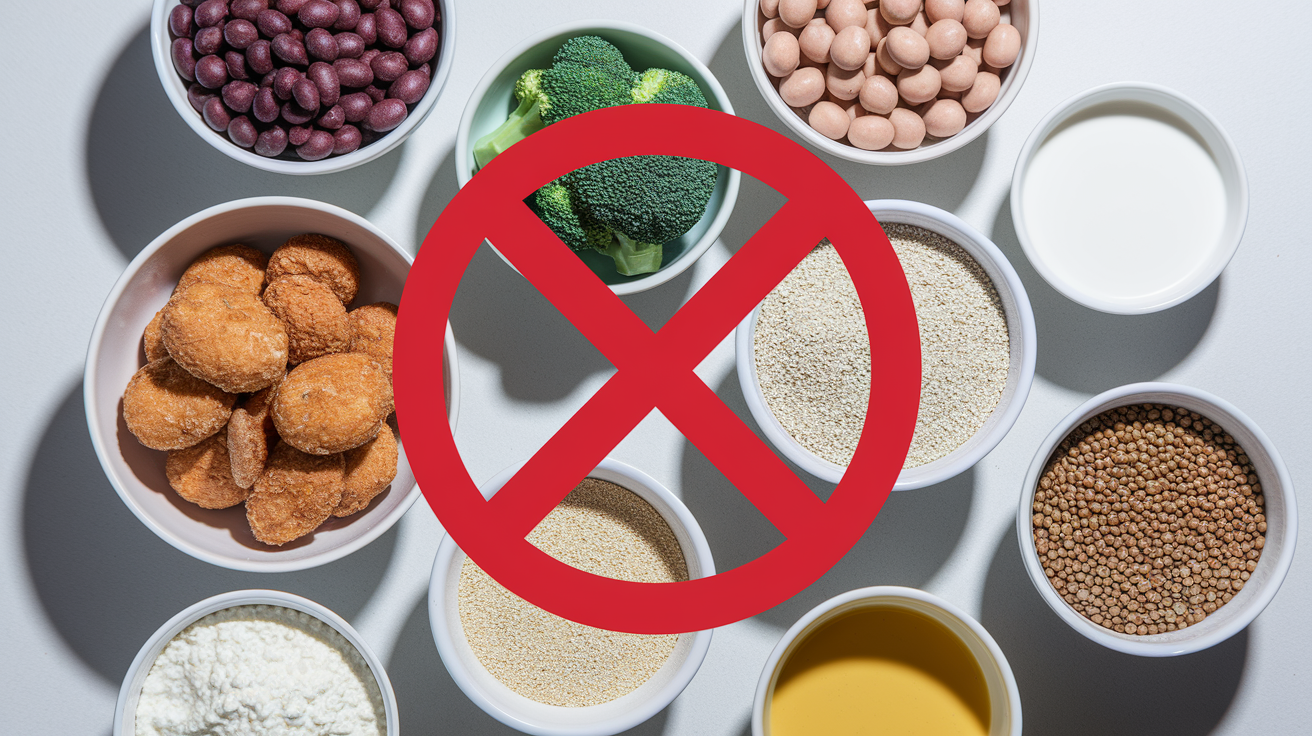
Certain foods are almost guaranteed to cause bloating if you eat them in the hour or two before training. Your gut can’t process them quickly enough. The result? Gas, cramping, or that heavy, sluggish feeling that kills your workout before it starts.
Beans and lentils. High in fermentable fiber and oligosaccharides that produce gas during digestion.
Cruciferous vegetables like broccoli, cauliflower, and Brussels sprouts. They contain raffinose, a sugar that ferments and traps gas in your intestines.
Carbonated drinks including sparkling water and soda. Bubbles equal swallowed air, which equals immediate bloating.
Fried foods like fries, fried chicken, or anything cooked in heavy oil. Fat slows gastric emptying and sits in your stomach for hours.
Artificial sweeteners such as sorbitol, maltitol, and xylitol found in sugar-free gum, protein bars, and some sports drinks. These sugar alcohols ferment in the gut and cause gas and cramping.
High-fiber cereals and bran products. Fiber takes time to move through your system and ferments along the way.
Dairy products if you’re even mildly lactose-sensitive. Undigested lactose ferments in your colon and produces gas, bloating, and sometimes cramping.
If you’re prone to bloating, treat the two hours before your workout like a no-fly zone for these foods. Even small amounts can derail your session.
Portion Sizes and Timing for Optimal Digestion
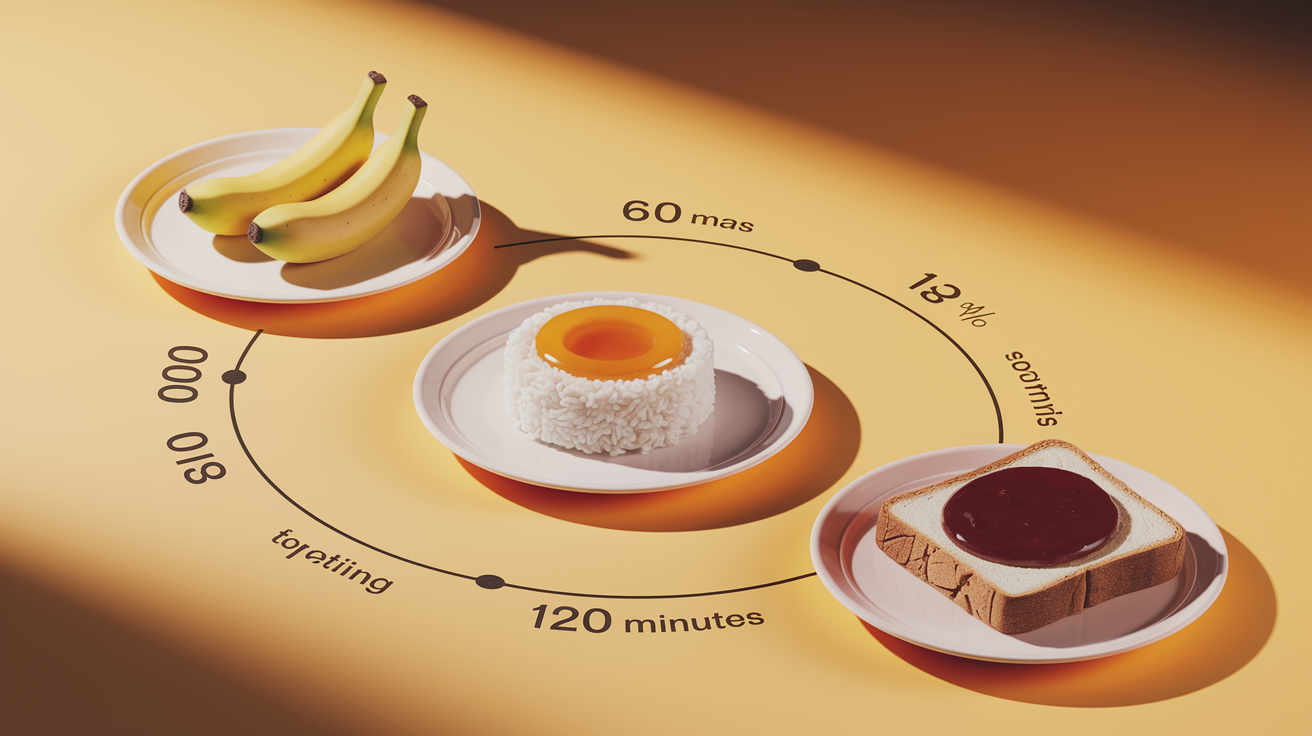
Smaller portions digest faster and produce less bloating because your stomach doesn’t have to work as hard. A 200 to 300 calorie snack eaten 30 to 60 minutes before exercise gives you enough fuel without overloading your digestive system. Think one banana, one rice cake with honey, or half a bagel. Your stomach can empty these simple carbs quickly, and you’ll feel light and energized instead of heavy and sluggish.
Larger meals in the 300 to 500 calorie range need at least 1.5 to 2 hours to digest properly. A small bowl of oatmeal with a tablespoon of peanut butter or one scrambled egg with a slice of toast falls into this category. Eat a full meal any closer to your workout? That food’s still sitting in your stomach when you start moving, and the jostling can cause nausea, cramping, and bloating.
Here’s a simple timing guide based on portion size:
| Time Before Workout | Calories | Examples |
|---|---|---|
| 30 minutes | 100 to 200 maximum | One small piece of fruit, one rice cake, or a few crackers |
| 1 hour | 200 to 300 | One slice of toast with jam, a small banana with a tablespoon of nut butter, or half a bagel |
| 2 hours | 300 to 500 | A small bowl of oatmeal, one or two scrambled eggs with toast, or a small smoothie with protein powder |
Sample Pre-Workout Meals Based on Timing
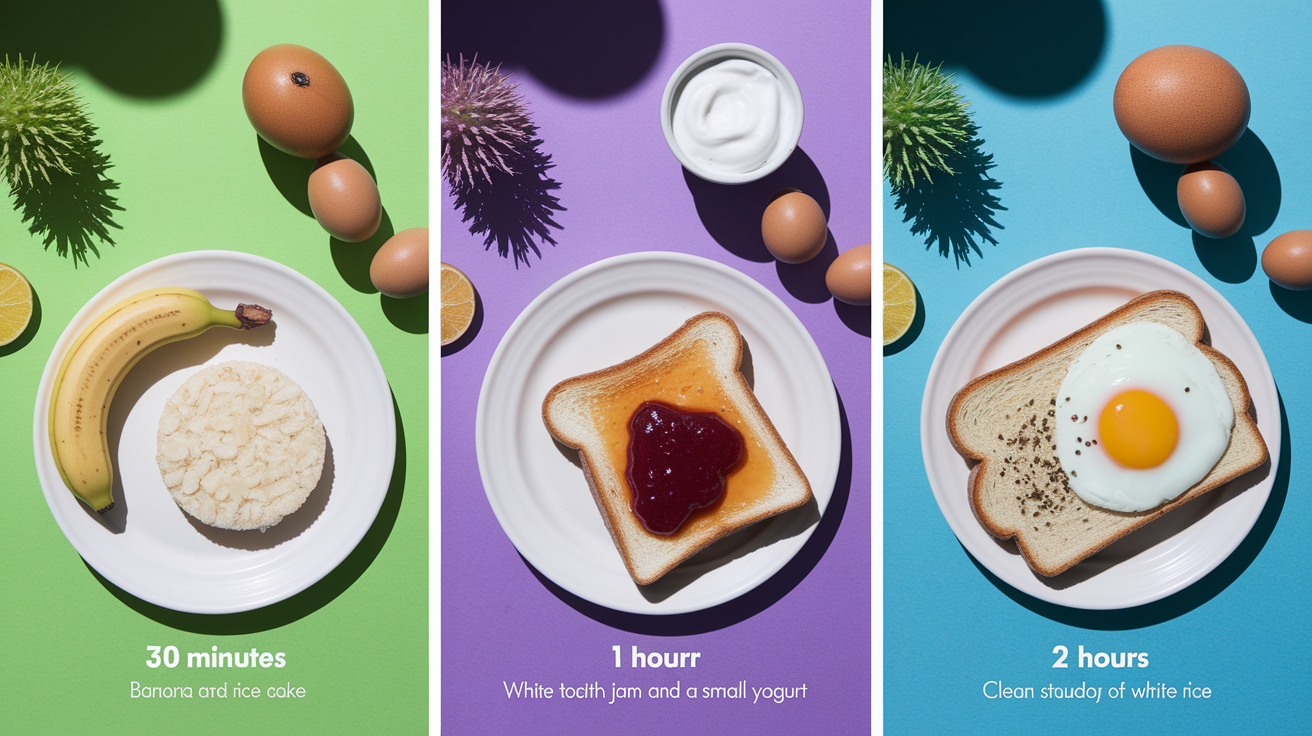
30 minutes before training
One medium banana. Quick sugars, minimal fiber, no prep required.
One rice cake with a thin layer of honey. Simple carbs, almost no fat, very light on the stomach.
A 250 ml smoothie made with one banana, water, and a small scoop of protein powder if tolerated. Blend it thin so it digests fast.
1 hour before training
One slice of white toast with jam or honey. Refined carbs digest faster than whole grain and won’t sit heavy.
A small cup of plain Greek yogurt with a drizzle of honey, if you tolerate dairy well and need a bit of protein.
Half a cup of cooked oatmeal made with water, topped with a teaspoon of honey. Warm, easy to digest, gentle on the gut.
2 hours before training
One or two scrambled eggs with one slice of white toast. Small portion of protein and easy carbs, no heavy fats.
A small serving of white rice, around 100 to 150 g cooked, with grilled chicken. Palm-sized portion, low fiber, balanced fuel.
Half a peanut butter sandwich on white bread with a small banana on the side. Simple carbs plus a bit of protein and fat for sustained energy.
Choose your option based on workout intensity. Doing high-intensity intervals or heavy lifting? Stick to the 1-hour or 2-hour windows so your body has time to absorb the fuel. Light jog or yoga session? The 30-minute snack’s usually enough.
Final Words
Pick a low-fiber, low-fat snack 30–90 minutes before you move. Choose easy-to-digest carbs with a bit of protein so your stomach stays calm and your energy holds.
We covered helpful foods, what to skip, portion sizes, and simple timing rules (30/60/120 minutes). Use the sample meals as quick swaps when you’re short on time.
If you’re wondering what to eat before a workout to avoid bloating, try one small change this week — it often makes a big difference.
FAQ
Q: What should I eat 30 minutes before the gym?
A: The best foods to eat 30 minutes before the gym are small, low-fiber carbs with a bit of protein—banana, rice cake with nut butter, or yogurt—easy to digest and give quick energy without bloating.
Q: What is the 2 2 2 rule in gym?
A: The 2 2 2 rule in the gym usually means two exercises per muscle, two sets each, twice per week; people use it differently, so check the specific plan you’re following.
Q: Is it OK to workout on an empty stomach?
A: Working out on an empty stomach is okay for many people, especially low-intensity sessions, but high-intensity or long workouts usually need a small carb snack to avoid dizziness and poor performance.
Q: How to prevent bloating from pre-workout?
A: To prevent bloating from pre-workout, choose small, low-fiber low-fat snacks (banana, rice cake), hydrate, avoid carbonated drinks and dairy if sensitive, and eat 30–90 minutes before exercise.