


Think eating right before a workout proves grit? For a sensitive stomach, it’s the quickest way to feel nauseous, bloated, and wiped out.
When you eat changes how much food is still sitting in your gut when you start moving, and that decides if you get steady energy or a sloppy, sick feeling.
This post lays out simple timing windows, 3 hours, 1 to 2 hours, and 30 to 60 minutes, plus easy low-fuss food swaps so you can skip the slosh, avoid nausea, and actually feel energized during your session.
Optimal Timing Strategies for Pre‑Workout Eating with a Sensitive Stomach
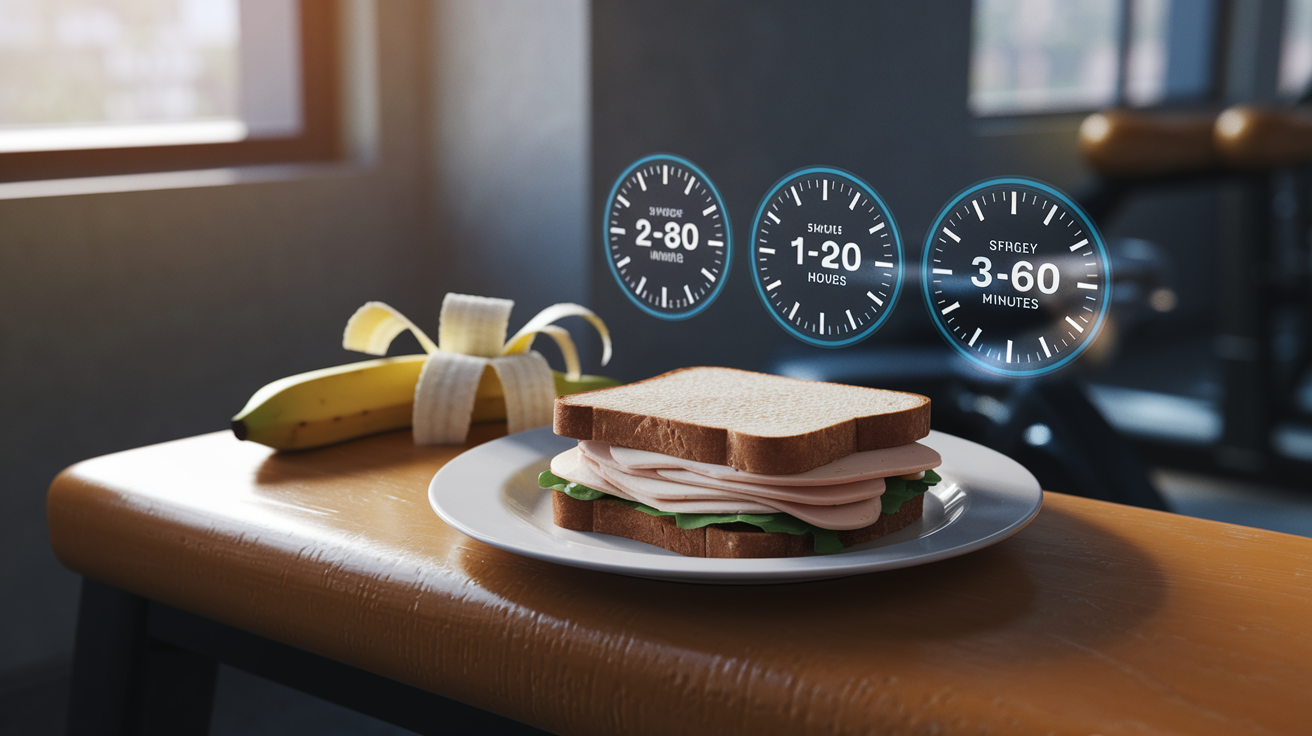
If your stomach’s touchy, a full meal 2–3 hours before training usually works best. That gives your digestive system enough time to empty out and start shuttling nutrients where they need to go. You’re building breathing room between eating and moving. Your carbs get digested, they’re ready to burn, and your stomach isn’t sloshing around when you start your warmup.
Can’t swing 2–3 hours? A smaller meal 1–2 hours out does the job. Keep it light. Lower fat, lower fiber. Something like a plain turkey sandwich on white bread or a bowl of low fiber cereal with milk won’t weigh you down. Don’t go big here. Think half a normal meal, not a full second lunch.
Cutting it close? If you’ve got 30–60 minutes, stick to simple carbs. A banana. Rice cakes with jam. Plain toast. These digest fast and won’t cramp you up mid set. Sensitive stomachs need more time because digestion slows down when your gut’s easily rattled. That heavy feeling during your first few reps? Food’s still sitting there.
You ate too close if you’re dealing with:
- Nausea in the first 10–15 minutes
- Heavy, sloshing feeling when you move
- Bloating or cramps that get worse as intensity ramps up
- Burping or reflux during warmup
- Sudden bathroom urgency mid workout
How Digestion Works Before Exercise for Sensitive Stomachs
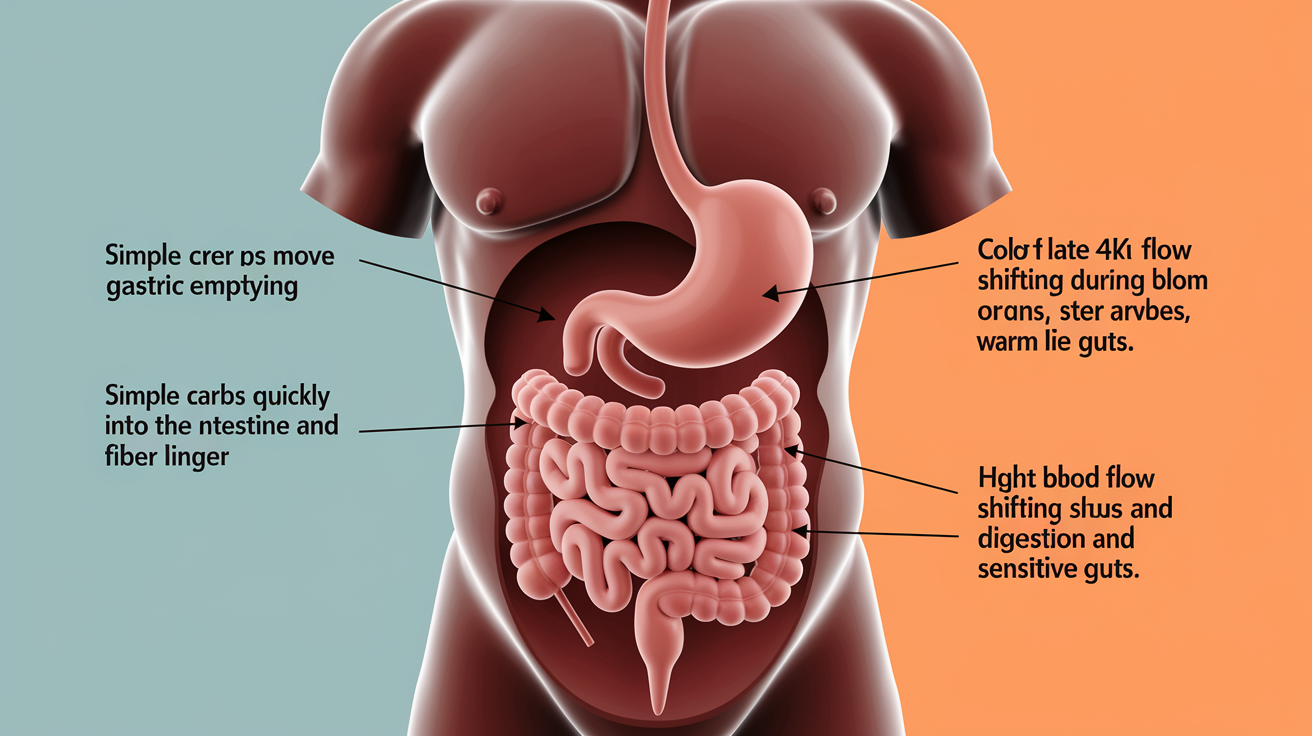
Food lands in your stomach. Acid and enzymes start breaking it down. Then your stomach slowly releases bits into the small intestine. That’s gastric emptying. Simple carbs like white rice or banana clear out in 30–60 minutes. Protein, fat, fiber? Those stick around. A meal with chicken, olive oil, or whole grains can sit there for 2–4 hours.
Once you start exercising, blood flow shifts. Your muscles need it more than your gut does. For most people, that’s fine if the stomach’s mostly empty. But if you’ve got a sensitive stomach, this shift can trap half digested food and cause nausea, cramping, that sluggish heaviness.
Intense exercise releases stress hormones. Those slow down gastric emptying even more. If you’re already someone who digests slowly (common with IBS, anxiety, general gut sensitivity), piling exercise on top of a full stomach makes it worse. That’s why matching what you eat and when you eat it to your personal digestion matters more than hitting some perfect macro balance. A carb snack that clears in 45 minutes beats a “balanced” meal that’s still churning when you walk into the gym.
Best Pre‑Workout Foods for Sensitive Stomachs
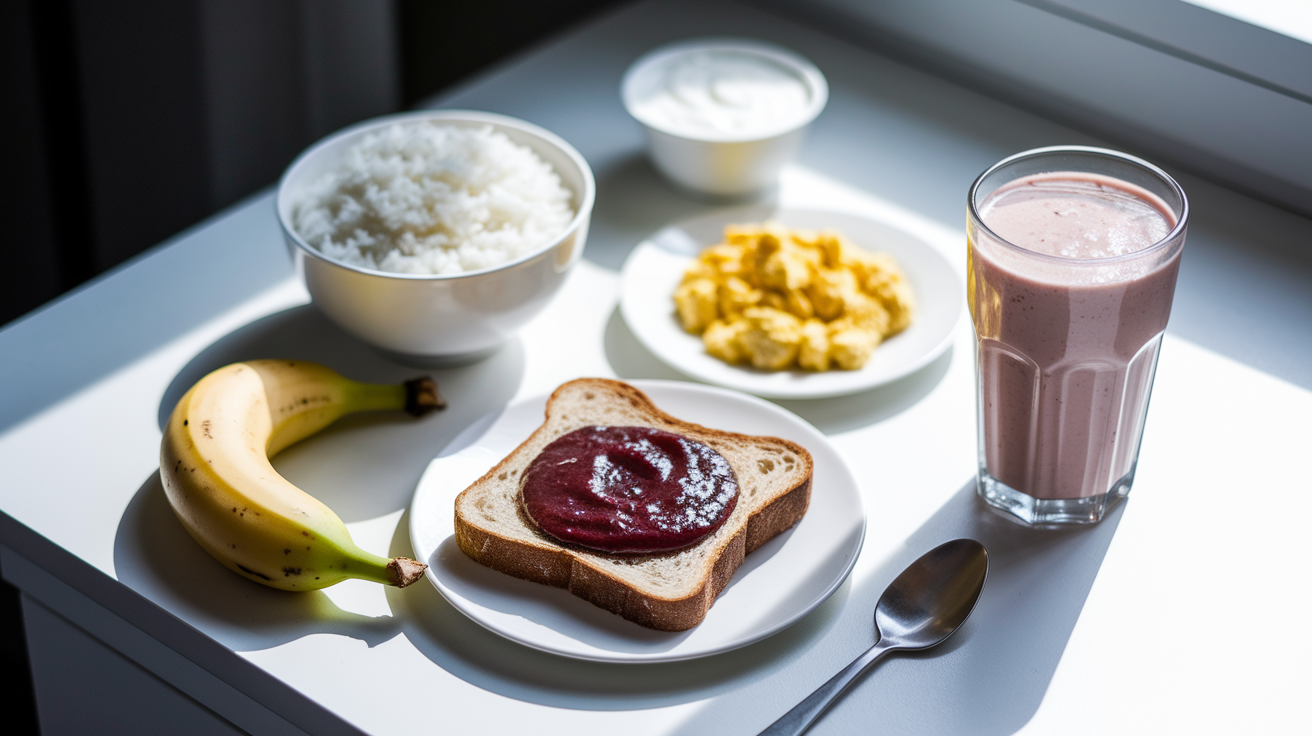
Low fiber, low fat, simple carbs are your safest move close to training. They digest fast and keep things calm. Good options:
- White rice or rice cakes
- Banana or applesauce
- Sourdough or white toast with jam
- Plain scrambled eggs (small portion)
- Low fat Greek yogurt, plain or lightly sweetened
- Smoothie with banana, low fat milk, tiny bit of nut butter
Pairing matters. Keep fat and fiber minimal in that 0–2 hour window. Eating a banana 45 minutes before? Skip the thick peanut butter. Add a scrape if you need it, or save the fat for after. Want eggs? Scramble them plain, pair with white toast. Not a fiber heavy muffin and avocado. The simpler the combo, the faster it moves, the more predictable your stomach feels when you start.
Foods and Habits That Commonly Trigger Stomach Issues Before Workouts
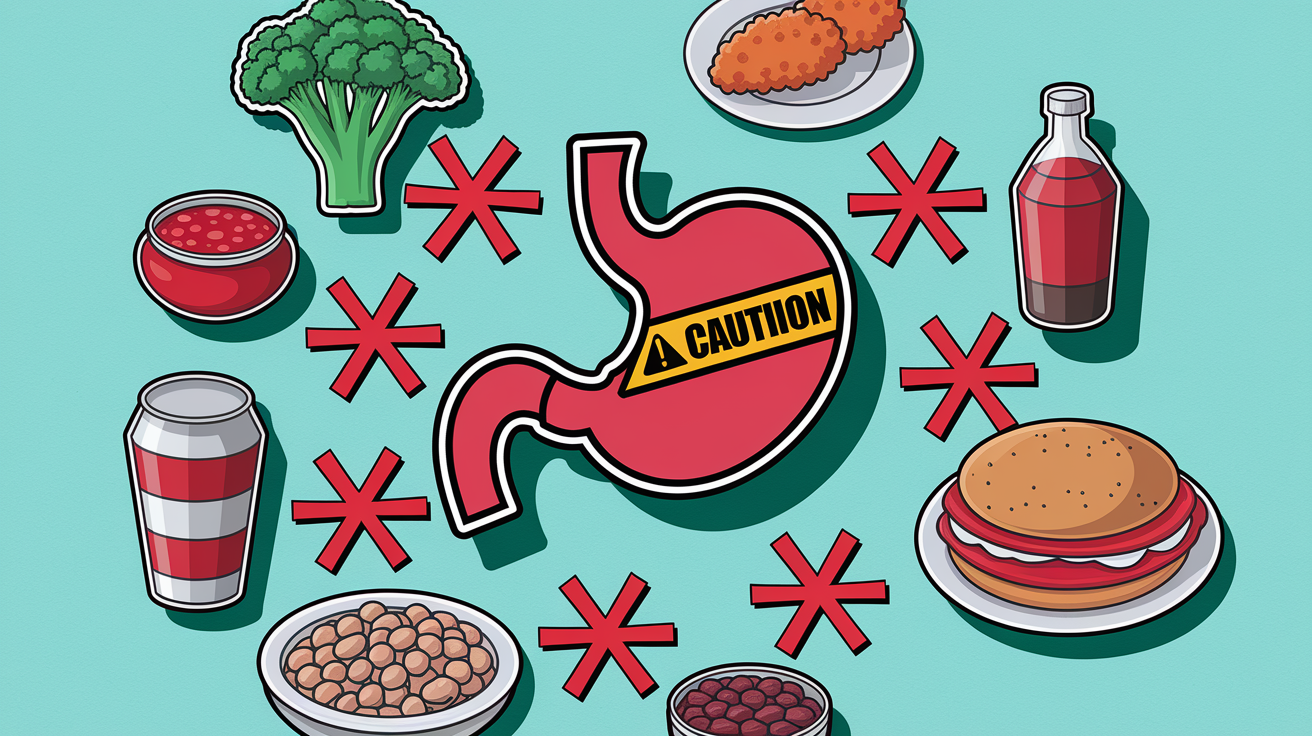
These are common troublemakers for sensitive stomachs before exercise:
- High fiber vegetables (broccoli, Brussels sprouts, big salads)
- Fried or greasy foods (fried chicken, heavy sauces, fast food)
- Spicy seasonings or hot sauces
- Legumes (beans, lentils, chickpeas) within 3–4 hours of training
- Carbonated drinks or sparkling water
- Large meals eaten quickly without chewing well
- High protein, high fat meals (steak, buttery salmon, cheese heavy dishes) within 2 hours of exercise
These slow gastric emptying and increase stomach pressure. Fiber rich veggies and legumes produce gas as they ferment, which makes cramping worse once you’re moving. Carbonation adds air to your digestive tract. Bloating and burping follow. Eating too fast means you swallow more air and don’t give your brain time to catch up, so you’re more likely to overeat and feel stuffed when you start warming up.
How to Personalize Your Meal Timing

Every stomach’s different. What works for someone else might make you feel awful. The only way to know your window is to test it.
Start conservative. Eat a simple meal 2–3 hours before a moderate workout. Pick something neutral. White rice with grilled chicken. Banana with a small amount of peanut butter. Pay attention during the session. Any nausea, bloating, cramping, sluggishness.
Then adjust one thing at a time:
- Try the same meal 2 hours before your next workout instead of 3. Compare how you feel.
- If 2 hours works, test 1.5 hours with a smaller portion.
- If you get discomfort, move the meal earlier or simplify it (cut fat or fiber).
- Once you find a comfortable window for full meals, test snack timing. Try a banana or rice cakes 30–60 minutes before a session.
- Repeat each test at least twice. Make sure it’s not just a fluke from sleep, hydration, or stress that day.
Keep a simple log. Meal, time before workout, workout type, symptoms. After 2–3 weeks, patterns show up. You might find oats work 90 minutes before a run but need 2 hours before lifting. Or that any fat within 2 hours causes nausea, but carbs alone at 45 minutes are fine. Use what you learn to build a predictable routine your gut can trust.
Sample Pre‑Workout Timing Schedules for Sensitive Stomachs
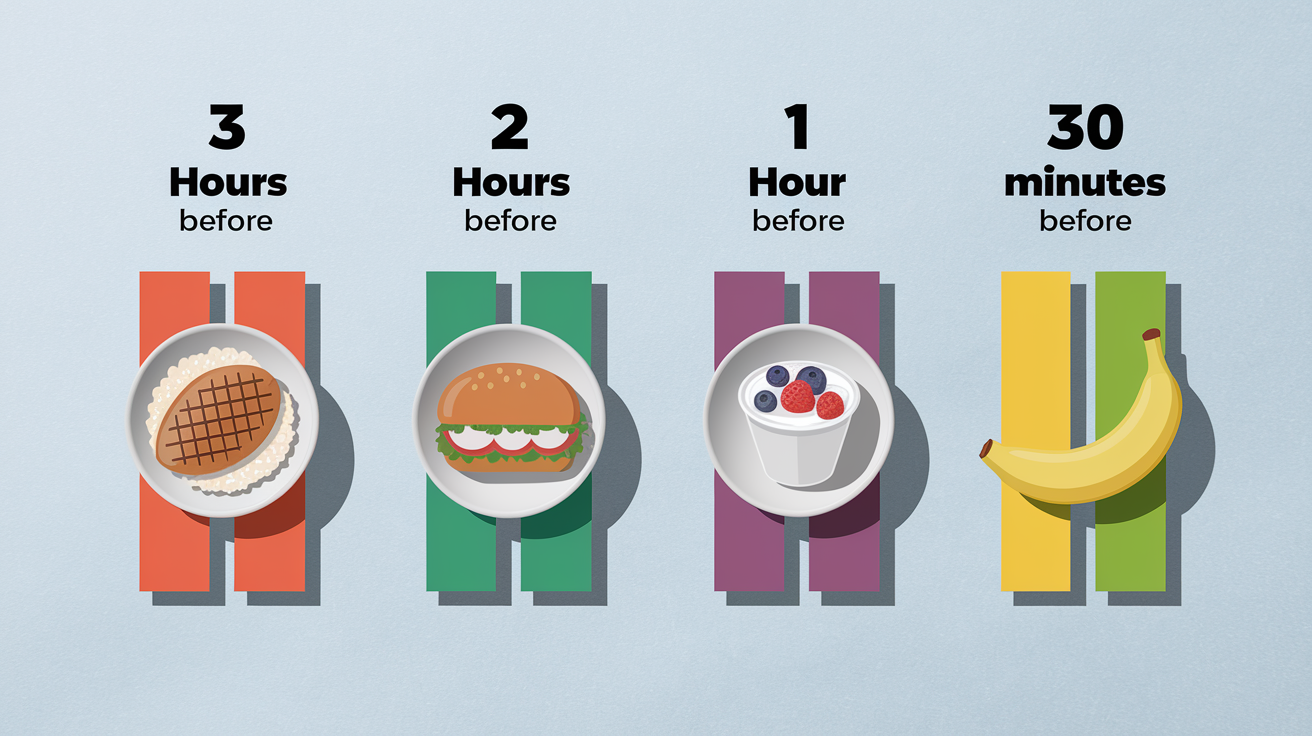
| Time Before Workout | Example Meal | Notes |
|---|---|---|
| 3 hours before | Grilled chicken breast, white rice, steamed carrots | Full balanced meal; safe for most sensitive stomachs if kept moderate in fat and fiber |
| 2 hours before | Turkey sandwich on white bread, small banana | Lower fat, lower fiber option; good for moderate intensity workouts |
| 1 hour before | Low fat Greek yogurt (6 oz) with ½ cup berries | Keep protein and fat minimal; choose low fiber fruit |
| 30 minutes before | 1 medium banana or 2 rice cakes with jam | Simple carbs only; no fat or fiber; small volume |
Pick your schedule based on how sensitive your stomach is and when you train. If you’re very sensitive, default to the 3 hour window for any meal with protein or fat. Use the 30 minute snack option for early morning sessions when you can’t eat hours ahead. If your gut’s moderately sensitive, the 2 hour or 1 hour windows with simpler foods often work. Test each timing during practice workouts. Never try a new schedule on race day or during an important session. Adjust based on how your stomach responds.
Final Words
In the action: full meals 2–3 hours before, mini-meals 1–2 hours, and light carbs 30–60 minutes. Choose low-fiber, low-fat options like banana, white rice, sourdough, or yogurt.
Remember digestion slows with fat, fiber, and exercise, so watch for bloating, cramping, reflux, racing heart, or a heavy stomach. Test one thing at a time and jot notes.
Use these simple rules to dial in pre workout meal timing for sensitive stomachs — small tests will help you find a steady, comfortable routine. You’re on the right track.
FAQ
Q: What is the 3 3 3 rule at the gym?
A: The 3 3 3 rule at the gym is a simple training template — often three exercises, three sets each, with about three minutes rest, or three sets of three reps for strength work.
Q: How many hours before should I eat my pre-workout meal?
A: You should eat your pre-workout meal based on size: full balanced meals 2–3 hours before, smaller mini-meals 1–2 hours, and quick carb snacks about 30–60 minutes before exercise.
Q: What is the 30/30/3 rule for eating?
A: The 30/30/3 rule for eating is a post-workout guideline: aim for about 30 grams protein within 30 minutes after exercise, providing roughly 3 grams of leucine to stimulate muscle repair.
Q: Can you take pre-workout with semaglutide?
A: You can take pre-workout with semaglutide, but semaglutide often slows stomach emptying and causes nausea; start with lower stimulant doses, choose gentle foods, and check with your prescriber first.