


Think you have to slam a giant shake right after every workout to grow? Think again.
Muscle protein synthesis (the process your muscles use to build new protein) peaks about 1 to 3 hours after you eat and stays elevated for several hours.
So timing matters, but it’s not everything, and total daily protein plus how you split servings matters more for both gains and gut comfort.
This post gives clear, practical rules: smart pre/post-workout doses, gentler protein choices, and simple meal splits so you can build muscle without bloating, cramping, or nausea.
How to Schedule Protein for Muscle Gain While Preventing Digestive Upset
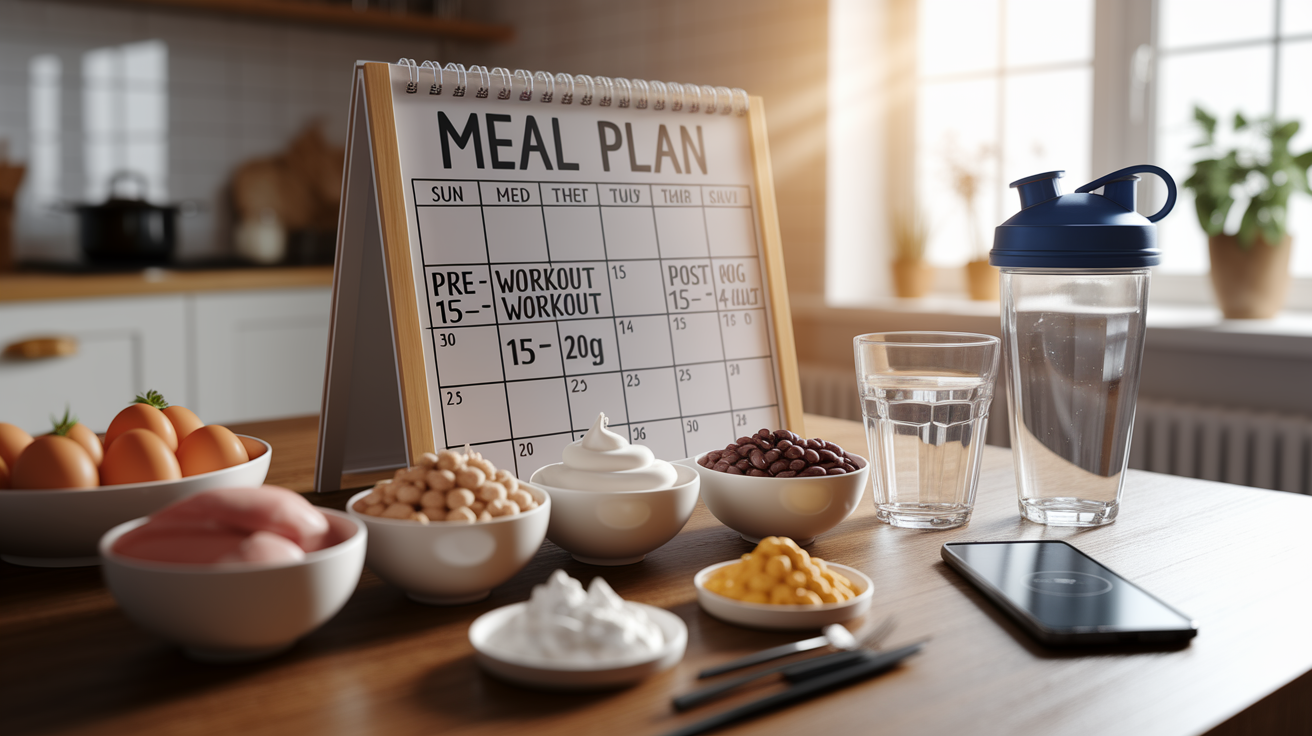
Muscle protein synthesis peaks somewhere between 1 and 3 hours after you eat protein. It stays elevated for up to 6 hours. That’s why you’ll see most recommendations suggest eating protein every 3 to 4 hours throughout the day. You’re keeping your body in a state where muscle building processes stay active without forcing your gut to deal with one or two enormous meals.
Timing protein around training still matters. Just not in the dramatic, make-or-break way you might’ve heard. Aim for 15 to 25 grams about 30 to 60 minutes before a workout. That gives you enough time to digest and reduces the chance of sloshing or cramping mid-session. After training, shoot for 25 to 40 grams within 60 minutes. This range keeps both muscle protein synthesis and your stomach happy. Large doses right before intense work are a reliable recipe for nausea and bloating.
A common mistake? Obsessing over exact timing while ignoring total daily protein. If you nail your per-day target but space meals inconsistently, you’ll still build muscle. Hit perfect timing windows but eat too little protein overall, and you won’t. Think of timing as the way to distribute your daily budget. It’s helpful, but the budget itself is what funds growth.
Practical scheduling tactics to support muscle and digestion:
- Avoid large shakes within 30 minutes of high-intensity training. Give yourself at least 60 minutes, or use a smaller 15 to 20 gram dose if you’re short on time.
- Split big servings across two feedings. If 40 grams in one shake causes bloating, try 20 grams now and 20 grams two hours later.
- Choose liquid over solid formats before training. Shakes usually empty from the stomach faster than chicken and rice, reducing mid-workout heaviness.
- Adjust meal frequency when sensitive. If 3 meals leave you overstuffed, spread the same daily protein across 5 or 6 smaller feedings.
- Hydrate consistently. Dehydration slows nutrient transport and can worsen constipation or bloating, especially when increasing protein intake.
- Pair protein with a simple carbohydrate if tolerated. A banana or handful of berries can improve absorption and provide quick energy without overwhelming digestion.
Optimizing Pre-Workout Protein for Training Performance and Comfort
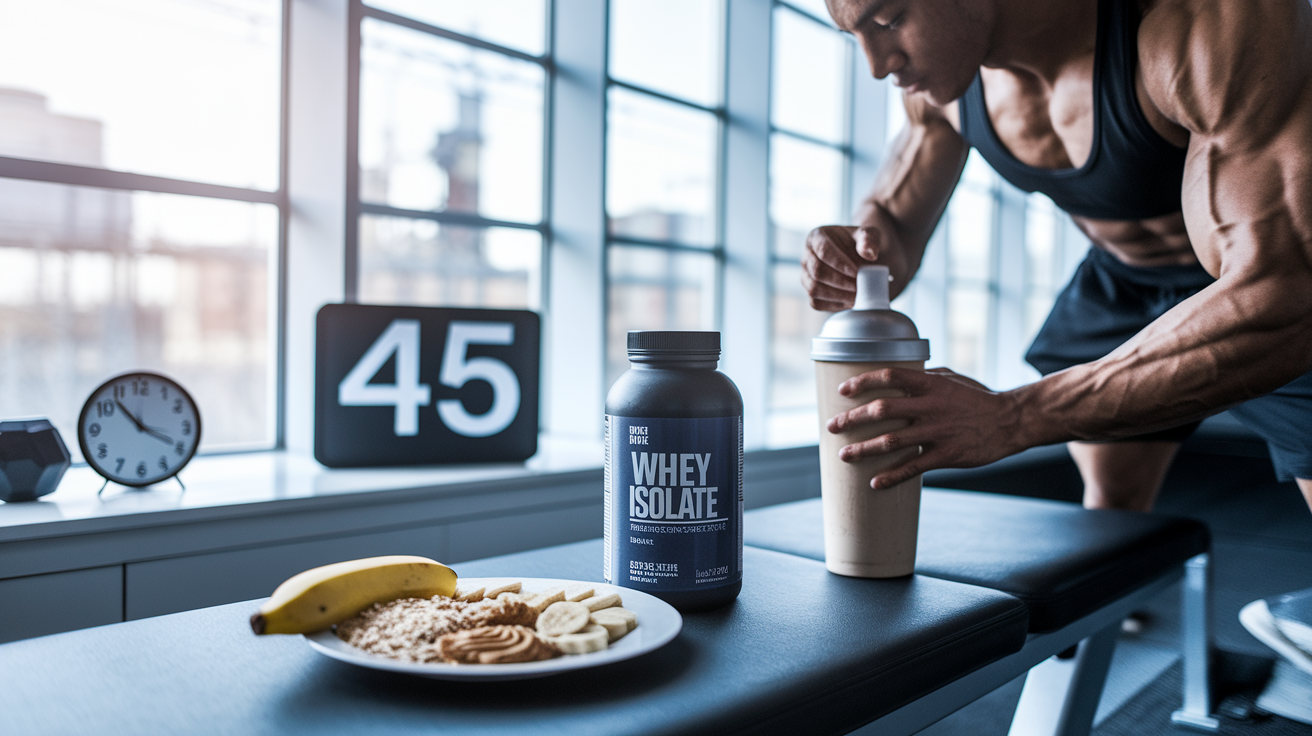
Whey protein reaches peak blood amino acid levels within 30 to 60 minutes of drinking it. Fast option for pre-training intake. How quickly protein leaves your stomach depends on what else is in the meal. Fat and fiber both slow gastric emptying. That slower digestion can be useful between workouts when you want sustained amino acid release, but it becomes a liability when you’re about to sprint, lift heavy, or do high-intensity intervals. A pre-workout shake loaded with peanut butter, oats, and seeds might sit like a rock in your stomach while you’re trying to warm up.
For fasted morning sessions or workouts longer than 90 minutes, a moderate pre-workout protein dose helps limit muscle breakdown and supplies amino acids during the effort. In these scenarios, keep the serving size modest. 15 to 25 grams. And give yourself at least 45 minutes between finishing the shake and starting your warm-up. If you’re training in the afternoon and had a protein-containing meal 2 to 3 hours earlier, adding another pre-workout dose is optional. Your amino acid levels are likely still elevated from that earlier feeding.
Five digestively gentle pre-workout protein options:
- Whey isolate mixed with water. Low lactose, minimal fat, fast absorption.
- Egg whites with a piece of fruit. Lean, easy to digest, and naturally low-fiber.
- Pea and rice protein isolate blend. Plant-based option with a solid amino acid profile and lower potential for dairy-related bloating.
- Greek yogurt (small serving, around 15 to 20 grams protein) with berries. Provides protein and a small carb boost without heaviness if you tolerate lactose.
- Hydrolyzed whey. Pre-digested protein that empties from the stomach quickly and rarely triggers GI upset, though it costs more and can taste slightly bitter.
Advanced Post-Workout Protein Choices for Recovery and GI Ease
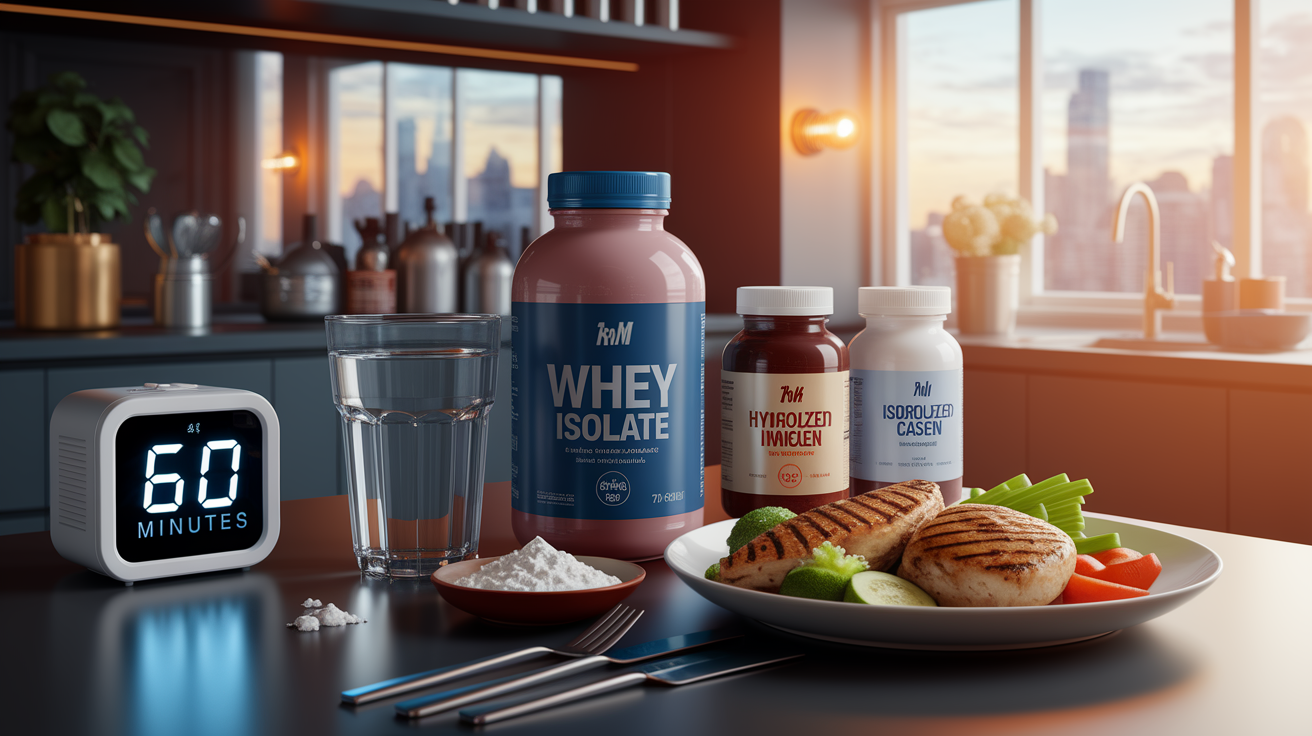
Muscle protein synthesis stays elevated for several hours after resistance training. So the old idea of a strict 30-minute “window” doesn’t hold up under scrutiny. Consuming 25 to 40 grams of protein within 60 minutes after training is still a sensible habit because it ensures you’re feeding recovery when your muscles are most responsive. But waiting 90 minutes or even two hours won’t ruin your progress. This flexibility matters when your stomach is unsettled immediately after a hard session. Forcing down a shake when you’re nauseous just leads to discomfort and poor absorption.
Post-workout protein dose depends on your body weight and total daily target. If you weigh 80 kilograms and aim for 160 grams per day across four meals, a 40-gram post-workout serving fits neatly into that plan. Smaller individuals or those splitting protein into more frequent feedings can use 25 to 30 grams and still maximize muscle protein synthesis. Larger boluses (50+ grams) don’t necessarily increase muscle-building response. They can overwhelm digestion, especially when combined with high-carb or high-fat foods immediately after training.
If you train in the evening and struggle with heavy meals before bed, consider consuming your post-workout protein within an hour of finishing, then having a lighter snack or skipping the pre-sleep feeding altogether. Your body doesn’t require protein every single hour. What matters is that you hit your daily target and avoid long gaps (more than 6 to 7 hours) without intake during waking hours.
Rapid vs Steady Absorption Post-Training
Whey isolate and hydrolyzed whey are the fastest-digesting options, delivering amino acids to muscles within 30 to 60 minutes. That speed makes them ideal immediately after training when your stomach is sensitive or when you have another meal or activity planned soon. Because isolates contain minimal lactose and fat, they’re less likely to cause bloating or gas compared to whey concentrate or whole-food proteins eaten right after a session.
Slower-digesting proteins work well for post-workout meals that happen 2 to 3 hours after training. Casein, blended plant proteins, or whole-food sources like chicken, fish, or beans. These proteins provide a sustained release of amino acids, which can be helpful for overall recovery and satiety, but they’re not necessary in the immediate post-workout window. If you’re prone to reflux or nausea after intense workouts, stick with isolates or hydrolysates for the first hour, then switch to whole foods once your appetite and stomach settle.
Portion Sizes and Daily Protein Distribution for Growth Without GI Problems
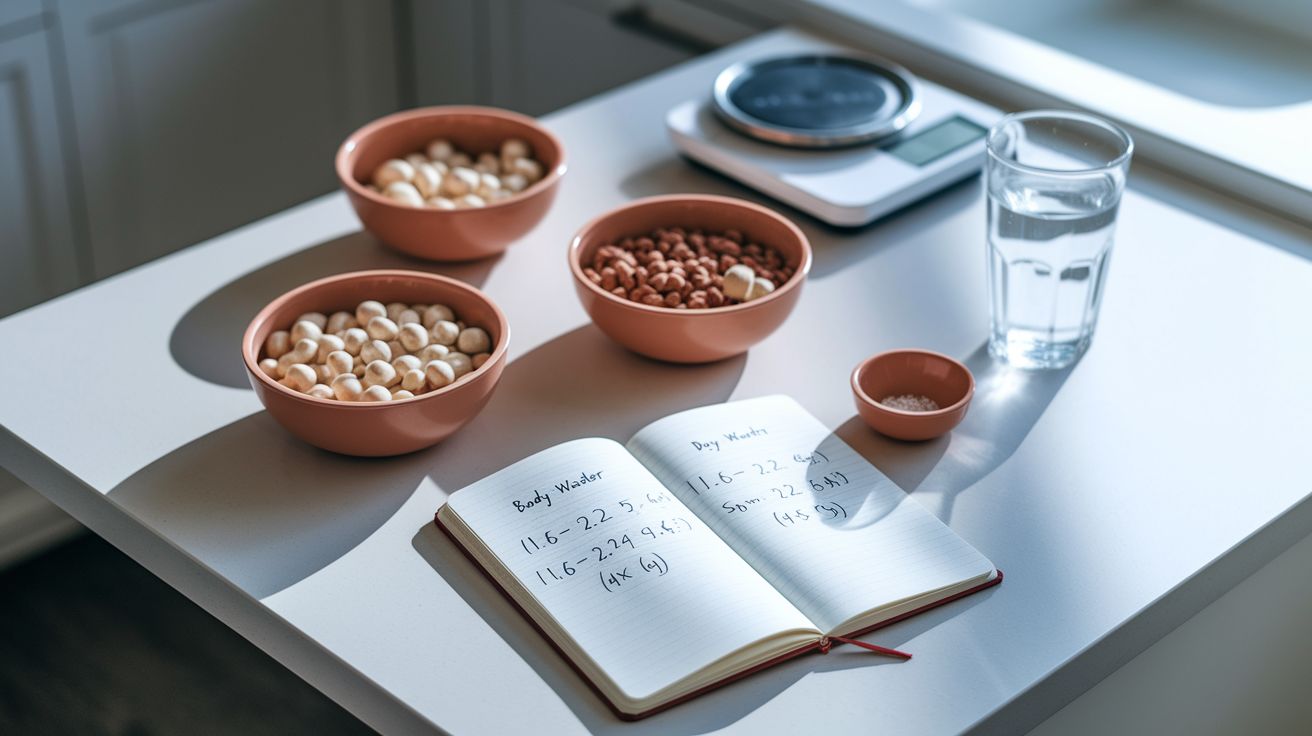
Current hypertrophy research suggests a daily protein intake of 1.6 to 2.7 grams per kilogram of body weight. Most people land around 1.8 to 2.2 grams per kilogram when actively building muscle. For comparison, the World Health Organization’s baseline recommendation is 0.8 grams per kilogram. That prevents deficiency but doesn’t optimize muscle growth. If you weigh 75 kilograms, a hypertrophy-focused target would be roughly 135 to 165 grams per day, compared to the WHO baseline of just 60 grams.
Older advice claimed that the body could only “use” 20 to 25 grams of protein per meal. But 2016 studies showed that larger servings (40 grams of whey or 70 grams of beef) produced greater muscle protein synthesis than smaller amounts. The practical takeaway is that your body can handle and benefit from meals containing 30 to 40 grams of protein. But splitting your daily total into more frequent, smaller doses (20 to 30 grams each) often reduces bloating and makes it easier to reach higher daily targets without feeling overstuffed.
If you’re GI-sensitive, distribute your protein across 4 to 6 meals instead of 3 large ones. This approach keeps each serving manageable while maintaining the 3 to 4 hour spacing that supports elevated muscle protein synthesis throughout the day. As you adapt to higher protein intake over 1 to 2 weeks, you may find you can tolerate slightly larger servings. But there’s no performance advantage to forcing down 50-gram meals if smaller portions feel better.
| Body Weight | Daily Protein Target (1.8–2.2 g/kg) | Sample Meal Split |
|---|---|---|
| 70 kg (154 lb) | 126–154 g/day | 4 meals × 32–39 g, or 5 meals × 25–31 g |
| 80 kg (176 lb) | 144–176 g/day | 4 meals × 36–44 g, or 6 meals × 24–29 g |
| 90 kg (198 lb) | 162–198 g/day | 5 meals × 32–40 g, or 6 meals × 27–33 g |
Protein Source Selection, Nutrient Pairing, and Troubleshooting Digestive Issues
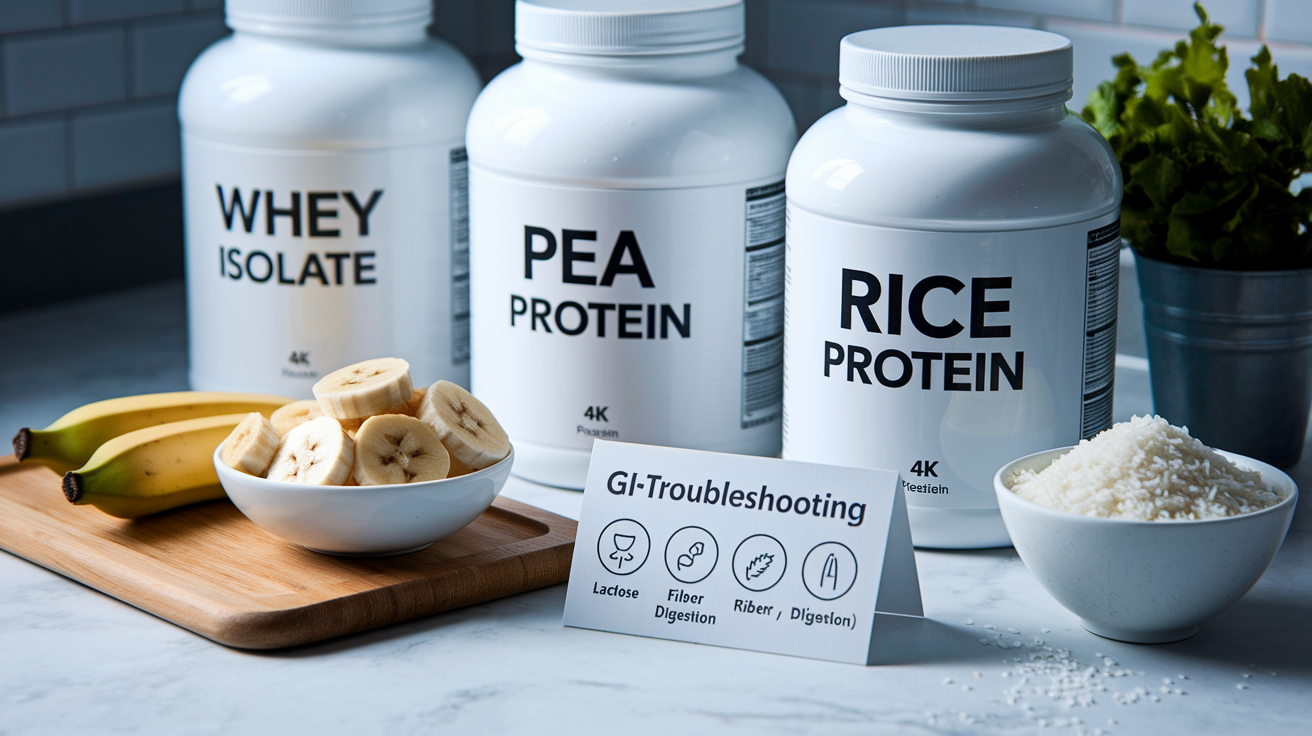
Whey isolate and hydrolyzed whey cause fewer digestive symptoms than whey concentrate because they contain less lactose and are absorbed faster. Isolates undergo additional filtration to remove most of the fat and milk sugar. Better choice if dairy bloats you or triggers gas. Hydrolyzed whey is pre-digested using enzymes, breaking protein chains into smaller peptides that empty from the stomach quickly. Often the gentlest option for people with sensitive stomachs, though the taste can be slightly bitter and the cost is higher. Among plant proteins, pea protein offers one of the strongest amino acid profiles. Blending pea with rice protein creates a complete profile that rivals animal sources when total intake is matched.
Pairing protein with easily digestible carbohydrates supports glycogen replenishment after training and can improve overall nutrient uptake without adding GI distress. Like a banana, white rice, or berries. Small amounts of simple carbs are especially useful post-workout when insulin sensitivity is elevated. On the other hand, adding high amounts of fat or fiber to a peri-workout shake slows gastric emptying and increases the chance of bloating or cramping. Save high-fiber meals (beans, whole grains, cruciferous vegetables) and high-fat foods (nuts, avocado, fatty cuts of meat) for windows outside your training, when slower digestion is an advantage rather than a liability.
Many commercial protein powders are sweetened with sugar alcohols like sorbitol or maltitol, which can ferment in the gut and cause gas. Check labels and switch to stevia or sucralose-sweetened options if you notice symptoms.
Troubleshooting digestive issues often requires a process-of-elimination approach. If you experience consistent bloating, gas, or nausea after protein shakes, try switching your protein source first. Move from whey concentrate to isolate, or from dairy to a plant blend. If that doesn’t resolve symptoms, reduce your per-serving size and increase meal frequency. Lactose intolerance can be managed with lactase enzyme supplements taken just before a dairy-based shake. Broader digestive enzyme blends containing protease may help if you struggle with protein digestion in general. Probiotics can support gut health over time, but their effect on acute protein-related symptoms is less predictable. Start with one change at a time so you can identify what actually helps.
Seven common GI problems and specific solutions:
- Bloating after whey shakes. Switch from concentrate to isolate, or try hydrolyzed whey. Reduce shake concentration by adding more water.
- Gas and cramping from plant protein. Use a pea-and-rice isolate blend instead of single-source powders. Avoid added inulin or chicory root fiber.
- Nausea during or after training. Reduce pre-workout protein to 15 to 20 grams and allow 60 minutes before exercise. Choose liquid over solid food.
- Reflux or heartburn from protein meals. Keep fat content low around training. Eat more slowly. Avoid lying down within 2 hours of a protein-heavy meal.
- Constipation when increasing protein. Drink more water throughout the day. Add soluble fiber (like psyllium husk) gradually. Ensure you’re not cutting carbs and fiber too low.
- Loose stools or urgency after shakes. Check for sugar alcohols and lactose. Reduce serving size. Try a different protein source or brand.
- Persistent intolerance to a specific protein. Eliminate it for 2 to 3 weeks, then reintroduce to confirm. Use a high-quality alternative (like egg white protein or beef isolate) in the meantime.
Practical Protein Timing Examples for Muscle Gain Without Digestive Issues
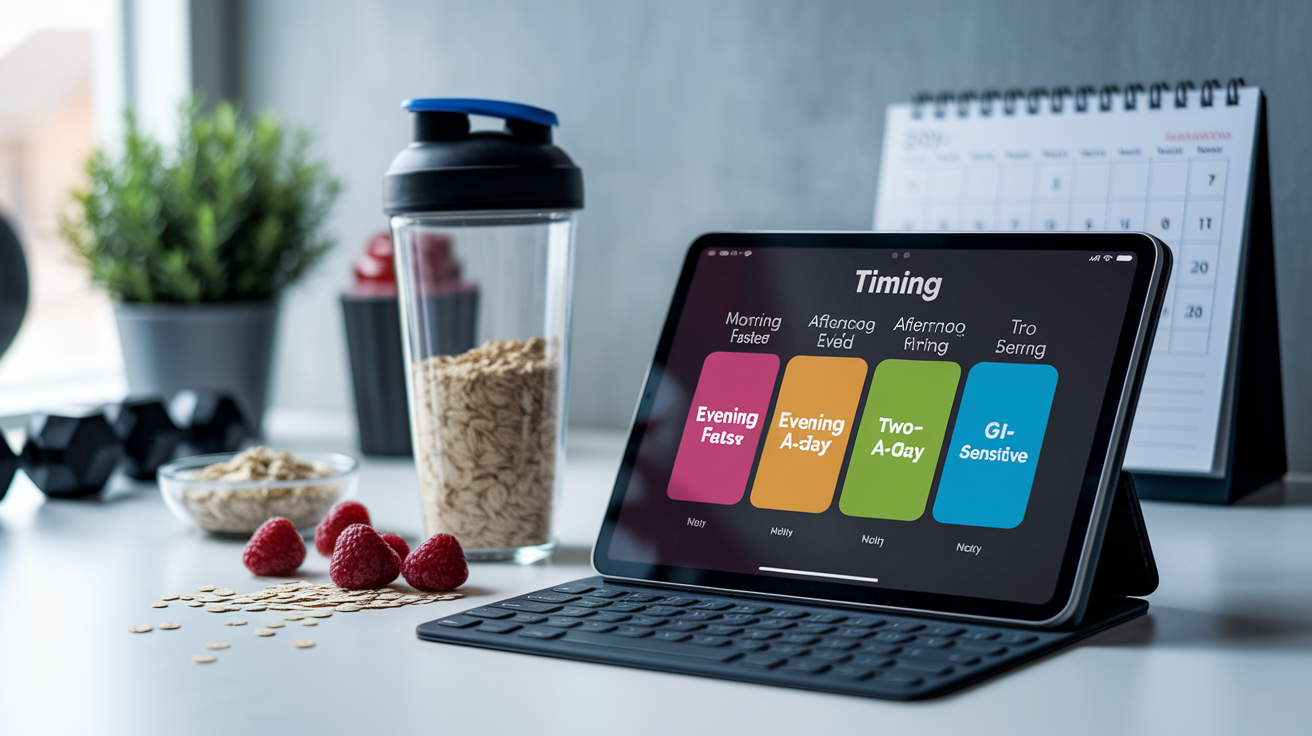
Sample schedules help translate general recommendations into daily routines you can actually follow. If you train in the morning, a small pre-workout protein dose (15 to 25 grams) about 45 minutes before your session prevents muscle breakdown during fasted training without causing GI upset. Follow that with a larger post-workout meal (30 to 40 grams protein plus carbs) within an hour, then space subsequent meals every 3 to 4 hours for the rest of the day.
Evening trainers can eat a normal breakfast and lunch, have a moderate pre-workout snack 1 to 2 hours before lifting, then consume a post-workout shake or meal and finish with a smaller evening feeding if total daily protein allows.
Liquid meals digest faster than whole-food proteins. Makes them useful immediately before or after training when your stomach is more sensitive. Whole foods work well between training sessions when you have time to sit, eat slowly, and let digestion proceed naturally. Grilled chicken, fish, eggs, Greek yogurt. If you tolerate it, a pre-sleep protein feeding of around 30 to 40 grams (casein or a blended plant protein) can support overnight muscle protein synthesis. Though this benefit is smaller when your total daily intake is already high.
Five timing examples for different training scenarios:
- Morning fasted training (6:00 AM workout). 15 to 20 g whey isolate at 5:15 AM, post-workout meal (35 g protein, carbs) at 7:00 AM, then meals at 11:00 AM, 3:00 PM, 7:00 PM.
- Afternoon training (4:00 PM workout). Breakfast 25 g, lunch 35 g, pre-workout snack (20 g protein, small carb) at 2:00 PM, post-workout shake (30 g) at 5:00 PM, dinner 30 g at 8:00 PM.
- Evening training (7:00 PM workout). Breakfast 30 g, mid-morning snack 20 g, lunch 35 g, pre-workout (20 g) at 5:30 PM, post-workout (35 g) at 8:00 PM, light evening snack (15 g) at 10:00 PM if daily target requires it.
- Two-a-day training. Distribute 5 to 6 feedings with 20 to 30 g per meal. Prioritize protein immediately after each session, spacing other meals to maintain 3 to 4 hour intervals.
- GI-sensitive schedule. Split total daily protein into 6 smaller feedings of 20 to 25 g each, using liquid isolates around training and whole foods at other times. Avoid high-fat and high-fiber foods within 2 hours of workouts.
Final Words
Space protein every 3–4 hours, aim for 15–40 g around workouts, and avoid large boluses right before training to keep nausea and gas down. Choose quick-absorbing options (whey isolate or split servings) or whole foods between sessions.
Remember total daily protein matters more than perfect timing. Pair protein with simple carbs, limit added fat and fiber near workouts, and try enzymes or a different powder if you get bloated.
Put these steps together and you’ve got a realistic plan for protein timing for muscle gain without digestive upset. Small, consistent tweaks add up — you’re headed the right way.
FAQ
Q: Can I build muscle while on zepbound?
A: You can build muscle while on Zepbound by keeping daily protein high (about 1.6–2.0 g/kg), doing regular resistance training, and spacing moderate protein doses every 3–4 hours to limit stomach upset.
Q: What is the 2 2 2 rule in gym?
A: The 2-2-2 rule in the gym usually means two warm-up sets, two working sets per exercise, twice weekly per muscle group — a simple low-volume template to maintain strength with limited time.
Q: What is the 30 30 30 rule for protein meals?
A: The 30-30-30 rule for protein meals typically means aiming for about 30 grams of protein per meal, spaced across the day to keep muscle protein synthesis active and gut comfort steady.
Q: What is the optimal timing to consume protein for muscle growth?
A: The optimal timing to consume protein for muscle growth is to space moderate doses (~15–40 g) every 3–4 hours, aiming 30–60 minutes pre-workout and within 60 minutes post-workout.