

Think bloating is just about what you eat?
Think again, it’s often about how you build your plate.
When your waistband digs in by mid-afternoon, unbalanced meals are usually the culprit.
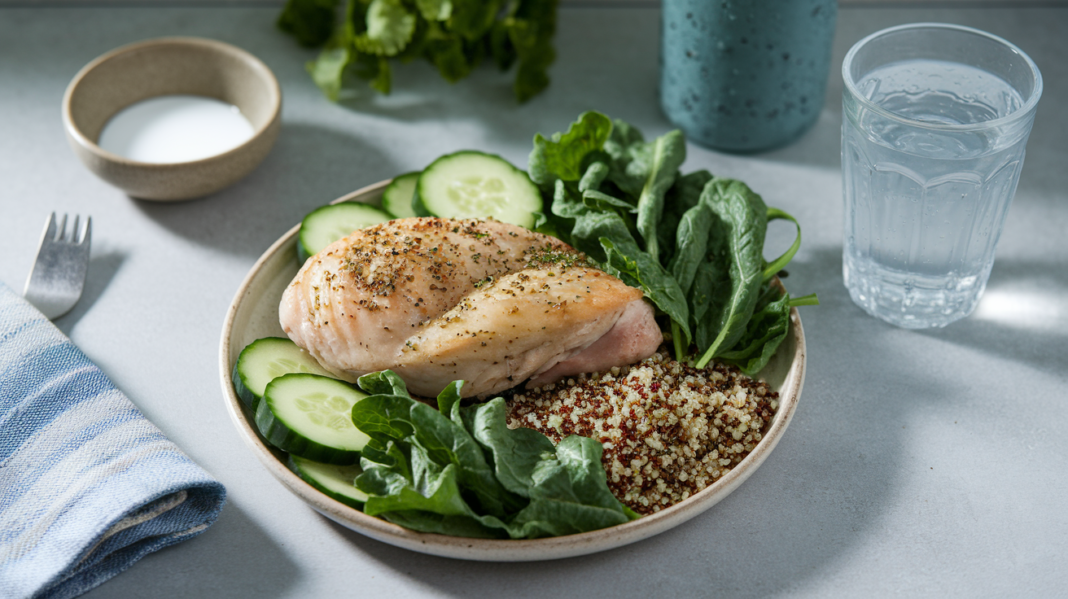
The quick fix: balance each meal with a palm-sized portion of lean protein, a fist of cooked vegetables or moderate whole grains, and a small amount of healthy fat.
Choose fiber-rich whole foods and water-dense produce, keep portions moderate, and use gentle cooking like steaming or grilling to make digestion easier.
Do this and you’ll get steadier energy, less gas, and a flatter-feeling belly without cutting out food groups.
The Best Meals to Reduce Bloating (Quick Start)

When your stomach feels tight by mid-afternoon or your waistband suddenly digs in after eating, you’re probably dealing with unbalanced meals. Build your plate around fiber-rich whole foods, lean proteins, and water-dense produce. Your digestive system works smoothly instead of fermenting food and trapping gas. You’ll get regular bowel movements, stable fluid balance, and the right fuel for your gut bacteria without overwhelming them.
Small portions matter just as much as what you eat. Pair lean protein with moderate fiber and a bit of healthy fat at each meal. This slows digestion enough to prevent blood sugar crashes and that heavy, sluggish feeling after carb-heavy plates. Skip high-sodium, high-fat combos. They cause water retention and gastric overload that leaves you feeling puffy.
Most anti-bloat meals follow a simple pattern: palm-sized protein, fist-sized serving of cooked vegetables or whole grains, minimal added salt or heavy sauces. Steam, grill, or lightly sauté your food. These methods break down plant fibers and make digestion easier. Raw or heavily seasoned dishes can increase gas production if your gut’s sensitive.
Six example anti-bloat meals:
- Overnight oats with rolled oats, lactose-free milk, banana, chia seeds
- Grilled chicken salad: mixed greens, cucumber, olive oil, lemon
- Baked salmon, roasted zucchini, half-cup of white rice
- Scrambled eggs on whole-grain toast with steamed spinach
- Turkey and vegetable wrap using whole-grain tortilla and water-packed turkey
- Greek yogurt with blueberries and ground flaxseed
Five foods to avoid within meals:
- Garlic and onions (try garlic-infused oil or chives)
- Beans and lentils in servings larger than a quarter cup
- Carbonated drinks during or right after eating
- High-sodium condiments like regular soy sauce or bottled dressings
- Fried or heavily oiled dishes that slow gastric emptying
Keep preparation simple. Steam vegetables until just tender. Grill proteins without heavy marinades. Season with lemon juice, fresh herbs, or a pinch of sea salt. If a meal fits on a standard dinner plate without stacking, the portion’s about right.
Quick Start Anti-Bloat Meal Plan
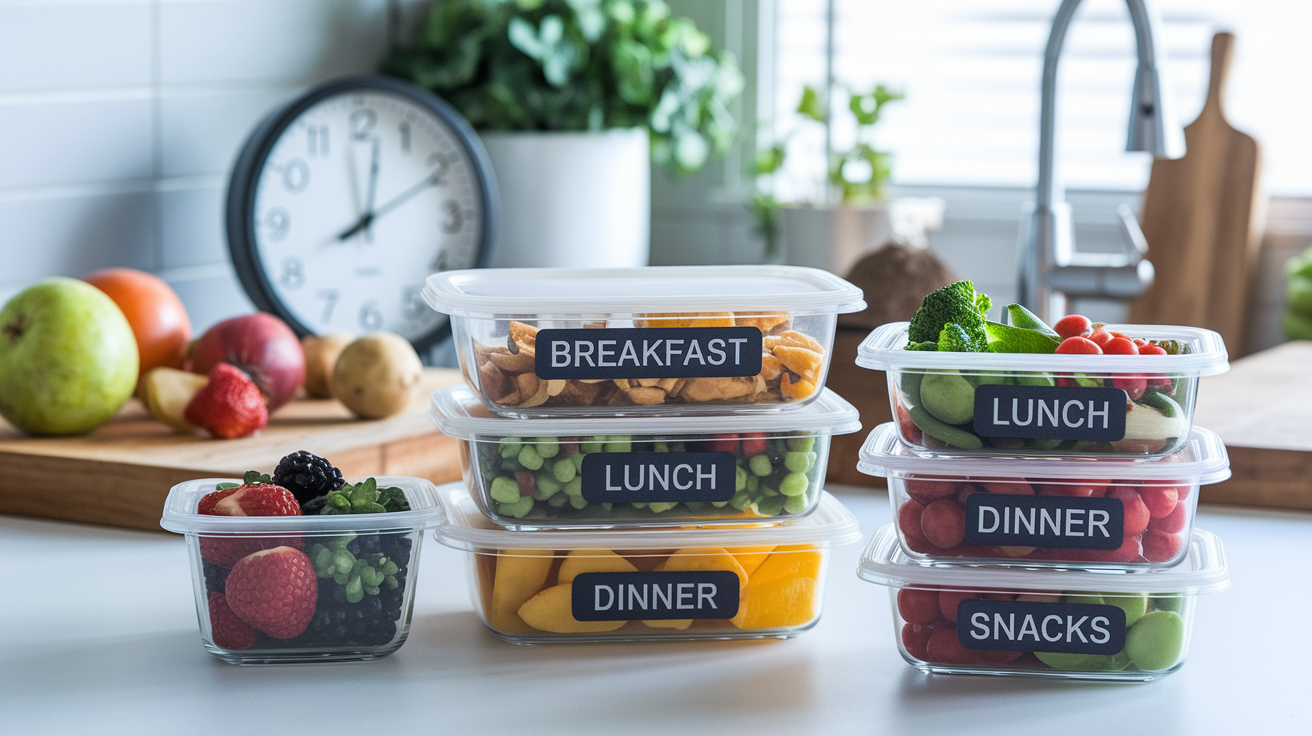
A structured eating plan removes the guesswork and keeps your digestive system on a predictable rhythm. Eat at consistent times with balanced portions. Your gut doesn’t have to shift between fasting, overload, and late-night digestion constantly. The result? Less gas formation, steadier energy, fewer episodes of that tight belly.
This quick-start plan emphasizes small, frequent meals built around low-FODMAP produce, lean proteins, and moderate whole grains. You’ll eat every three to four hours. Avoid large dinners close to bedtime. Keep added sodium low to prevent water retention that mimics bloating.
Four steps for using the plan:
- Choose one breakfast, one lunch, one dinner, and one or two snacks from the suggested lists each day.
- Prep proteins and grains in batches twice a week so meals come together in under ten minutes.
- Drink plain water or herbal tea between meals. Limit fluids to small sips during eating.
- Track how you feel after each meal for three days, then adjust portions or swap foods if bloating persists.
Five quick meal plan principles:
- Keep cooked protein portions to about 100 to 120 grams per meal (palm-sized).
- Aim for 1.5 to 2 liters of plain fluid daily, mostly between meals.
- Eat your last meal at least two hours before lying down.
- Prioritize low-FODMAP vegetables like carrots, cucumber, zucchini, and spinach.
- Use minimal salt. Season with lemon, vinegar, fresh herbs, or a small amount of olive oil.
Best Foods for Digestion and Why They Work

Certain foods actively support the digestive process. They reduce inflammation, feed beneficial gut bacteria, or speed transit through the intestines. Soluble fiber forms a gel in your stomach that helps regulate bowel movements without creating excess gas. Probiotics in fermented foods replenish the bacteria that break down nutrients efficiently. Natural enzymes in fruits like pineapple help protein digestion.
Potassium-rich foods counteract sodium and help your kidneys release excess water. This reduces the puffy, bloated feeling tied to fluid retention. Anti-inflammatory compounds in ginger and green tea calm irritated gut linings. High-water produce like cucumbers and celery hydrate your digestive tract and keep things moving.
Cooking starchy vegetables and grains breaks down some of the fibers that ferment in your colon. This makes them gentler on sensitive guts. Choose these digestion-friendly foods consistently and you’ll get fewer gas episodes and more predictable comfort after meals.
| Food | Why It Helps |
|---|---|
| Ginger | Contains gingerol, which reduces gut inflammation and speeds gastric emptying |
| Bananas | High in potassium; helps regulate fluid balance and prevent water retention |
| Cucumbers | About 95% water; hydrates digestive tract and reduces constipation-related bloating |
| Greek yogurt | Probiotics support healthy gut bacteria and improve digestion of lactose and fiber |
| Oats | Contain beta-glucan fiber that absorbs water and forms gel, regulating bowel movements |
| Pineapple | Provides bromelain enzyme that helps break down protein and reduce inflammation |
Foods That Commonly Cause Bloating

Even nutritious foods can trigger gas and discomfort when they contain fermentable carbohydrates your gut bacteria love to feast on. High-FODMAP foods like onions, garlic, and wheat release gas as they break down in the colon. Beans and lentils contain oligosaccharides that many people struggle to digest fully. Carbonated drinks introduce air directly into your stomach. Processed foods high in sodium cause your body to hold onto extra water.
Dairy can be a problem if you’re low on lactase, the enzyme that digests milk sugar. Even small amounts of lactose can cause bloating, cramping, and gas if you’re lactose intolerant. Artificial sweeteners like sorbitol and xylitol pass through the small intestine undigested and ferment in the colon, creating similar symptoms.
Six foods that commonly trigger bloating:
- Garlic and onions (high in fructans, a fermentable fiber)
- Wheat-based breads and pasta (contain fructans and gluten, which some people react to)
- Beans and lentils (oligosaccharides ferment and produce gas)
- Apples and pears (high in fructose and sorbitol)
- Carbonated beverages (introduce gas directly into the digestive tract)
- High-sodium processed snacks like chips and canned soups (cause water retention)
Individual tolerance varies widely. One person might handle half a cup of cooked lentils without issue. Another feels bloated after a single garlic clove. Test suspect foods one at a time in small portions. Keep a simple food log for a week if you’re not sure which items are causing trouble.
Sample 1-Day and 3-Day Anti-Bloat Meal Plans
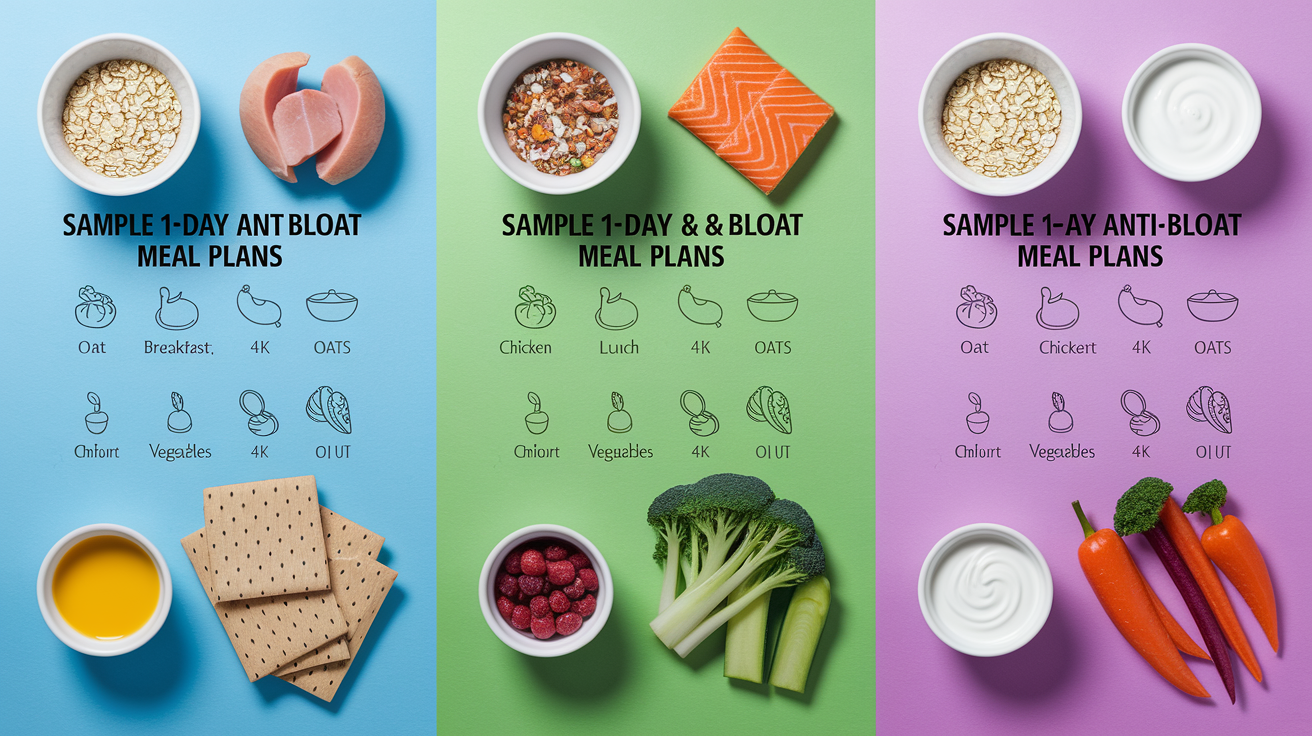
Short, structured plans give your digestive system a chance to reset without the constant guesswork of meal decisions. Follow a low-sodium, balanced eating pattern for 24 to 72 hours. You’ll often notice reduced puffiness, less gas, and steadier energy as water retention drops and gut bacteria settle into a calmer rhythm.
| Meal | Example |
|---|---|
| Breakfast | Overnight oats: ½ cup rolled oats, 240 ml lactose-free milk, ½ banana, 1 tbsp chia seeds |
| Lunch | Grilled chicken salad: 120 g chicken breast, 2 cups mixed greens, ½ cup cooked quinoa, 1 tbsp olive oil + lemon |
| Dinner | Baked salmon (150 g), 1 cup roasted zucchini, ½ cup white rice |
| Snacks | 10 almonds + 1 small orange; 150 g probiotic yogurt |
| Day | Meal Overview |
|---|---|
| Day 1 | Overnight oats for breakfast; turkey wrap with cucumber and carrots for lunch; grilled shrimp, quinoa, steamed broccoli for dinner; Greek yogurt and berries as snacks |
| Day 2 | Scrambled eggs with spinach and whole-grain toast for breakfast; leftover grilled shrimp salad for lunch; baked cod, roasted Brussels sprouts, sweet potato for dinner; banana and rice cake with peanut butter as snacks |
| Day 3 | Smoothie bowl (spinach, lactose-free kefir, blueberries, flaxseed) for breakfast; chicken Caesar with romaine and low-sodium dressing for lunch; lentil soup (¼ cup lentils) with whole-grain bread for dinner; carrot sticks and hard-boiled egg as snacks |
These plans keep fiber moderate (around 20 to 25 grams daily) to avoid overwhelming your gut while still supporting regular bowel movements. Protein stays consistent at each meal to stabilize blood sugar and slow digestion. Sodium remains low to prevent water retention. You can swap similar foods. Cucumber for zucchini, chicken for turkey, white rice for quinoa. Just keep portions and preparation simple.
Meal Timing and Portion Strategies
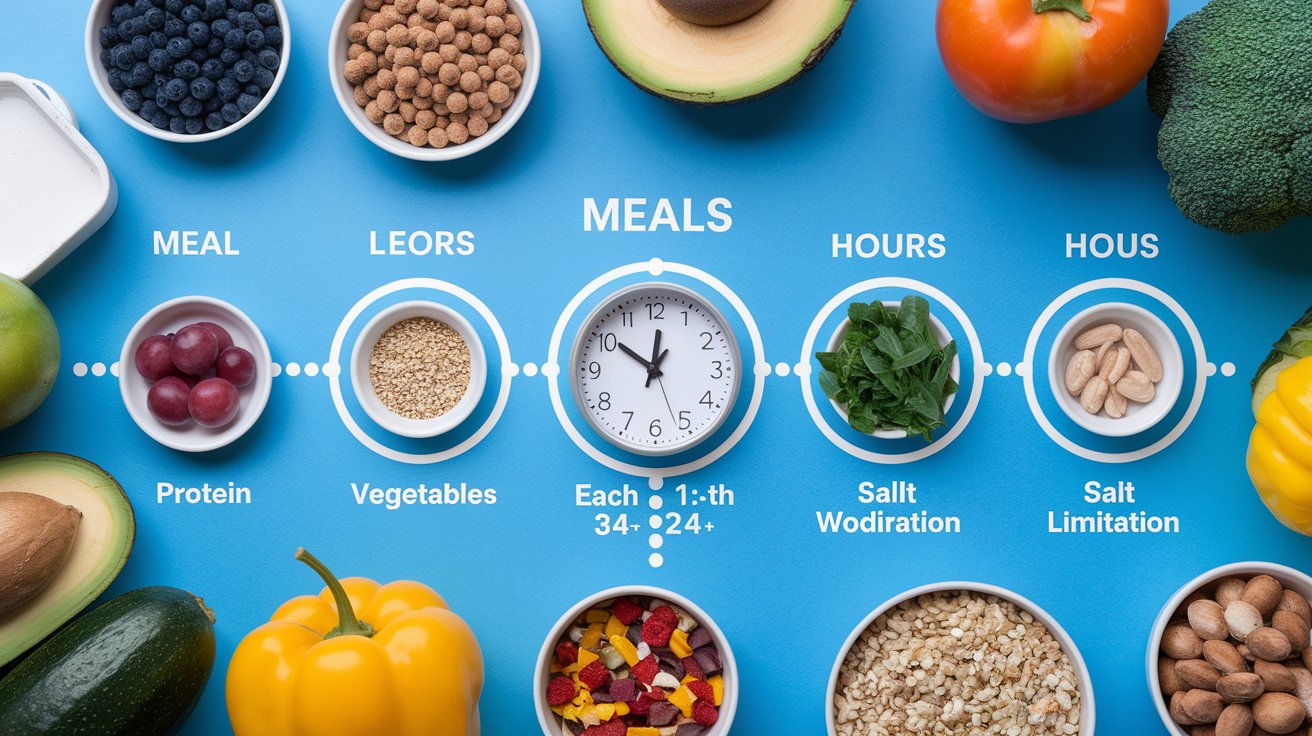
When you eat matters almost as much as what you eat. Space meals three to four hours apart. This gives your stomach time to empty and your small intestine time to absorb nutrients before the next round arrives. Large gaps between meals leave you ravenous and prone to overeating, which overloads your digestive system and increases gas production.
Eat your largest meal in the middle of the day, when digestive enzymes and gut motility are naturally higher. This reduces the chance of nighttime bloating. Late dinners or heavy snacks close to bedtime force your gut to work hard while you’re lying down, slowing transit and trapping gas. Stop food intake at least two hours before bed. Your stomach empties and you reduce reflux and discomfort.
Portion control prevents the mechanical stretching of your stomach that feels like bloating even when gas isn’t the issue. A palm-sized portion of protein, a fist-sized serving of cooked vegetables or grains, and a thumb-sized amount of added fat keep each meal manageable without leaving you hungry an hour later.
Four timing strategies:
- Eat breakfast within an hour of waking to kickstart gut motility and set a consistent daily rhythm.
- Space main meals about four hours apart. Add a small snack if the gap stretches beyond five hours.
- Finish your last meal or snack at least two hours before lying down for the night.
- Drink most of your daily water between meals rather than during eating. Limit fluids to 120 to 150 ml sips with food to avoid diluting digestive enzymes and over-distending your stomach.
Shopping List for an Anti-Bloat Diet

Stock your kitchen with digestion-friendly staples. It’s easier to throw together balanced meals without last-minute decisions that usually lead to high-sodium takeout or processed snacks. Focus on fresh produce, lean proteins, whole grains, and a few fermented foods that support gut health without triggering gas.
Ten shopping items for anti-bloat eating:
- Rolled oats (buy plain, unflavored)
- White or brown rice (1 kg bag)
- Chicken breast or turkey breast (1 to 1.2 kg for the week)
- Fresh or frozen salmon fillets (600 to 800 g)
- Firm tofu (400 g, if plant-based)
- Lactose-free yogurt or probiotic yogurt with live cultures (1 kg tub)
- Spinach, mixed salad greens, zucchini, carrots, cucumbers (enough for 1 to 2 cups daily)
- Bananas, oranges, strawberries, or blueberries (choose lower-FODMAP servings)
- Almonds or ground flaxseed (small bag, portions limited to 10 to 12 g per snack)
- Olive oil, lemon, fresh ginger, low-sodium seasonings (basil, oregano, turmeric)
Use this list as a template for one person over seven days. Prep grains and proteins twice weekly so they’re ready to assemble into meals in under ten minutes. Store cooked rice and chicken in airtight containers in the fridge for three to four days. Freeze extra portions if you batch-cooked more than you’ll use in that window.
Final Words
In the action, you’ve got quick anti‑bloat meals, a ready meal plan, foods that help, foods to skip, timing tips, and a simple shopping list.
Pick one sample meal, follow the timing and portion rules, and use the prep tips—light seasoning, minimal sodium, and steam or grill.
Start with one tiny change, swapping a heavy, salty meal for balanced meals to reduce bloating by choosing steamed veggies and lean protein. Do that for a few days and you’ll likely feel lighter and more comfortable.
FAQ
Q: What meals to eat to stop bloating?
A: The meals to eat to stop bloating are small, balanced plates with lean protein, water-rich vegetables, low-FODMAP carbs, and a potassium fruit; use gentle cooking (steamed or grilled) and keep added salt low.
Q: What foods help reduce belly bloating?
A: The foods that help reduce belly bloating include ginger, peppermint, yogurt (live cultures), bananas, cucumbers, oats, and cooked vegetables, since they soothe digestion, cut gas, and support friendly gut bacteria.
Q: Does kefir help with bloating?
A: Kefir helps with bloating for many people by supplying probiotics (beneficial bacteria) that can rebalance gut flora, though dairy sensitivity or lactose issues may still cause symptoms for some.
Q: What fruit takes away gas?
A: Fruits that take away gas include papaya and pineapple (digestive enzymes), bananas (potassium and easy to digest), and kiwi, which help break down food and ease trapped gas.