


What if fixing your bathroom timing was as simple as reshuffling what’s on your plate?
Most adults miss the 25–30 grams of fiber that keeps things moving, which shows up as hard stools, bloating, and days where nothing happens.
This post lays out high-fiber balanced meals and complete meal plans that hit about 8–12 grams per meal and 3–6 grams per snack, plus hydration and ramp-up steps.
You’ll get easy recipes, portion templates, and a simple plan to feel softer, more regular, and less worried about timing.
High-Fiber Meal Solutions for Immediate Regularity Support
Hitting 25–30 grams of fiber each day matters because that’s the range that keeps waste moving through your digestive tract without straining, waiting, or worrying. Most adults fall short by 10–15 grams daily, which shows up as irregular bowel patterns, hard stools, and that uncomfortable feeling of incomplete elimination. When you structure meals to deliver 8–12 grams at breakfast, lunch, and dinner, plus 3–6 grams from snacks, you create consistent intestinal stimulus throughout the day instead of relying on one big fiber dose that can overwhelm your gut and trigger gas or bloating.
Soluble fiber absorbs water and forms a soft gel that hydrates stool from the inside, making it easier to pass. You’ll find it in oats, chia seeds, beans, and citrus. Insoluble fiber adds physical bulk and speeds the time food spends in your intestines, which directly shortens the gap between meals and bowel movements. It’s present in whole wheat products, bran, and most vegetables. You need both types working together. Soluble fiber softens, insoluble fiber moves. A meal built around chickpeas and quinoa delivers both. A breakfast of refined cereal and juice delivers almost none.
Hydration amplifies fiber’s effect. Aim for 64–96 fluid ounces of water daily, and drink an 8-ounce glass with every high-fiber meal or snack. Increase fiber gradually over one to two weeks to give your gut bacteria time to adjust. Jumping from 15 to 35 grams overnight often causes cramping and gas that make people abandon the plan before it works. Most people notice softer, more frequent stools within 48–72 hours. Full regularity can take up to two weeks.
Quick meal examples that hit fiber targets:
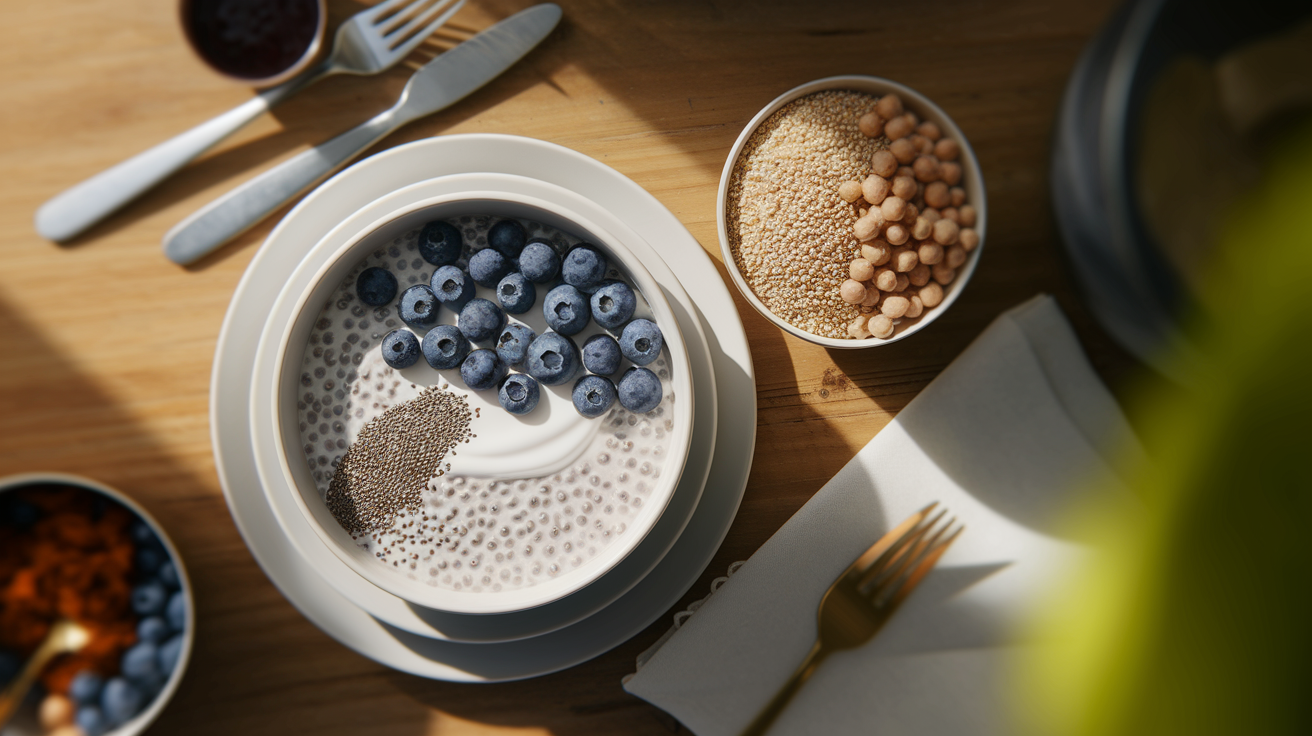
- Overnight oats — ½ cup rolled oats, 1 tbsp chia seeds, ½ cup blueberries, plain yogurt: ~11 g fiber, 400 kcal
- Chickpea salad bowl — 1 cup cooked chickpeas, 1 cup greens, ½ cup quinoa, olive oil dressing: ~17 g fiber, 550 kcal
- Lentil stew — 1 cup cooked lentils, 1 cup roasted vegetables, ½ cup brown rice: ~20 g total (10–14 g per serving), 450 kcal
- Apple with almond butter — 1 medium apple with skin, 1 tbsp almond butter: ~6 g fiber, 190 kcal
- Carrot sticks and hummus — 1 cup baby carrots, 3 tbsp hummus: ~5.6 g fiber, 140 kcal
Understanding Fiber Balance in High-Fiber Meals

Soluble and insoluble fiber do different jobs. Both are essential for regularity. Soluble fiber dissolves in water and slows digestion slightly, which gives your colon more time to absorb water into the stool mass and prevents the dry, pebble-like consistency that defines constipation. Insoluble fiber doesn’t dissolve. It stays intact as it moves through your gut, scraping along the intestinal walls and stimulating the muscular contractions that push waste forward.
A meal that includes both types gives you hydration and motion in one bowl. Oatmeal topped with raspberries is a good example. Adults need 25–38 grams total daily, and aiming for a roughly even split between soluble and insoluble sources keeps your digestive system balanced.
Some soluble fibers also act as prebiotics, meaning they feed beneficial gut bacteria that produce short-chain fatty acids. These fatty acids support the intestinal lining and help regulate gut motility. Chia seeds, oats, legumes, and certain fruits like apples and pears are prebiotic-rich. Including them regularly supports not just immediate bowel movements but also long-term gut health. If a meal feels heavy or sluggish, it often means you’ve loaded up on insoluble fiber without enough soluble fiber or water to soften the bulk.
| Fiber Type | Examples | Approx. Fiber per Serving |
|---|---|---|
| Soluble | Oats (½ cup cooked), chia seeds (1 tbsp), black beans (½ cup cooked) | 2–4 g, 5 g, 6–8 g |
| Insoluble | Whole-wheat bread (2 slices), broccoli (1 cup raw), wheat bran (¼ cup) | 6–8 g, 2.4 g, 6 g |
| Mixed (both types) | Lentils (1 cup cooked), quinoa (½ cup cooked), raspberries (1 cup) | 15.6 g, 2.8 g, 8 g |
| Prebiotic soluble | Apple with skin (1 medium), chickpeas (1 cup cooked), flaxseed (1 tbsp ground) | 4.4 g, 12 g, 2.8 g |
Building High-Fiber Balanced Meals for Regularity

A high-fiber meal that actually improves regularity also needs to supply steady energy and satiety. That means balancing macronutrients: roughly 45–55% carbohydrates, 20–25% protein, and 25–35% fat. When you structure meals this way, fiber-rich complex carbohydrates deliver the bulk and prebiotics, protein supports muscle repair and blood sugar stability, and healthy fats slow gastric emptying just enough to prevent blood sugar spikes without stalling digestion. A typical high-fiber balanced meal lands between 400–700 calories depending on your total daily energy needs, activity level, and weight goals.
Portion sizes matter because they determine whether you hit your fiber target without overeating or under-fueling. A half-cup serving of cooked whole grains like oats, quinoa, or barley provides 2–4 grams of fiber. Legumes deliver 6–8 grams per half-cup or 12–16 grams per full cup. Vegetables contribute 2–4 grams per cup depending on type, fruits provide 4–6 grams per medium serving, and seeds like chia or ground flax add 3–5 grams per tablespoon. If you build your plate around one generous serving of legumes, one serving of whole grains, and at least one cup of vegetables, you’re already at 10–14 grams of fiber before adding fruit or seeds.
Combining ingredients strategically supports smooth digestion and stable energy. Pair soluble-fiber foods like oats and beans with a source of healthy fat (nuts, avocado, olive oil) to slow carbohydrate absorption and reduce post-meal blood sugar swings. Add a palm-sized portion of protein (chicken, fish, tofu, eggs, or more legumes) to extend satiety and prevent the energy crash that sometimes follows high-carb meals. This structure keeps your gut moving without triggering the sluggish, overstuffed feeling that can happen when fiber intake suddenly jumps without enough fat or protein to balance it.
Meal-building templates with portion guidelines:
- Breakfast — ½ cup cooked oats + 1 tbsp chia or flax + ½ cup berries + protein (yogurt or protein powder) = 10–12 g fiber, 350–450 kcal
- Lunch — 1 cup cooked legumes (or ½ cup + whole-grain pita) + 1 cup greens + ½ cup cooked grain + 1 tbsp healthy fat = 10–17 g fiber, 500–600 kcal
- Dinner — ¾ cup cooked legumes or grain + 1.5 cups cooked or raw vegetables + 3–4 oz lean protein + olive oil or nuts = 10–14 g fiber, 450–650 kcal
- Snack — 1 medium fruit (apple, pear) + 1 tbsp nut butter, or 1 cup raw vegetables + 3 tbsp hummus = 5–6 g fiber, 150–200 kcal
High-Fiber Breakfast Meals for Better Morning Regularity

Breakfast that delivers 8–12 grams of fiber sets up your digestive system for the day by triggering the gastrocolic reflex. That’s the signal that tells your colon to contract and move waste after you eat. Many people find that a high-fiber breakfast leads to a bowel movement within 30–90 minutes, especially when paired with a warm beverage like coffee or herbal tea. Starting the day with refined cereal or a pastry delays this process because those foods pass through your stomach quickly without stimulating the lower gut. You’re left waiting until lunch or later for any movement.
Overnight oats anchor a reliable morning routine. Combine ½ cup rolled oats (4 grams fiber) with 1 tablespoon chia seeds (5 grams) and ½ cup blueberries (2 grams) in a jar, add plain yogurt or unsweetened almond milk, and refrigerate overnight. The oats and chia soften as they soak, making them easier to digest while preserving their fiber content. Total fiber: ~11 grams, 400–450 calories.
If you prefer a smoothie, blend 1 cup spinach (1 gram), 1 medium banana (3 grams), ½ cup raspberries (4 grams), 2 tablespoons ground flaxseed (4 grams), and 1 cup unsweetened almond milk for ~12 grams of fiber. Add 20–25 grams of protein powder if you need more satiety or are training that morning.
Whole-grain toast with avocado also works well. Two slices of 100% whole-wheat bread (6–8 grams) topped with ½ cup mashed avocado (5 grams) delivers 11–13 grams of fiber plus healthy fats that support nutrient absorption and steady energy. If you want more protein, add a poached egg or a few tablespoons of mashed white beans.
Breakfast Fiber Targets
Aim for 8–12 grams of fiber at breakfast. That represents roughly one-third of your daily total if you’re targeting 25–30 grams. Drink at least 8 ounces of water or herbal tea with your meal to help soluble fiber form that soft gel and keep insoluble fiber moving. Toppings like chia seeds, ground flax, berries, and sliced apple with skin are easy fiber boosters. Each tablespoon of chia or flax adds 4–5 grams, and a half-cup of raspberries or blueberries adds another 4 grams without requiring complicated recipes or extra cooking time. If your mornings are rushed, prep overnight oats or smoothie packs the night before so you can grab, blend, and go.
High-Fiber Lunch Meals to Maintain Daytime Regularity

Lunch should deliver 10–14 grams of fiber to keep intestinal motility steady through the afternoon. Many people experience a mid-afternoon bowel movement if their lunch includes enough fiber and fat to trigger digestive activity without causing a heavy, sluggish feeling that interferes with work or other responsibilities. Legumes anchor most high-fiber lunches because they’re portable, shelf-stable when canned, and pack 12–16 grams of fiber per cup while also supplying plant protein that extends satiety until dinner.
A chickpea salad bowl is one of the simplest high-fiber lunches. Combine 1 cup cooked chickpeas (12 grams fiber), 1 cup mixed greens (1 gram), ½ cup cherry tomatoes (1 gram), and ½ cup cooked quinoa (2.8 grams) with a tablespoon of olive oil and lemon juice. Total: ~17 grams fiber, 500–600 calories. If that feels like too much volume or too much fiber for one meal, use ½ cup chickpeas and add a whole-grain pita for a total closer to 10–12 grams. Both versions work. The key is consistency over perfection.
Whole-grain sandwiches also hit the target when built thoughtfully. Use 2 slices of 100% whole-wheat bread (6–8 grams fiber), spread with ½ cup mashed avocado (5 grams), and layer with ½ cup cooked lentils (6–8 grams) or ¼ cup hummus (2–3 grams) plus lettuce, tomato, and cucumber. Total fiber: 12–16 grams depending on your filling choice. Another option is two slices of whole wheat toast topped with half a tin of baked beans, which delivers 14.8 grams of fiber and takes less than five minutes to prepare. For a warm lunch, try a baked sweet potato (skin on) topped with vegetable and bean chili for 19.3 grams of fiber. Split this into two servings if it’s too much at once.
High-Fiber Dinner Meals That Support Evening Digestion
Dinner provides your last opportunity to hit your daily fiber target, and it’s also the meal where many people have the most time to cook and sit down. A high-fiber dinner that includes 10–14 grams of fiber supports overnight digestion so you wake up ready for a morning bowel movement rather than feeling backed up and sluggish. Plant-based meals often deliver the highest fiber counts, though you can hit your targets with lean animal protein as long as you pair it with generous portions of whole grains, legumes, and vegetables.
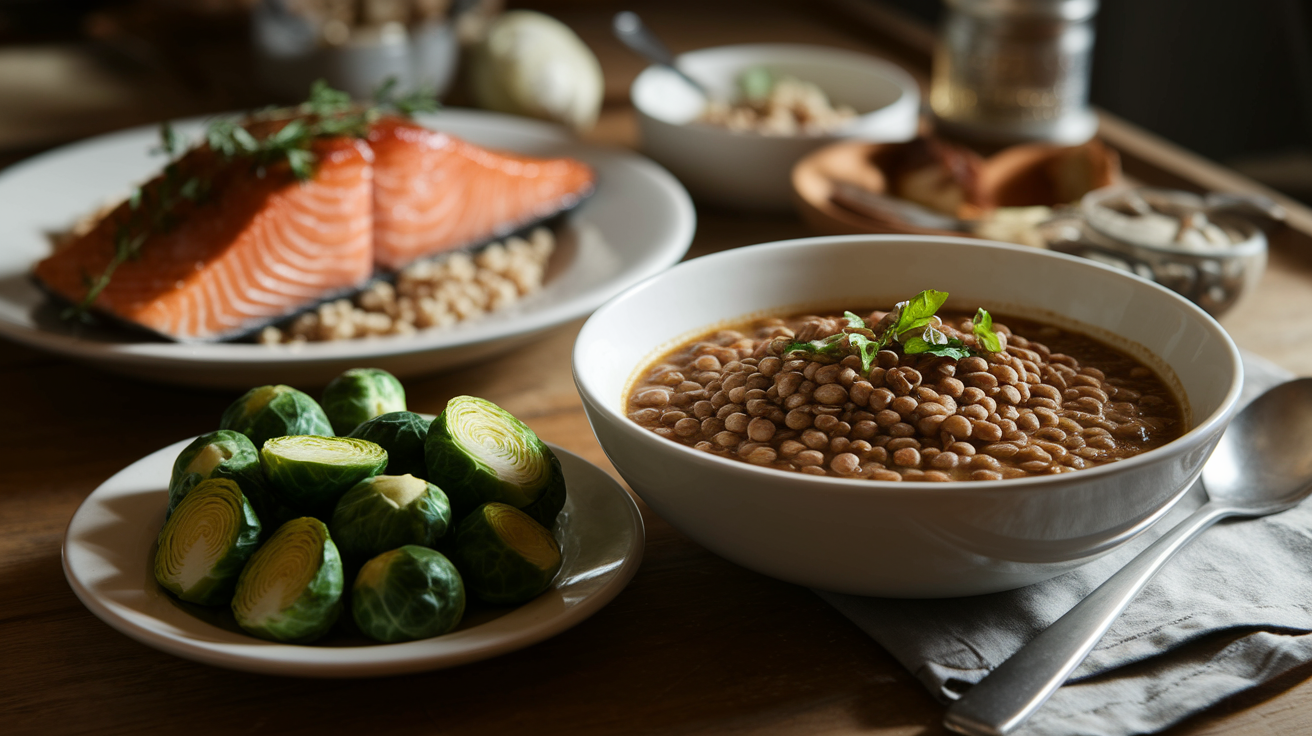
Lentil stew is one of the highest-fiber dinners you can make. Use 1 cup cooked lentils (15.6 grams fiber), 1 cup mixed roasted or sautéed vegetables like carrots, bell peppers, and zucchini (2–4 grams), and ½ cup brown rice (1.8 grams) cooked in vegetable broth with garlic, tomato, and cumin. Total fiber per serving: 10–14 grams depending on portion size, roughly 450 calories.
Make a large batch and freeze individual portions so you always have a high-fiber meal ready. For variety, try a kidney bean curry (14 grams fiber per serving) or sticky tempeh stir-fry with broccoli and brown rice (17 grams). All three meals freeze well and reheat in under 10 minutes.
5 high-fiber dinner examples with fiber grams per serving:
- Lentil vegetable stew with brown rice — 10–14 g fiber, 450 kcal
- Salmon with barley and Brussels sprouts (3–4 oz salmon, ¾ cup cooked barley, 1.5 cups steamed sprouts) — 10–12 g fiber, 520 kcal
- Kidney bean and sweet potato curry over quinoa — 14 g fiber, 480 kcal
- Sticky tempeh stir-fry with broccoli and brown rice — 17 g fiber, 510 kcal
- Slow-cooker beef with stir-fried broccoli (3 oz beef, 2 cups broccoli, ½ cup barley) — 9 g fiber, 440 kcal
High-Fiber Snacks That Boost Daily Regularity
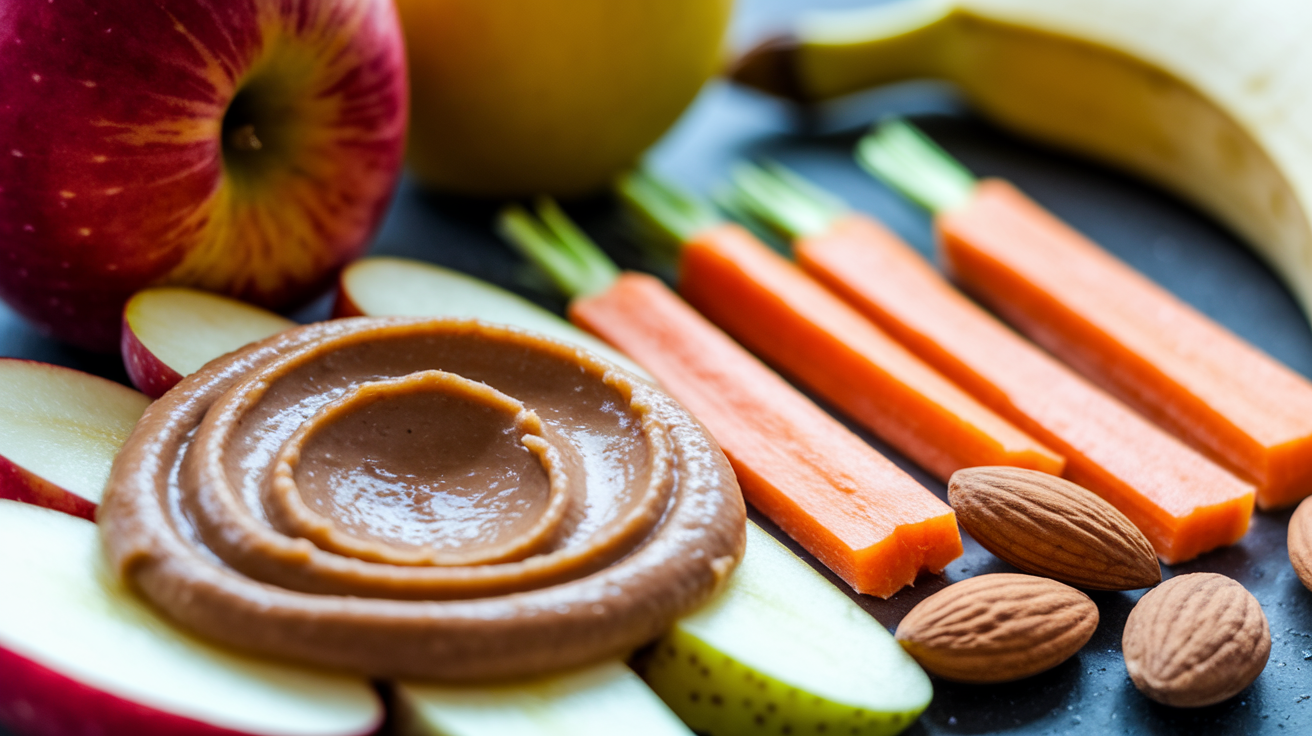
Snacks that contribute 3–6 grams of fiber help you reach 25–30 grams daily without forcing oversized meals. The best high-fiber snacks pair a fruit or vegetable with a source of fat or protein so you get satiety along with the fiber. An apple with almond butter, for example, provides the soluble and insoluble fiber from the apple (especially the peel) plus the healthy fat and protein from the nut butter, which slows digestion slightly and prevents a blood sugar spike.
Raw vegetables with hummus make an equally practical snack. One cup of baby carrots (3.6 grams fiber) plus 3 tablespoons of hummus (2 grams fiber) totals 5.6 grams and costs less than 150 calories. Keep pre-washed carrot sticks, bell pepper strips, or cucumber slices in the fridge alongside single-serve hummus cups for grab-and-go convenience. A handful of almonds (about 23 nuts) provides 3.8 grams of fiber and 160 calories, while a medium banana offers 3.2 grams of fiber and pairs well with a tablespoon of peanut butter for added satiety.
| Snack | Fiber per Serving |
|---|---|
| 1 medium apple with skin + 1 tbsp almond butter | ~6 g |
| 1 cup baby carrots + 3 tbsp hummus | ~5.6 g |
| 1 handful (23) almonds | ~3.8 g |
| 1 medium banana | ~3.2 g |
Meal Planning and Prep Strategies for High-Fiber Regularity

Consistency beats perfection when it comes to improving regularity with fiber. The simplest way to stay consistent is to batch-cook your highest-fiber ingredients once or twice a week so you can assemble meals in minutes. Cook a large pot of lentils, chickpeas, or black beans, then freeze them in 1-cup portions (each portion contains roughly 12–16 grams of fiber). Thaw one portion overnight in the fridge, and you have the base for a salad, soup, or grain bowl ready in less time than it takes to order takeout.
Frozen produce saves time and money without sacrificing fiber content. Frozen berries, spinach, broccoli, and mixed vegetables often contain the same or more fiber than fresh versions because they’re flash-frozen at peak ripeness. Use frozen berries in smoothies, frozen greens in stir-fries or soups, and frozen broccoli or Brussels sprouts for quick side dishes. Canned beans are another shortcut. Rinse them under cold water for 30 seconds to remove excess sodium, then add them to any meal. A can of black beans adds 12 grams of fiber to tacos, burritos, or grain bowls without requiring soaking, boiling, or planning ahead.
Increase fiber intake gradually over 7–14 days to minimize gas and bloating. If you’re currently eating 10–15 grams of fiber per day, add 5 grams per day each week until you reach 25–30 grams. Start with soluble-fiber foods like oats, chia, and beans because they tend to cause less gas than sudden increases in insoluble fiber from bran or raw vegetables. Your gut bacteria need time to adjust to the new fuel source. Rushing the process often leads to discomfort that makes people quit before regularity improves.
5 meal prep shortcuts that save time and preserve fiber:
- Batch-cook legumes and freeze in 1-cup portions (thaw overnight for quick meals)
- Use frozen berries and pre-washed greens (same fiber, less prep)
- Keep canned beans and lentils on hand; rinse to reduce sodium
- Pre-chop vegetables on Sunday for salads, snacks, and stir-fries all week
- Add 1–2 tbsp ground flax or chia to smoothies, yogurt, oatmeal for a 3–10 g fiber boost without extra cooking
Hydration, Activity, and Lifestyle Factors That Enhance Fiber’s Effect

Fiber only improves regularity when you drink enough water to help it do its job. Soluble fiber absorbs water and forms the soft, gel-like mass that hydrates stool. Insoluble fiber needs fluid to push that mass through your intestines without getting stuck. Aim for 64–96 fluid ounces (roughly 2–3 liters) of water per day as a baseline, and drink an 8-ounce glass with every high-fiber meal or snack. If you’re physically active, live in a hot climate, or sweat heavily, increase your intake by another 16–32 ounces.
Dehydration is one of the most common reasons high-fiber diets fail to improve constipation. People add fiber without adding water, and the result is harder, drier stools that move even more slowly.
Physical activity directly improves intestinal motility. Walking, jogging, yoga, and even household chores like vacuuming stimulate the muscles that line your colon and push waste forward. Aim for at least 20–30 minutes of moderate movement most days of the week. Many people notice that a 10-minute walk after dinner leads to a bowel movement within an hour or the next morning.
Sleep quality also matters. Chronic sleep deprivation disrupts the gut-brain axis and slows digestion, while consistent 7–9 hour sleep cycles support regular bowel patterns.
Bathroom positioning can make elimination easier, especially if you’re dealing with chronic constipation. Placing a low footstool under your feet while sitting on the toilet shifts your body into a squat-like position that straightens the rectum and reduces straining. This small adjustment, combined with high-fiber meals and adequate hydration, often shortens bathroom time and makes bowel movements feel more complete. Wait patiently rather than straining. Give your body 5–10 minutes to respond to the urge naturally.
Allergy-Friendly and Special-Diet High-Fiber Meal Adaptations
High-fiber eating works for almost every dietary pattern when you know which ingredients to swap. For gluten-free diets, replace wheat-based grains with quinoa, brown rice, buckwheat, certified gluten-free oats, or sorghum. All deliver comparable fiber without gluten. ½ cup cooked quinoa provides 2.8 grams, ½ cup cooked brown rice offers 1.8 grams, and ½ cup cooked buckwheat groats contains roughly 2.3 grams. Use gluten-free whole-grain bread (check labels for 3+ grams fiber per slice) instead of refined gluten-free options, which often contain little fiber.
Vegan and plant-based eaters often hit fiber targets more easily than omnivores because legumes, whole grains, nuts, seeds, and vegetables form the foundation of most meals. Combine legumes with whole grains (beans and rice, lentils and barley, chickpeas and quinoa) to meet both fiber and protein needs in a single dish. Include fortified plant milks to meet calcium and vitamin D requirements. If you’re new to plant-based eating, increase fiber slowly and ensure you’re drinking enough water to avoid digestive discomfort during the transition.
3 substitution frameworks for common dietary needs:
- Gluten-free — Replace wheat bread/pasta with quinoa, brown rice, buckwheat, or certified GF oats; use chickpea or lentil pasta for 8–12 g fiber per serving
- Vegan — Build meals around legumes + whole grains + nuts/seeds to meet fiber and protein targets; include fortified plant milks for calcium and B12
- Low-FODMAP — Choose lower-FODMAP high-fiber options like oats, quinoa, chia, firm tofu, and limited fruit portions (e.g., ½ banana, 10 grapes); work with a dietitian to ensure adequate fiber intake while managing symptoms
Monitoring Digestion and When to Adjust Your High-Fiber Plan
Most people notice softer, more frequent stools within 48–72 hours of increasing fiber intake, though full regularity can take up to two weeks. Track your bowel movement frequency, stool consistency (aim for soft, formed stools that pass easily), and any symptoms like bloating, gas, or cramping. If you’re experiencing daily bowel movements that feel complete and comfortable, you’ve found your target fiber intake.
If constipation persists beyond two weeks despite hitting 25–30 grams of fiber daily and drinking adequate water, schedule a visit with your primary care provider to rule out underlying conditions like hypothyroidism, medication side effects, or pelvic floor dysfunction.
Excess bloating or gas usually signals that you increased fiber too quickly or aren’t drinking enough water. Slow the rate of increase by 5 grams per day for another week, prioritize soluble-fiber foods over insoluble ones temporarily, and make sure you’re hitting 64+ ounces of fluid daily. If symptoms persist, consider working with a registered dietitian who specializes in digestive health to identify specific trigger foods or adjust your macronutrient balance. Some people do better with slightly lower fiber intakes (20–25 grams) paired with increased hydration and movement rather than pushing toward 30+ grams.
4 signs that you need to adjust your high-fiber plan:
- Constipation persists beyond 2 weeks despite meeting fiber and hydration targets (seek medical evaluation)
- Severe bloating or cramping after meals (slow fiber increases, prioritize soluble fiber, drink more water)
- Diarrhea or very loose stools (may be eating too much insoluble fiber too quickly; reduce portions and reintroduce gradually)
- No improvement in regularity after 1 week (double-check portions, track actual fiber grams, ensure adequate hydration and activity)
Final Words
Aim for 25 to 30 grams of fiber daily, split as about 8 to 12 g per meal and 3 to 6 g per snack. Choose simple meals like overnight oats for breakfast, a chickpea bowl for lunch, and lentil stew for dinner to hit targets fast.
Remember soluble fiber (oats, chia, legumes) softens stool while insoluble fiber (whole grains, veggies) adds bulk and speeds transit. Increase fiber slowly over 7 to 14 days and pair with 64 to 96 fl oz of water daily.
Stick with these small swaps, and consistent high-fiber balanced meals to improve regularity will make digestion more predictable and life more comfortable. You’ll notice the difference.
FAQ
Q: What is the rule of 3 for constipation?
A: The rule of 3 for constipation is having fewer than three bowel movements per week, often with hard stools or straining; it indicates clinically significant constipation that may need diet, lifestyle, or medical steps.
Q: What can I eat to have more regular bowel movements? Should I eat more fiber if I am constipated?
A: Eating to have more regular bowel movements and whether to eat more fiber: aim for 25 to 30 grams fiber daily, 8–12g per meal; mix soluble (oats, legumes) and insoluble (whole grains, vegetables), increase slowly and drink more water.
Q: What simple trick empties bowels every morning?
A: A simple trick to empty bowels every morning is a fiber-rich breakfast (8–12g), 8 fl oz warm water on waking, then a 10–20 minute walk to trigger the gastrocolic reflex (the gut’s signal to move) and a bowel movement.